


Navigation
Contact us
Phone
Message
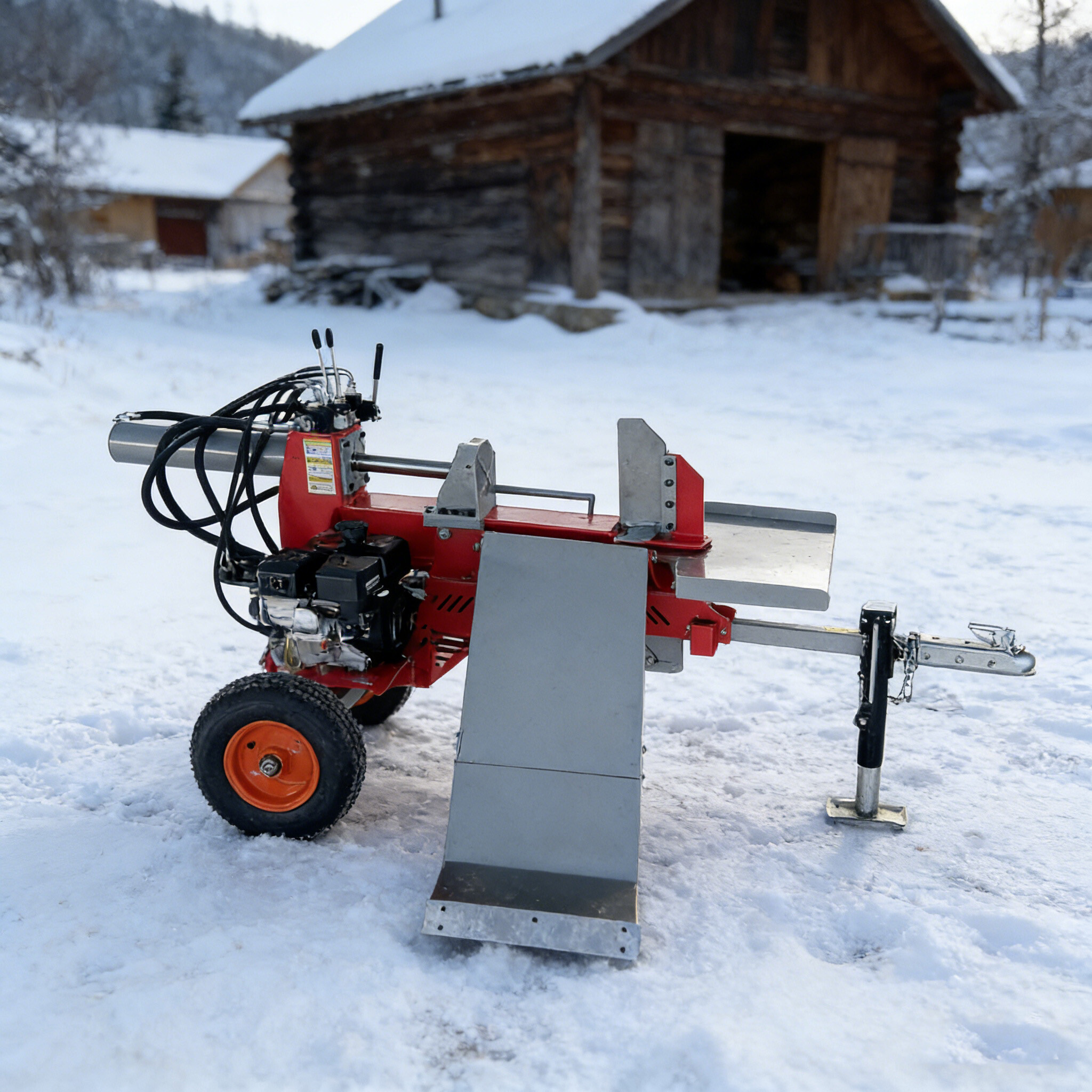
Selecting the right log splitter for farm use is a crucial decision to ensure efficient, safe, and cost-effective wood processing. Log splitters come in various designs, sizes, and power types, each suitable for different applications. This guide will help you navigate the selection process by focusing on the key factors to consider when choosing a log splitter for agricultural use.
1. Power Type: Gas, Electric, or Hydraulic
Factors to Consider:
Gasoline-Powered Log Splitters: Ideal for farms without reliable electricity access. Gas-powered models provide portability and high splitting force for larger, harder wood. They are suitable for heavy-duty tasks but may require regular maintenance.
Electric Log Splitters: Perfect for farms with access to power outlets. Electric splitters are quieter, require less maintenance, and are more eco-friendly, making them an excellent option for smaller to medium-sized wood splitting tasks.
Hydraulic Log Splitters: These offer a combination of power and precision and are best for farm operations requiring consistent, high-force splitting. Hydraulic systems are ideal for splitting larger logs and for users who need the machine to perform under heavy workloads.
Recommendation:
For smaller farms or occasional use, electric models might be sufficient. For larger farms or more intensive use, hydraulic or gas-powered models are likely better choices.
2. Tonnage and Splitting Force
Key Consideration:
Splitting Force (Tonnage): The splitting force is a critical factor that determines how effectively the splitter can handle larger, tougher logs. For typical farm use, a model with 20-30 tons of splitting force is usually sufficient for splitting most hardwoods and softwoods.
Recommendation:
If your farm processes mainly small-to-medium logs, a lower tonnage model (around 20 tons) will work well. For larger logs or more frequent use, consider a higher tonnage model (up to 40 tons).
3. Splitter Design: Horizontal vs. Vertical
Design Types:
Horizontal Log Splitters: These models are ideal for smaller, lighter logs. They are generally more compact and cost-effective, making them suitable for farms with limited storage space.
Vertical Log Splitters: Best for larger logs, these machines allow operators to load heavy logs vertically, which reduces the physical strain on users. Vertical splitters are especially useful for farms that deal with large, tough logs.
Recommendation:
If your farm works with a mix of small and large logs, consider a dual-position splitter that offers both horizontal and vertical operation.
4. Cycle Time and Efficiency
What to Look For:
Cycle Time: The time it takes for the log splitter to return to its starting position after splitting a log is an important factor for operational efficiency. Faster cycle times allow for more logs to be split in less time.
Efficiency Features: Look for features such as adjustable splitting speeds and quick ram return for increased productivity.
Recommendation:
For farms with high-volume log splitting needs, opt for models with fast cycle times and automatic or adjustable speed settings for optimal efficiency.
5. Portability and Storage
Factors to Consider:
Portability: If you need to move the splitter around your farm, models with wheels and tow kits are essential. Gas-powered and hydraulic models often come with mobility features, making them easy to transport across fields.
Storage: Consider the available space on your farm for storing the log splitter. Compact models are ideal for smaller farms with limited storage.
Recommendation:
For farms with significant mobility needs, choose a model with robust wheels and tow capabilities, especially if you have to move the splitter between multiple areas.
6. Maintenance and Durability
What to Look For:
Durability: Look for log splitters made of heavy-duty steel and quality components that can withstand prolonged use. This is especially important for farm environments where the splitter is used frequently and under varying conditions.
Ease of Maintenance: Consider models with easy access to hydraulic systems, oil change points, and replaceable parts. Gas-powered and hydraulic splitters often require more maintenance than electric models.
Recommendation:
If durability and low maintenance are your priorities, opt for hydraulic log splitters with well-constructed frames and self-lubricating systems.
7. Price vs. Performance
What to Consider:
Budget: Log splitters come in a wide range of price points. While electric models tend to be cheaper, gas and hydraulic models offer more power but come with higher upfront costs.
Long-Term Value: Consider the cost of ownership over the machine’s lifetime, including maintenance, parts replacement, and fuel consumption.
Recommendation:
Choose a log splitter based on long-term value rather than just initial price. If you plan to use the splitter frequently, investing in a more durable, high-performance model could save money in the long run.
8. Safety Features
Key Safety Considerations:
Two-Hand Control Systems: These require operators to use both hands simultaneously to activate the machine, keeping hands away from the splitting zone.
Automatic Stop Systems: Features like automatic shut-off mechanisms in case of overloading or malfunction can prevent accidents and improve safety.
Recommendation:
Look for log splitters with integrated safety systems such as emergency stops, two-hand controls, and adequate protective guards.
Conclusion
Choosing the right log splitter for your farm involves assessing several key factors including power type, splitting force, design, portability, and safety features. Whether you are looking for an electric, gas-powered, or hydraulic model, selecting the right tool based on your farm's size, log types, and usage frequency will ensure efficient and safe wood processing. By considering long-term durability and maintenance requirements, you can make an investment that serves your farm’s needs for years to come.
This stunning beach house property is a true oasis, nestled in a serene coastal community with direct access to the beach.
Contact
West Street, Melbourne Victoria 3000 Australia