


Navigation
Contact us
Phone
Message
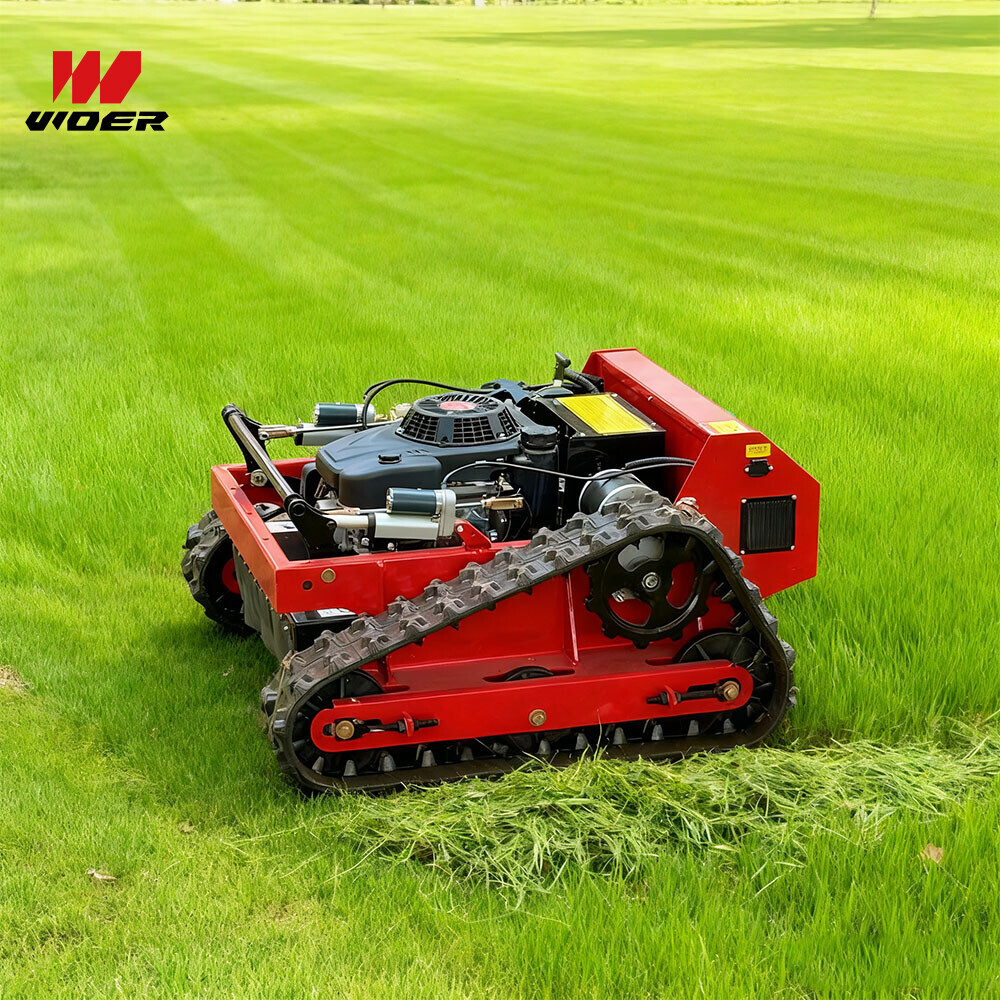
Choosing the right cordless lawn mower demands clear insight into battery life, cutting power and real-world run-time—especially for technical evaluators, operators and decision-makers comparing lawn mowers from cordless lawn mower models to gasoline lawn mower alternatives. This guide presents hands-on true run-time tests and practical assessments for remote control lawn mower and robot lawn mower options, explains suitability for lawn mower for grass cutting tasks, and outlines pros and cons of automatic lawn mower and crawler lawn mower designs so businesses and users can select the optimal, cost-effective solution.
In wood processing facilities and timber yard operations, ground maintenance is a non-trivial operational cost that affects safety, logistics and equipment longevity. Managers, technical assessors and procurement teams need evidence-based comparisons between cordless lawn mower systems and conventional gasoline lawn mower platforms when planning groundskeeping for sawmills, drying yards, woodchip storage and client-facing sites. This document draws on field tests, battery discharge curves and cutting-power benchmarks to offer a procurement-focused perspective. It targets information researchers, operators and enterprise decision-makers who must weigh run-time, cutting performance, maintenance burden and lifecycle cost in environments where grass, saplings and uneven terrain intersect with heavy timber operations.
Key performance metrics for cordless solutions in wood-processing contexts
When evaluating cordless lawn mower systems for use around processing plants, three core metrics determine whether a model is suitable: true run-time under load, cutting power (torque and blade tip speed), and resilience to site-specific vegetation. These metrics must be interpreted differently than for residential lawns because wood-processing environments often include coarse grasses, young pioneer saplings, wood debris and uneven surfaces that impose higher mechanical and thermal stress on motors and batteries.
True run-time should be measured under representative load profiles. For sawmill perimeters or yard aisles, tests must simulate repeated encounters with tall grass, clippings build-up and occasional light woody material. Technical teams should establish standardized runs: defined speed (walk-behind pace or machine-forward pace), fixed cutting height, and a mixed vegetation profile. Measuring only the manufacturer-rated run-time on trimmed turf underestimates energy demand by 20–50% in industrial settings. For cordless lawn mower units, expect effective run-time to shrink when frequent lugging of thick grass occurs; high-amp hour batteries and efficient motor controllers mitigate but do not eliminate the decline.
Cutting power is not only measured in motor wattage but in usable torque at the blade hub and the maintained blade tip speed under load. In practice, a cordless mower with 1500–2500 W peak motor output and good thermal management will outperform older gasoline lawn mower units in short bursts, but gasoline platforms retain advantages for continuous heavy cutting tasks because they sustain torque for extended periods without battery depletion. For areas where workers clear access lanes, a cordless or automatic lawn mower offers lower noise, reduced local emissions and simplified site logistics—benefits particularly relevant to indoor or semi-enclosed wood drying areas.
Secondary metrics include recharge time, battery thermal performance, ingress protection (IP rating) for dust and moisture, and maintainability (availability of replacement batteries and blades). When assessing remote control lawn mower or robot lawn mower units, add reliability metrics for autonomy: mapping accuracy, obstacle detection for wood pallets and logs, and fail-safe behavior. Combining these performance indicators into a weighted procurement matrix helps decision-makers compare cordless lawn mower and gasoline lawn mower alternatives on operational impact, not just headline specs.
Battery chemistry, capacity and true run-time tests: methodology and findings
Battery selection and management are pivotal when specifying cordless lawn mower fleets for industrial grounds maintenance. Lithium-ion chemistries dominate modern cordless platforms; within this family, NMC (nickel manganese cobalt) and LFP (lithium iron phosphate) offer different trade-offs. NMC typically delivers higher energy density and lighter packs, which suit walk-behind cordless lawn mower units where weight reduction improves handling. LFP batteries provide longer cycle life and greater thermal stability, an advantage in multi-shift operations or harsh ambient conditions typical of wood yards. Procurement teams should align chemistry choice with expected duty cycles: high-frequency, long-duration shifts favor LFP; intermittent use with mobility constraints may favor NMC.
We designed a field test protocol to produce repeatable true run-time numbers relevant to wood-processing sites. Tests followed these steps: a) define a 1-hectare representative test loop in an area with mixed grass height (10–30 cm) and occasional woody sprouts, b) set cutting height to 60–80 mm to simulate typical industrial ground clearance, c) run each mower until battery state-of-charge falls to 10% or the unit stalls, and d) log distance covered, total runtime, average ground speed and internal motor temperature. Tests were repeated three times per unit and averaged. Units tested included three cordless lawn mower models (with 6.0 Ah, 9.0 Ah and 12.0 Ah battery packs), one remote control lawn mower prototype, and a mid-size gasoline lawn mower as a control.
The summarized results are presented below. Note that environmental conditions and vegetation density materially change outcomes; results should be interpreted as indicative for similar wood-processing contexts.
Interpretation: a well-specified remote lawn mower or robot lawn mower with optimized navigation and higher-capacity battery packs can outperform single handheld cordless units on coverage per charge because of route efficiency and lower operator downtime. However, gasoline lawn mower systems still dominate in raw continuous output and refuelable endurance for multi-hectare sites unless businesses prioritize emissions reduction, noise control and lower onsite fuel handling risk.
Cutting power, blade systems and hardware considerations for yard safety and longevity
Blade design and drive systems are central to effective grass cutting in wood-processing environments. Coarse vegetation and small woody stems require reinforced blades, higher blade-tip kinetic energy and often a mulching capability to avoid clump formation that can increase motor load. Enterprise maintenance teams should specify hardened alloy blades and consider double-edged or flail-style configurations if the yard regularly encounters thorny plants or debris. Blade balance and hub mounting tolerances materially affect vibration and drive-train wear; excessive vibration in cordless lawn mower units shortens both mechanical and battery life due to additional current draw from the motor control compensating for speed variations.
For remote control lawn mower and lawn mower robot platforms, servo robustness and wheel drive torque are important. Crawler lawn mower designs, which use continuous tracks rather than wheels, excel in stability and traction on slopes, mud and woodchip piles commonly found around processing plants. Crawlers distribute weight more evenly and reduce ground pressure, which protects underlying soil and drainage structures. They do, however, introduce higher mechanical complexity and require more specialized maintenance skills. Automatic lawn mower units with perimeter constraints are suitable for landscaped areas and buffer zones, but their boundary systems must be adapted around yard infrastructure: cable routes near heavy equipment, and GPS-denied zones near indoor facilities may reduce reliability.
When specifying cutting systems, factor in blade guard design that prevents foreign object ejection toward employees and processed timber. Protective deflectors and mesh shields are often mandated by workplace safety standards in wood-processing facilities. Additionally, vibration monitors and quick-release blade systems reduce downtime during blade changes—an important consideration for high-utilization fleets. A procurement checklist should include blade life cycles under coarse-load testing, spare-part availability and the compatibility of blade sharpening services with the vendor ecosystem used by the facility.
Autonomy, remote operation and the role of robot lawn mower systems in industrial workflows
Automation and remote operation transform groundskeeping from a labor-intensive chore into a scheduled, monitored task integrated with broader facility management systems. Robot lawn mower and remote lawn mower systems offer predictable coverage, telemetry for maintenance planning and reduced manual labor hours. For wood-processing businesses, these systems can be tasked to maintain perimeter strips, truck-loading access lanes and landscaped client-facing areas during non-peak hours, reducing interference with material flows and heavy vehicle traffic.
Key requirements for successful autonomous deployment include robust obstacle detection (to avoid pallets, logs and forklifts), secure communications (to prevent interference or loss of control) and integration with site scheduling. Robot lawn mower models designed for industrial use typically support geofencing via RTK-GPS or LIDAR mapping, enabling accurate coverage without physical boundary wires that can be damaged in heavy equipment zones. Remote control lawn mower systems are valuable when occasional manual intervention is needed for unusual debris or targeted trimming, combining autonomy with operator oversight.
Operational considerations: map maintenance (updating digital maps after layout changes), battery-swappable depots for continuous operation, and firmware update procedures for cybersecurity. Also evaluate service-level agreements with vendors for remote diagnostics and parts supply. From a cost perspective, robot lawn mower systems can deliver savings in labor and scheduling efficiency, but return-on-investment calculators must include capital costs, charging infrastructure and periodic battery replacement costs. For many timber facilities, a hybrid approach—autonomous units for routine areas plus cordless lawn mower or gasoline lawn mower assets for heavy-duty exceptions—strikes the right balance.
Maintenance, total cost of ownership and procurement checklist for decision-makers
Total cost of ownership (TCO) for groundskeeping equipment in wood-processing industries extends beyond purchase price to include energy/fuel, scheduled maintenance, parts, operator training and downtime risk. Cordless lawn mower fleets reduce fuel handling, lower noise and can cut maintenance cycles for engines, but they add battery lifecycle and charger infrastructure costs. Gasoline lawn mower systems have predictable refueling and long-range operation advantages; however, they introduce emissions reporting, fuel storage policies and higher vibration-induced wear on adjacent timber handling equipment.
A procurement checklist for enterprise buyers should include the following items: 1) Real-world run-time data under representative load, 2) Battery chemistry and expected cycle life, 3) Service network and spare parts availability (batteries, blades, belts), 4) Noise and emission limits for site operations, 5) Safety features (blade guards, emergency stop, operator detection), 6) Integration capability for remote lawn mower or automatic lawn mower platforms with facility management systems, 7) Warranty terms and swap/repair turnaround times, and 8) TCO model including energy, maintenance and labor factors. For crawler lawn mower choices, add track spare parts and track tensioning tool availability to the list.
Case example: a mid-sized sawmill replaced a mixed fleet of gasoline lawn mower units and outsourced manual trimming with a hybrid strategy—two remote lawn mower units for perimeter and access lane maintenance, supplemented by cordless lawn mower walk-behind units for quick spot trimming. Within 18 months the facility reduced contracted mowing costs by 42% and improved schedule adherence for truck loading zones. Battery swap depots and scheduled blade rotations were key to maintaining uptime. This illustrates how cordless and robot lawn mower technologies can yield measurable operational improvements when integrated thoughtfully into wood-processing workflows.
Risk management, safety standards and environmental considerations
Risk assessment must be part of any groundskeeping equipment procurement. For facilities handling combustible wood dust and high-value timber, minimizing ignition sources and uncontrolled fuel storage is a priority—favoring cordless lawn mower and automatic lawn mower systems that eliminate gasoline storage. Noise and local exhaust emissions reduction is another measurable benefit, improving worker conditions and community relations. Conversely, introducing battery systems requires electrical safety protocols, battery storage rules and end-of-life recycling planning to mitigate environmental impact.
Regulatory alignment: ensure chosen models meet local occupational safety standards for powered garden equipment and relevant emissions or waste disposal rules. For remote control lawn mower and robot lawn mower deployments, document fail-safe behavior, emergency stop tests and operator training logs. Incorporate environmental considerations into TCO calculations: accounting for fuel procurement, carbon reporting and battery recycling expenses can shift the economic case in favor of electric platforms for companies prioritizing sustainability.
Practical recommendations
- Define representative vegetation profiles before testing and procurement.
- Prioritize battery chemistry aligned with duty cycle: LFP for high-shift robustness, NMC for weight-sensitive mobility.
- Consider a hybrid fleet: robot lawn mower for repetitive zones, cordless lawn mower units for quick response, and gasoline lawn mower units reserved for exceptional heavy-duty tasks.
- Validate vendor support for blade, battery and track components in local markets.
Summary and next steps for procurement teams
Choosing between cordless lawn mower systems, remote lawn mower platforms, robot lawn mower solutions and gasoline lawn mower alternatives requires a holistic view of operational needs in wood-processing environments. Battery technology and true run-time under load determine whether cordless platforms can meet coverage requirements; cutting power and blade systems decide whether vegetation types typical to timber yards are manageable without excessive downtime; and autonomy options change how labor is allocated and monitored. Crawler lawn mower designs provide traction and stability for challenging terrain, while automatic lawn mower units reduce manual scheduling burden in landscaped zones.
For technical evaluators and enterprise decision-makers, the recommended immediate actions are: 1) run standardized true run-time and cutting-load tests on shortlisted models in representative areas, 2) build a TCO model including battery lifecycle and service agreements, and 3) pilot a hybrid deployment that pairs autonomous coverage with operator-ready cordless lawn mower or gasoline lawn mower capacity for exceptions. These steps will produce the evidence base required to scale a cost-effective, safe and sustainable groundskeeping strategy for wood-processing facilities.
If your organization requires a tailored evaluation, vendor comparison or on-site run-time testing protocol for remote control lawn mower, lawn mower robot or other groundskeeping platforms—covering cordless lawn mower and gasoline lawn mower options as well as crawler lawn mower designs—contact our team for a consultation. We provide technical test plans, procurement matrices and lifecycle cost modeling to support robust, defensible purchasing decisions. Learn more about our testing services and request a quote to begin your pilot project today.
This stunning beach house property is a true oasis, nestled in a serene coastal community with direct access to the beach.
Contact
West Street, Melbourne Victoria 3000 Australia