


Navigation
Contact us
Phone
Message
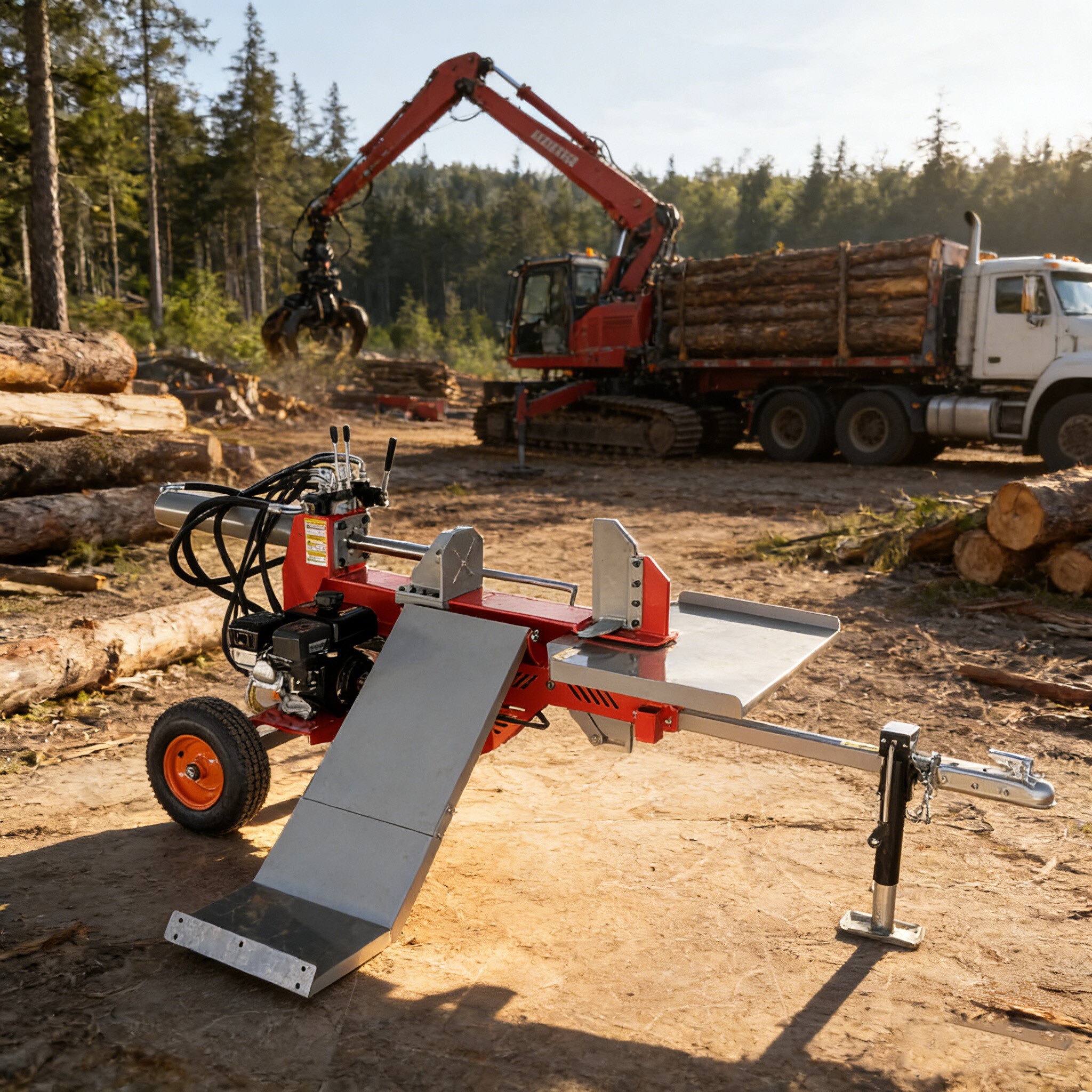
Transportation and Handling Tips for Log Splitters
Proper transportation and handling of log splitters are essential to prevent equipment damage, ensure operator safety, and maintain long-term performance. Whether moving a log splitter within a job site or transporting it over long distances, following correct procedures can significantly reduce risks and downtime.
This guide outlines practical tips for safely and efficiently transporting and handling log splitters.
1. Prepare the Log Splitter Before Transportation
Key Preparation Steps:
Power off the machine and disconnect all power sources
Release hydraulic pressure according to manufacturer instructions
Secure or remove loose components and accessories
Proper preparation prevents accidental movement and hydraulic damage during transport.
2. Use Appropriate Lifting and Handling Equipment
Best Practices:
Use forklifts, pallet jacks, or cranes rated for the machine’s weight
Lift only from designated lifting points
Avoid lifting by hoses, guards, or control handles
Correct lifting methods reduce the risk of structural damage and injury.
3. Secure the Log Splitter During Transport
Transportation Safety Tips:
Use straps or chains to secure the machine firmly to the vehicle
Prevent movement in all directions during transit
Protect hydraulic hoses and control panels from impact
Proper securing minimizes vibration-related wear and transport damage.
4. Consider Wheel and Towing Safety (If Applicable)
For Towable Log Splitters:
Check tire pressure and wheel condition before transport
Secure the hitch and safety chains properly
Observe recommended towing speeds
Safe towing ensures stability and reduces stress on the frame and axle.
5. Handle the Log Splitter Carefully On-Site
On-Site Handling Tips:
Move the machine slowly over uneven surfaces
Avoid sudden drops or impacts
Position the splitter on stable, level ground before operation
Careful handling preserves alignment and operational accuracy.
6. Protect the Hydraulic System During Transport
System Protection:
Avoid placing heavy loads on hydraulic hoses
Keep cylinders fully retracted when possible
Inspect hoses and fittings after transport
Protecting the hydraulic system ensures reliable performance after relocation.
7. Follow Safety Procedures and Training Guidelines
Safety Considerations:
Ensure operators are trained in proper handling techniques
Use personal protective equipment during loading and unloading
Follow manufacturer transport recommendations
Standardized procedures reduce accidents and equipment damage.
Conclusion
Safe transportation and handling of log splitters depend on proper preparation, correct lifting methods, secure transport, and careful on-site movement. By following these best practices, users can reduce equipment damage, enhance safety, and maintain long-term machine reliability.
For professional users and distributors, standardized transport procedures help protect equipment investments and ensure consistent operational readiness.
This stunning beach house property is a true oasis, nestled in a serene coastal community with direct access to the beach.
Contact
West Street, Melbourne Victoria 3000 Australia