


Navigation
Contact us
Phone
Message
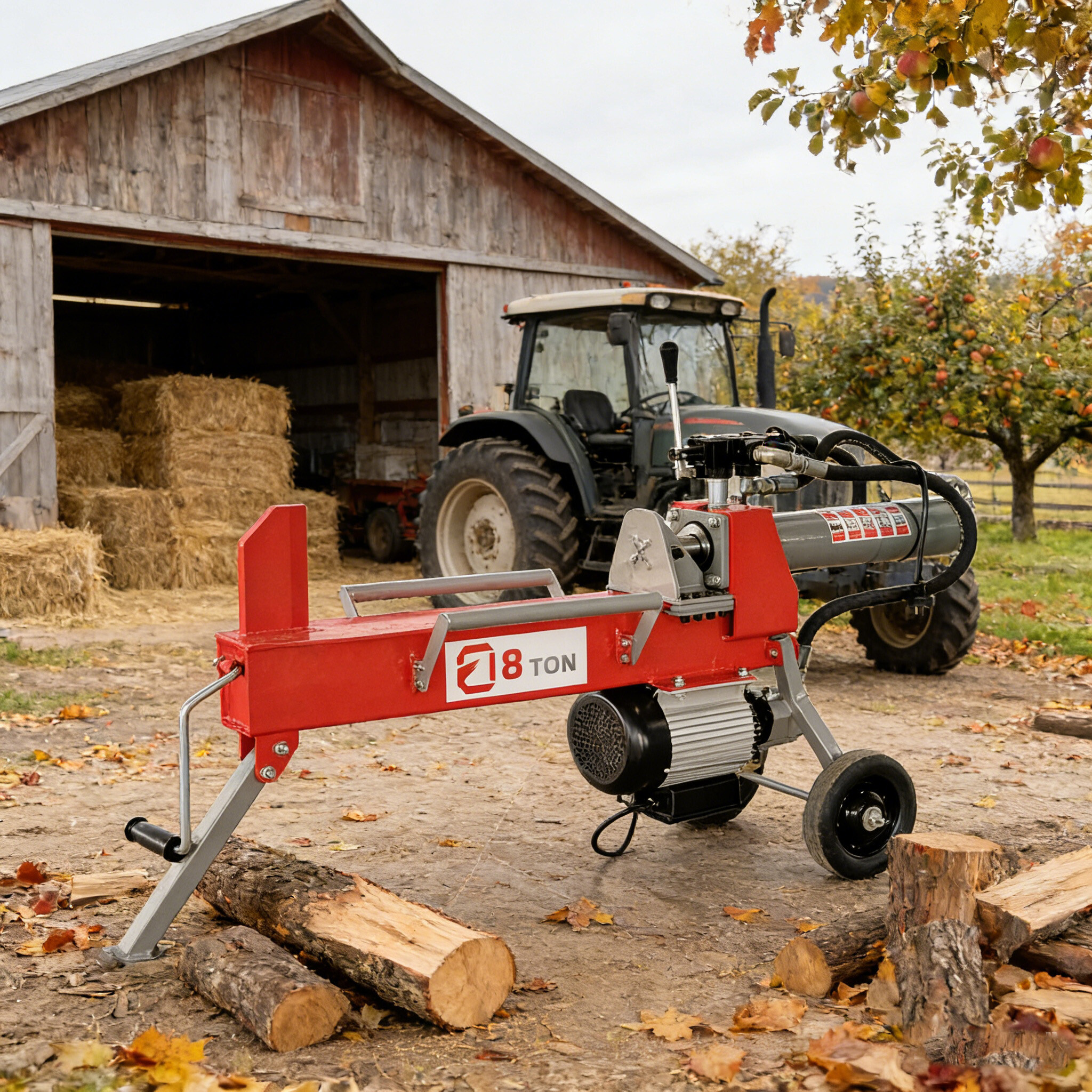
Work efficiency and productivity are key performance indicators when evaluating a log splitter for residential, commercial, or industrial applications. A high-efficiency log splitter not only increases wood processing output but also reduces labor intensity, operating time, and overall costs.
This analysis examines the main factors that affect log splitter efficiency and productivity, providing practical insights for professional users and buyers.
1. Definition of Log Splitter Efficiency and Productivity
Work Efficiency refers to how effectively a log splitter converts power into splitting performance, including cycle time, splitting force utilization, and operational stability.
Productivity refers to the total volume of wood processed within a given time period, often influenced by machine capacity, operating method, and workflow organization.
Both factors are critical when selecting a log splitter for continuous or large-scale wood processing.
2. Key Factors Affecting Log Splitter Efficiency
Splitting Force (Tonnage)
Adequate splitting force ensures that logs are split in a single cycle without repeated attempts. Insufficient tonnage leads to slower operation and increased machine strain.
Cycle Time
Shorter cycle time improves output per hour. Efficient hydraulic systems with optimized pump flow and cylinder design help reduce cycle duration while maintaining stable force.
Power System
Electric and gasoline engines drive hydraulic systems differently. Stable power output directly affects pressure consistency and splitting speed.
3. Impact of Hydraulic System Design
The hydraulic system plays a central role in productivity:
High-quality hydraulic pumps deliver stable oil flow
Proper cylinder sizing balances speed and force
Efficient valve control improves cycle responsiveness
Well-designed hydraulic systems reduce energy loss and support continuous operation.
4. Influence of Wood Characteristics on Productivity
Wood-related factors significantly affect processing efficiency:
Wood Species: Hardwood requires more force and longer cycle times than softwood
Log Diameter: Larger logs increase resistance and may reduce throughput
Moisture Content: Green wood generally splits more efficiently than very dry or frozen wood
Matching machine capacity to wood characteristics is essential for maintaining high productivity.
5. Operator Technique and Workflow Organization
Operator experience and workflow setup strongly influence productivity:
Correct log positioning reduces repeated cycles
Sorting logs by size and type improves processing speed
Using vertical splitting mode for heavy logs reduces handling time
Continuous operation with minimal interruptions increases hourly output
Efficient workflow design can significantly improve overall productivity without increasing machine power.
6. Maintenance and Its Effect on Efficiency
Regular maintenance helps maintain peak performance:
Proper blade condition ensures consistent splitting
Clean hydraulic oil supports stable pressure
Tight fasteners and aligned components reduce energy loss
Poor maintenance often results in slower cycle times and increased downtime.
7. Productivity Comparison: Light vs Heavy-Duty Log Splitters
Light-Duty Models (10–15T):
Suitable for residential use with moderate productivity and shorter operation cycles.Heavy-Duty Models (25–30T and above):
Designed for continuous operation, high output, and large-diameter hardwood processing.
Selecting the right capacity avoids underperformance and unnecessary energy consumption.
Conclusion
Log splitter efficiency and productivity depend on a combination of machine design, hydraulic performance, power system stability, wood characteristics, and operating practices. A properly selected and well-maintained log splitter can significantly increase output while reducing labor and operational costs.
For distributors and professional users, evaluating these factors ensures better purchasing decisions and long-term operational efficiency.
This stunning beach house property is a true oasis, nestled in a serene coastal community with direct access to the beach.
Contact
West Street, Melbourne Victoria 3000 Australia