


Navigation
Contact us
Phone
Message
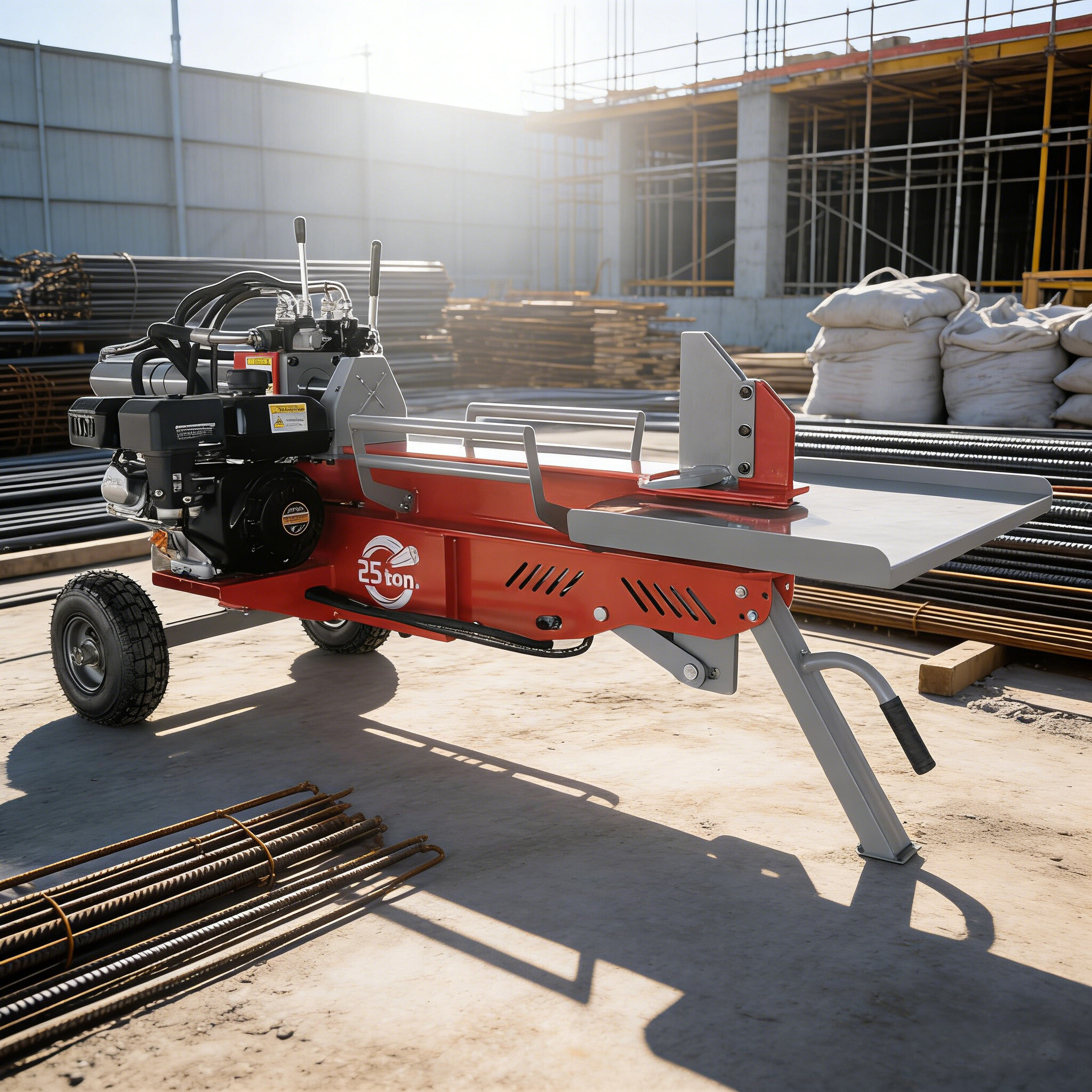
Log splitters play a vital role in modern wood processing by reducing manual labor and improving output consistency. Work efficiency and overall productivity depend on a combination of machine performance, operating methods, and material characteristics.
This analysis examines the key factors that influence log splitter efficiency and productivity in practical applications.
1. Splitting Force and Rated Capacity
Impact on Efficiency:
Splitting force determines the machine’s ability to handle different log sizes and wood hardness.
Adequate tonnage ensures logs are split in fewer cycles
Operating within rated capacity maintains stable pressure
Overloading reduces efficiency and accelerates component wear
Matching splitting force to application requirements is essential for consistent productivity.
2. Cycle Time and Output Rate
Impact on Productivity:
Cycle time directly affects hourly and daily output.
Shorter cycle times increase logs processed per hour
Consistent stroke speed improves workflow rhythm
Adjustable speed allows optimization for different wood types
Efficient cycle control significantly improves production capacity.
3. Hydraulic System Performance
Impact on Efficiency:
In hydraulic log splitters, system quality is a key productivity driver.
High-efficiency pumps provide stable flow and pressure
Proper oil temperature maintains system responsiveness
Clean hydraulic oil reduces energy loss and downtime
An optimized hydraulic system ensures reliable, continuous operation.
4. Wood Characteristics and Preparation
Impact on Productivity:
Material properties strongly influence splitting performance.
Green wood typically splits faster than dry or frozen wood
Straight-grain logs reduce resistance and repositioning
Oversized or knotty logs increase cycle time
Proper wood preparation improves throughput and reduces interruptions.
5. Machine Design and Configuration
Impact on Efficiency:
Structural design affects handling speed and operator effort.
Horizontal and vertical dual-mode designs improve flexibility
Stable worktables reduce repositioning time
Ergonomic controls enhance operator efficiency
Well-designed machines minimize non-productive movements.
6. Operator Skill and Workflow Management
Impact on Productivity:
Human factors are critical to sustained efficiency.
Correct positioning reduces failed splitting attempts
Organized workflow improves output consistency
Safety compliance prevents accidents and downtime
Training and standardized procedures enhance overall productivity.
7. Maintenance and Equipment Reliability
Impact on Long-Term Productivity:
Reliable equipment sustains efficiency over time.
Regular maintenance prevents performance degradation
Timely replacement of worn components avoids breakdowns
Clean and lubricated systems operate more efficiently
Preventive maintenance is essential for long-term productivity.
Conclusion
Log splitter efficiency and productivity are the result of balanced machine capacity, optimized hydraulic performance, proper wood preparation, and effective operation. By addressing these factors, users can maximize output, reduce downtime, and extend equipment service life.
For professional users and distributors, understanding productivity drivers enables better equipment selection and more reliable production planning.
This stunning beach house property is a true oasis, nestled in a serene coastal community with direct access to the beach.
Contact
West Street, Melbourne Victoria 3000 Australia