


Navigation
Contact us
Phone
Message
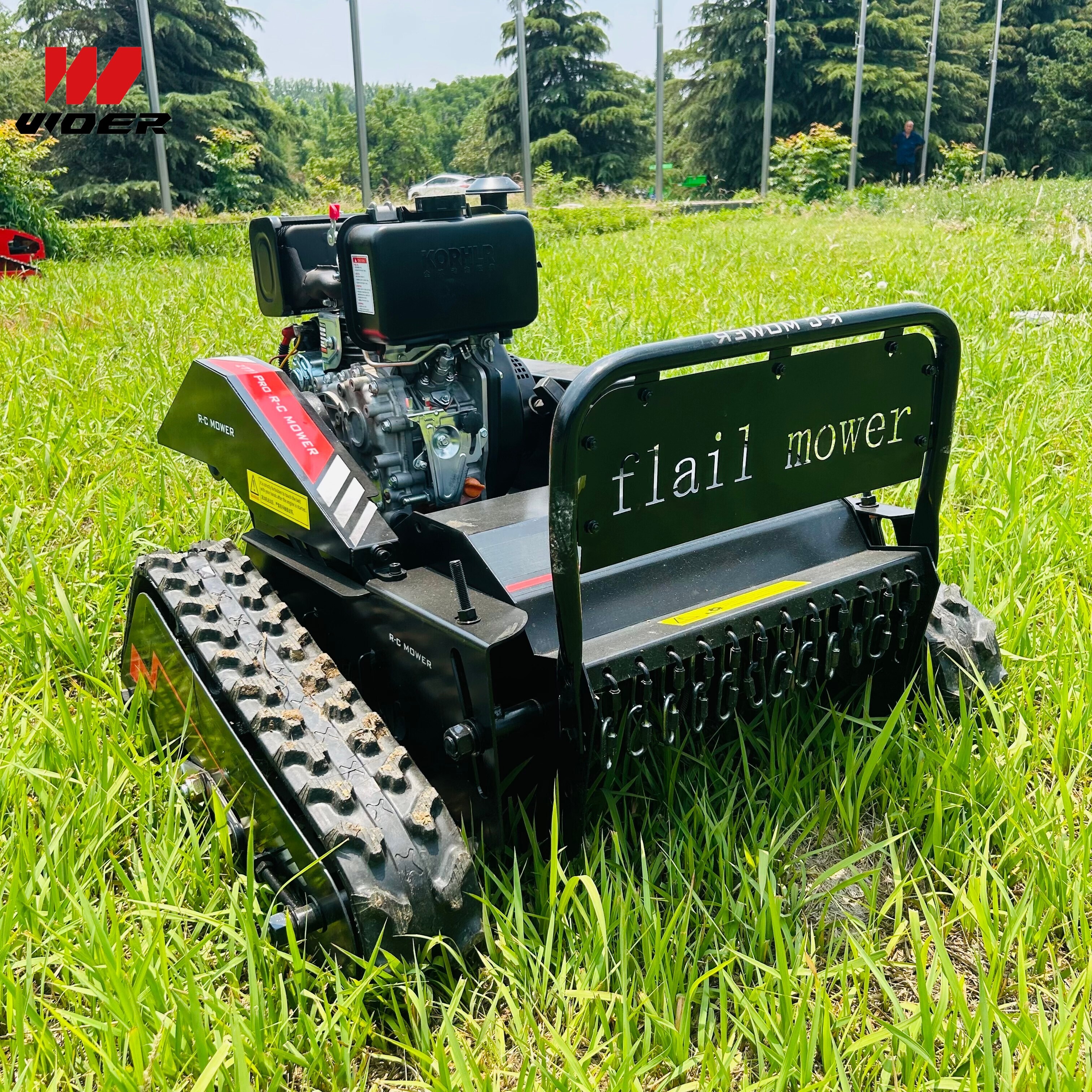
Whether you manage lawn mowers or a remote lawn mower fleet—or evaluate procurement of a robot lawn mower or a Remote Control Lawn Mower With Gasoline Engine—this operator training checklist focuses on safety and efficient operation of automatic lawn mower systems. Designed for operators, technical and business evaluators, decision-makers and contract/finance approvers, it covers pre-start inspections for lawn mower machine and gasoline lawn mower models, lawn mower blades maintenance, remote control lawn mower robot operation, fuel and emissions considerations, and standardized procedures for lawn mower for grass cutting to reduce risk and downtime. In addition to the core checklist items, this introduction clarifies the intended outcome of operator training: reduce incidents, extend machine uptime, control maintenance costs and provide objective metrics for performance and procurement evaluation. For information researchers and technical evaluators, the checklist details testable items and acceptance criteria; for business and finance approvers it highlights cost drivers and ROI-sensitive maintenance intervals; and for operators it gives step-by-step pre-start and in-field safe operation guidance that is easy to memorize and verify during shift handover. The list emphasises practical elements such as verified remote control communication, throttle and kill-switch checks on gasoline lawn mower units, and physical inspection of lawn mower blades for nicks, balance and secure mounting. It also explains safety zones, exclusion fencing and emergency stop procedures for automatic and robot lawn mower deployments on industrial timber or greenbelt sites. The aim is to produce consistent outcomes whether you deploy an automatic lawn mower, a remote lawn mower, a robot lawn mower or a hybrid remote control lawn mower robot with a gasoline engine — all described with actionable checkpoints and a mindset toward measurable operational efficiency.
Definition & Overview
This section defines the common equipment families and clarifies terms so stakeholders share the same expectations when reading the checklist or preparing specifications. A lawn mower machine is any device designed for lawn mower for grass cutting, and in our context it ranges from walk-behind gasoline lawn mower units to fully autonomous robot lawn mower platforms. A robot lawn mower generally denotes a battery-powered automatic lawn mower that navigates using boundary wires, GPS or sensors; it is optimized for frequent, low-impact mowing cycles. By contrast, a Remote Control Lawn Mower With Gasoline Engine is typically an industrial-grade remote lawn mower designed for heavier workloads, longer runtimes and sites lacking reliable charging infrastructure; it uses a remote controller to operate an internal combustion engine and drive systems. The term remote lawn mower or remote control lawn mower robot is used when human operators control a machine at distance, whether for safety reasons (steep slopes, proximity to timber operations) or productivity (large acreages, rough terrain). Understanding these distinctions helps decision-makers, procurement teams and contract executors choose the right model family and training level. Technical evaluation personnel should note the trade-offs between engine torque and electric drive responsiveness, between maintenance intervals for gasoline lawn mower engines and blade replacement cadence for electric robotic units. Safety considerations vary: automatic lawn mower platforms often require perimeter management and software interlocks, while gasoline lawn mower units require fuel-handling training, exhaust management and vibration monitoring. Accurately defining the asset class avoids mismatched expectations during acceptance, commissioning and operator training.
Technical Performance, Pre-Start Inspections and Safety Procedures
Operators and evaluators must be able to verify technical performance and safety before any deployment. A comprehensive pre-start inspection checklist should include visual and functional items covering the lawn mower blades, drive system, remote control link, engine or battery health, and safety interlocks. For gasoline lawn mower machines this means checking fuel quality, cap seals, vapor leaks, carburetor condition, cooling pathways and emissions controls compliant with local regulations (for example, EPA or equivalent regional standards where applicable). For automatic lawn mower and robot lawn mower platforms, inspections emphasize firmware version, obstacle sensors, GPS accuracy, perimeter integrity and battery state-of-health. Critical blade checks include examining blade sharpness, straightness, balancing marks, mounting bolt torque and the absence of hairline cracks; a compromised lawn mower blade can create unsafe projectile hazards and cause catastrophic gearbox failure. Recommended steps include: 1) Ensure all guards and deck shields are present and secure; 2) Verify remote control pairing and range through a functional test in an open area; 3) Confirm kill-switch and emergency stop routines activate within specified milliseconds; 4) For remote control lawn mower robot with gasoline engine, run an idle to load transition test to detect misfires or fuel delivery issues; and 5) Conduct a short load pass to measure cut quality and motor/engine temperature rise. During these checks, logs should be kept and serial numbers recorded to support traceability in maintenance and warranty claims. Technical evaluators should specify acceptance criteria such as vibration thresholds (measured in mm/s RMS), blade runout tolerances (e.g.,<0.5 mm), and communication latency limits for remote lawn mower control. Training must include how to read diagnostic codes, interpret sensor health reports, and safely clear minor jams and debris without bypassing interlocks. Following these procedures reduces unplanned downtime, minimizes safety risks and creates a defensible maintenance record for the enterprise.
Procurement Guide, Cost Considerations and Comparison
When selecting between a robot lawn mower, an automatic lawn mower, a remote lawn mower or a Remote Control Lawn Mower With Gasoline Engine, procurement teams need a structured evaluation matrix that balances total cost of ownership (TCO), operational fit and compliance. Key decision dimensions include initial capital cost, fuel or energy consumption, replacement frequency for lawn mower blades and consumables, maintenance labor hours, remote control and telemetry features, warranty terms and availability of spare parts. Below is a compact comparison that procurement teams can adapt to local conditions, with typical trade-offs illustrated for electric robot versus gasoline remote control models.
Procurement Guide checklist items should include: validated vendor references, demonstrable spare parts lead times, operator and maintenance training packages, warranty response times and on-site service SLAs. Include checks for compatibility with existing telematics platforms if remote telemetry is required. From a cost perspective, assess blade life-cycle cost per hectare mowed and compare across models: frequent, inexpensive blade swaps on a gasoline lawn mower may still cost more in labor than a higher-spec blade on a robot lawn mower that requires less frequent service. Consider alternative approaches such as hybrid fleets (electric robots for routine maintenance and remote control gasoline units for heavy-duty tasks) to optimize both cost and coverage. Include clauses in purchase contracts for updated firmware support and guaranteed parts availability for a minimum period to protect operational continuity.
FAQ, Misconceptions, Trends & Why Choose Us / Contact Us
This final module addresses common questions and forward-looking insights while ending with a clear call to action for decision-makers. Frequently asked questions include: "Do robot lawn mowers replace human operators?" — No: they reduce routine labor and allow operators to focus on exception handling, safety oversight and higher-value tasks. "Are gasoline lawn mower models obsolete?" — Not necessarily; a remote control lawn mower robot with a gasoline engine remains relevant where runtime and refueling speed outweigh emissions concerns. "How often should lawn mower blades be replaced or sharpened?" — Dependent on terrain and material contact, but operators should perform daily visual inspections and a documented service every 40–100 operating hours; keep records in maintenance logs for warranty and compliance. Misconceptions to correct: equating autonomy with zero oversight, or assuming remote systems eliminate all safety risks. Real-world performance depends on proper training, maintenance of lawn mower blades, and adherence to pre-start safety checks. Trending now are hybrid deployments, better sensor fusion for obstacle avoidance, and regulatory pressure on small-engine emissions that push fleets toward electrification where feasible. For timber and heavy vegetation areas, manufacturers are integrating debris-shedding deck designs and stronger blade alloys to withstand intermittent contact with woody material. Case studies from mixed-use greenbelt projects show fleets combining automatic lawn mower units for urban turf and remote control gasoline units for edge trimming near timber operations; these hybrid fleets reduced total operational spend by measurable percentages while improving safety metrics.Why choose us: we combine domain expertise in industrial mowing systems with practical operator training programs tailored to wood-processing and greenbelt environments—our checklists are tested against real-world scenarios and linked to procurement specifications and compliance frameworks. Contact us to schedule a pilot, request a tailored operator training workshop, or obtain a procurement-ready evaluation template that includes blade maintenance schedules, safety verification steps, and TCO models for both robot lawn mower and Remote Control Lawn Mower With Gasoline Engine deployments. Reach out to align safety, performance and cost goals across your organization and ensure your lawn mower fleet operates safely and efficiently.
This stunning beach house property is a true oasis, nestled in a serene coastal community with direct access to the beach.
Contact
West Street, Melbourne Victoria 3000 Australia