


Navigation
Contact us
Phone
Message
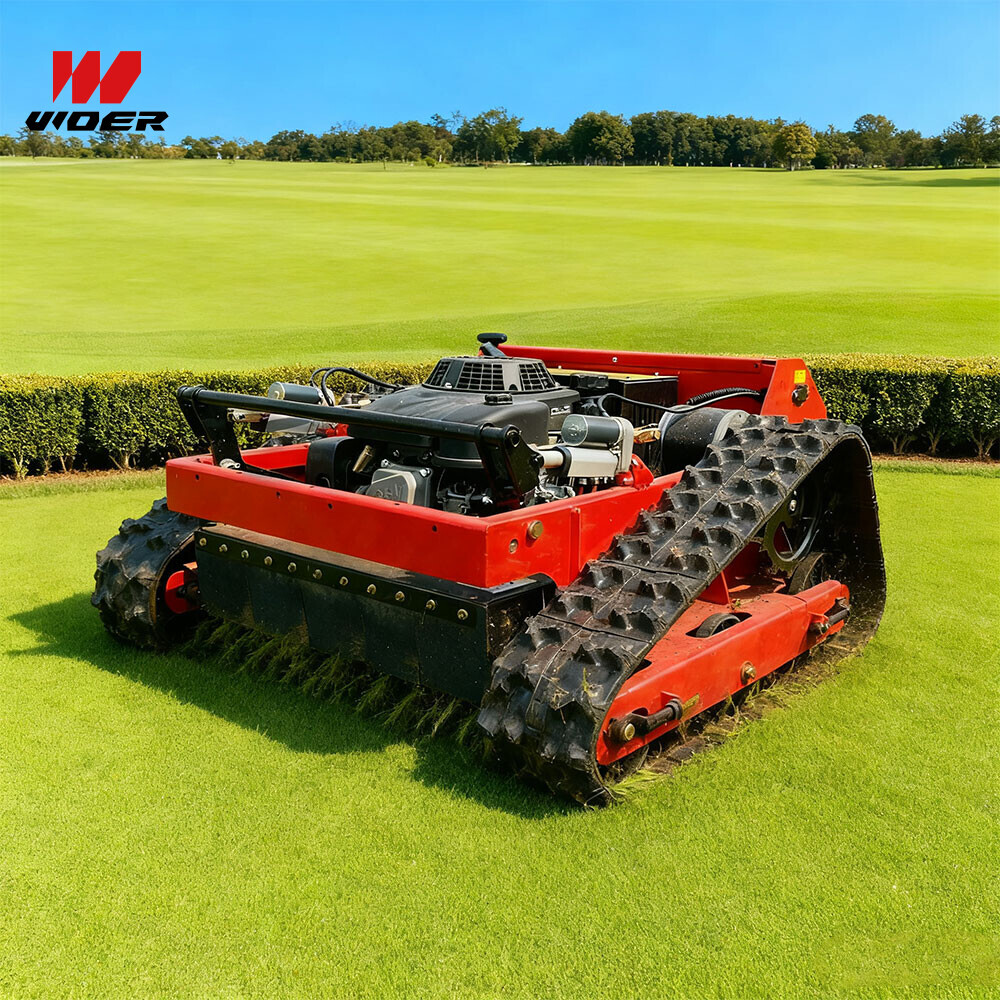
As you evaluate mowing solutions for commercial sites with steep slopes, sensitive turf, or uneven ground, choosing a crawler lawn mower can improve stability, safety, and productivity. This guide compares crawler systems with traditional lawn mowers — from gasoline lawn mower models to cordless and automatic robot lawn mower options — and explains when a remote control lawn mower or lawn mower robot outperforms a standard lawn mower for grass cutting. Technical metrics, operator considerations, and site-specific risk factors help information researchers, operators, and decision-makers select the right remote lawn mower for long-term efficiency and compliance.
Commercial wood processing sites — sawmills, log yards, pallet plants and veneer facilities — present a unique set of vegetation management challenges. Heavy machinery traffic, uneven ground from stacked timber, wood debris, sawdust accumulation and combustible materials create both operational and safety constraints. For information researchers, technical evaluators, operators and business decision-makers, the choice between traditional lawn mowers and crawler lawn mower systems is not just about cutting performance: it directly affects site safety, asset protection, regulatory compliance and total cost of ownership. This article unpacks relevant metrics and decision criteria — traction, ground pressure, gradeability, stability and remote operation features — and aligns them with wood-processing site requirements so procurement teams can make informed, defensible choices.
Terrain and traction metrics: when tracked platforms outperform wheeled lawn mowers
Understanding terrain characteristics is the first step in selecting the right mowing platform. Commercial wood-processing facilities often have varied substrates: compacted gravel in yard aisles, softer soils near riparian buffers, and uneven beds created by settled wood residues. Wheeled lawn mowers, including gasoline lawn mower and cordless lawn mower models, depend on tire-ground contact for traction and typically perform best on relatively uniform surfaces. In contrast, crawler lawn mower systems distribute machine weight across a larger contact area, reducing ground pressure and increasing traction on slopes, loose surfaces and debris-laden terrain.
Key technical metrics to evaluate when comparing tracked and wheeled mowing solutions include:
- Gradeability: Expressed as a percent grade or angle, gradeability indicates the maximum slope a machine can safely traverse. Manufacturer specifications vary; wheeled lawn mowers often operate safely up to moderate slopes, while many crawler lawn mowers are rated for significantly higher inclines due to improved traction and lower center of gravity. Verify rated gradeability rather than relying on anecdotal claims.
- Ground pressure: Measured in kPa or psi, ground pressure determines floatation. Lower ground pressure reduces soil compaction and turf damage, an important consideration near sensitive planting beds or on reclaimed topsoil in wood-processing site landscaping.
- Contact area and suspension: Tracks provide continuous contact and more even load distribution, helping machines move over rutted surfaces or wood-chip accumulations without losing traction. Track suspension and tensioning systems also affect ride stability and debris clearance.
- Traction coefficient: The effective friction between track or tire and surface — influenced by tread design, track material, and debris presence — determines slip risk. For operations on sawdust, wood chips and oily surfaces, choosing track compounds and grousers engineered for debris resistance mitigates spin and loss of control.
For decision-makers: assess site slope maps, typical footing (gravel, packed earth, turf), and the frequency of wood debris presence. If yard assessments reveal frequent steep approaches, loose materials, or regular rutting, a crawler lawn mower or a remote control lawn mower on tracks will often deliver superior uptime and lower rework compared with wheeled gasoline lawn mower or standard walk-behind units. Additionally, track systems minimize ground disturbance in sensitive areas, preserving adjacent vegetation or newly seeded buffers used for erosion control around log storage zones.
Stability, safety features and operator exposure: reducing risk in wood-processing environments
Stability considerations extend beyond slope negotiation. Rollover risk, operator exposure to hazardous zones (e.g., near conveyors or loading docks), and ignition hazards from hot engine components must be assessed in context. Traditional ride-on gasoline lawn mower units expose operators to potential hazards when operating near log stacks or moving vehicles. Remote lawn mower and automatic lawn mower solutions — including remote control lawn mower and lawn mower robot models — remove the operator from the immediate danger area, significantly reducing risk of injury.
Critical safety metrics and controls to evaluate:
- Tilt and rollover protection: Does the system include tilt sensors, automatic shutdowns, or mechanical guards? Crawler platforms benefit from a lower center of gravity, but sensors and redundant emergency stop systems remain essential.
- Remote-control ergonomics and communication: For remote control lawn mower solutions, verify the control console’s range, latency, and fail-safe behavior. Reliable line-of-sight communications or encrypted RF links are necessary in busy industrial sites to prevent unintended operation.
- Fire and ignition mitigation: Gasoline lawn mower engines produce hot surfaces and exhaust sparks; in wood-processing contexts where sawdust and chips accumulate, this elevates fire risk. Consider cordless lawn mower units or remote lawn mower robots with electric drivetrains to minimize ignition sources. If fuel-powered options are required, ensure spark arrestors, proper muffler shielding, and strict housekeeping protocols.
- Access and exclusion zones: Establishing physical barriers or geofenced zones for lawn mower robots prevents operation near active log handling or storage. Integration with site safety processes — lockout/tagout, permit-to-work when mowing near maintenance activities — is mandatory.
From a compliance perspective, equipment selection should align with operational safety procedures. Remote operation and automatic lawn mower options can reduce the number of personnel required in hazardous areas, but they also introduce new competency requirements for remote operators and maintenance technicians. Include training hours, periodic competency checks, and documented response procedures for remote or autonomous mower incidents as part of procurement evaluation criteria.
Productivity, lifecycle costs and performance metrics across mower types
Budget-conscious procurement teams must weigh upfront price against lifecycle costs: fuel/electricity, maintenance, downtime, operator labor, and replacement intervals. Different lawn mowers — gasoline lawn mower, cordless lawn mower, and automatic lawn mower variations including robot lawn mower or lawn mower robot — have distinct cost profiles and performance trade-offs when deployed in timber-industry settings.
Consider the following performance metrics when comparing options:
- Area throughput (m2/hr): Determined by cutting width, travel speed, and number of passes. Remote control lawn mower and crawler lawn mower models often support wider decks and higher stability at speed on uneven ground, increasing throughput compared to smaller automatic lawn mower robots designed for routine low-profile maintenance.
- Duty cycle and refuel/recharge time: Gasoline lawn mower units can be refueled quickly, but produce emissions and heat. Cordless lawn mower systems and lawn mower robots require battery swaps or recharging; battery-managed fleets with hot-swap capability can achieve operational parity in scheduled deployments.
- Maintenance intervals and mean time between failures (MTBF): Tracked machines may have higher component counts (track drives, rollers) but are designed for heavy use and debris environments. Assess real-world maintenance records from similar industrial sites and include consumable replacement schedules in TCO models.
- Environmental operating limits: Temperature range, dust ingress protection, and resistance to oil or sap contamination are especially relevant in wood yards. Electric lawn mower robot models typically include sealed control enclosures and lower ingress risk compared to engine intake on gasoline lawn mowers.
This table is a starting point for procurement scoring. Quantify each category and apply weightings aligned with site priorities — for example, slope capability and fire risk mitigation may carry higher weights in sawmills. When comparing specific models, request manufacturer data on cutting width, travel speed, gradeability, ground pressure and recommended maintenance intervals to build a defensible total cost of ownership model over a 5–7 year horizon.
Integrating mower selection into wood processing workflows: environmental, regulatory and operational considerations
Selecting a mowing solution is not an isolated procurement; it affects yard layout, fire prevention plans, and maintenance scheduling. In wood-processing environments, mowing intersects with environmental management — erosion control, dust suppression and invasive species management — as well as occupational safety. Machines should be evaluated for how they integrate into these broader systems.
Practical integration checklist:
- Housekeeping and combustible material control: Specify equipment with reduced ignition potential in sawdust-prone zones. For gasoline lawn mower use, mandate daily cleaning of engine compartments and use spark arrestors. Consider automatic lawn mower robots or cordless lawn mower fleets for high-risk zones.
- Route planning and geofencing: For remote lawn mower and lawn mower robot deployments, implement geofence maps aligned with yard traffic patterns and exclusion zones near active conveyors. Use GPS, RFID or perimeter wire solutions depending on accuracy requirements.
- Maintenance and spare parts strategy: Track drive components, belts, blades and batteries have different lead times. Maintain critical spares to avoid prolonged downtime during peak seasons. Include vendor SLAs for priority repair if uptime is a contractual obligation.
- Environmental compliance: If site landscaping includes protected buffers or seeded reconstructions, select mower platforms that minimize ground compaction. Crawler lawn mower systems often preserve seeded areas better than wheeled alternatives.
- Operator training and competency: For remote control lawn mower use, require certification of remote operators and defined procedures for control handover and emergency intervention. For automatic lawn mower deployments, set inspection and intervention schedules to verify sensors and boundary systems.
Procurement teams should codify these integration points into vendor RFPs and acceptance testing. Request on-site demonstrations under representative yard conditions to verify traction, debris handling and safety system performance before final acceptance.
Case studies, best-practice deployment and decision checklist for buyers
Real-world examples clarify the decision logic. Two anonymized use cases from the wood-processing sector illustrate typical outcomes:
- Sawmill A migrated from ride-on gasoline lawn mower units to a mixed fleet of crawler lawn mower remote-control units for slope edges and cordless lawn mowers for flatter landscaping. Result: 40% reduction in rework from turf damage, elimination of two minor ignition incidents, and 25% reduction in labor hours attributed to remote operations in high-risk zones.
- Log yard B trialed an automatic lawn mower robot for routine mowing inside a fenced perimeter and used a tracked remote lawn mower for log-splitter approach zones. Result: automated robot reduced routine labor for low-risk lawns, while the crawler unit handled debris-laden zones safely and with fewer interruptions.
Best-practice deployment guidance:
- Conduct a site terrain and risk audit to map slopes, debris hotspots and combustible-material exposure.
- Define prioritized equipment performance metrics (gradeability, ground pressure, swath width, duty cycle) and include them in RFP scoring templates.
- Require manufacturer-provided case studies or references from similar industrial sites and request service records where feasible.
- Include a staged acceptance process: factory acceptance testing, on-site demonstration under representative loads, and a short warranty period with defined uptime expectations.
Buyer decision checklist (quick):
- Are slopes and loose surfaces frequent enough to justify a crawler lawn mower?
- Do fire risk assessments favor electric/corrosion-resistant drivetrains over gasoline models?
- Can the site support battery recharge/logistics if choosing cordless lawn mower fleets?
- Do operational schedules require automated lawn mower robots for routine tasks to free up labor for high-skill activities?
- Does the vendor provide training, spare parts and local service for tracked components?
Summary and recommended next steps
Selecting the right mowing platform for wood-processing sites requires a holistic evaluation of terrain, safety risks, productivity expectations and lifecycle costs. Crawler lawn mower systems excel where slopes, loose materials, and debris compromise traction and stability; they reduce ground pressure, lower rollover risk and protect sensitive seeded or landscaped areas. Remote control lawn mower units and lawn mower robot models reduce operator exposure and can be combined into hybrid fleets that allocate routine tasks to automatic lawn mowers while reserving heavy-duty, slope-prone or debris-laden areas for tracked remote units.
When building a procurement case, include quantified site metrics (grade maps, area throughput targets), safety and fire-risk mitigation criteria, and a total cost of ownership model covering maintenance, energy/fuel and downtime. Favor vendors who provide field references from wood-processing facilities, offer robust training programs, and furnish clear maintenance/safety documentation for crawler components and remote-control systems.
If your site requires advice tailored to specific yard topography and operational constraints, we can help you evaluate candidate machines — from gasoline lawn mower units to cordless lawn mower fleets and fully automatic lawn mower robots — and build a procurement specification aligned with safety and productivity goals. Contact our team to request on-site assessments, vendor shortlists and a standardized RFP template to compare crawler lawn mower and remote lawn mower solutions. Learn more about integrated vegetation-management solutions and schedule a consultation to identify the best-fit equipment for your wood-processing operation — request a demo or talk to a specialist today.
This stunning beach house property is a true oasis, nestled in a serene coastal community with direct access to the beach.
Contact
West Street, Melbourne Victoria 3000 Australia