


Navigation
Contact us
Phone
Message
Overview
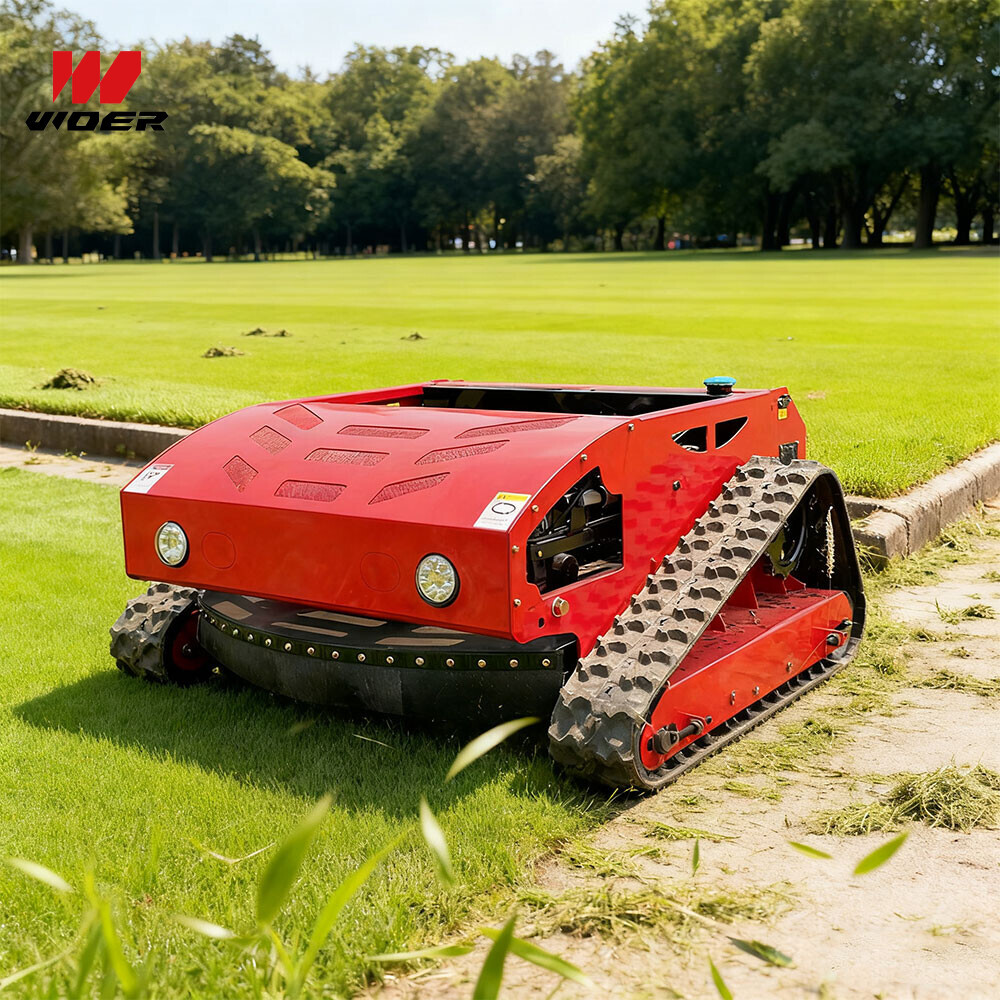
This 2025 cost and productivity comparison evaluates remote control lawn mower robot solutions and traditional manual crews to guide information researchers, operators, technical and business decision-makers. We benchmark lawn mowers across categories — robot lawn mower and remote control lawn mower robot units, Remote Control Lawn Mower With Gasoline Engine variants, remote lawn mower and automatic lawn mower platforms, and gasoline lawn mower or lawn mower machine options — focusing on output as a lawn mower for grass cutting, lawn mower blades wear, maintenance, labor cost, and ROI to support procurement and finance approvals. In this extended introduction we clarify scope and target audience, highlight the primary performance indicators, and preview the procurement guidance that follows. The comparison covers field productivity (m2/hour), effective operating cost per hectare, downtime due to maintenance or blades replacement, safety incident exposure for manual crews versus remote lawn mower systems, and the capital amortization period when replacing manual crews with a robot lawn mower or remote control lawn mower robot. Readers include information researchers who need benchmark data, operators focused on daily reliability of the lawn mower machine, technical evaluation teams testing a Remote Control Lawn Mower With Gasoline Engine, business evaluators planning TCO for large campuses, finance approvers modeling ROI on gasoline lawn mower fleet reductions, and contract executors who require clear SLA and maintenance metrics. Throughout we use neutral, evidence-based language and link comparative metrics to practical procurement choices: blade life in hours, common failure modes, fuel consumption for gasoline lawn mowers, battery runtime for automatic lawn mower variants, and remote control latency considerations for remote lawn mowers deployed on slopes. This section sets expectations: the report is practical, metric-led, and actionable; subsequent sections provide definitions, market context, head-to-head productivity analysis, technical performance ranges for lawn mower for grass cutting tasks, and a procurement checklist that ties back to budget and contract execution priorities.
Definition & Overview
To make informed choices, begin with clear definitions. A robot lawn mower is typically an autonomous, often battery-driven unit that follows boundary wires or GPS guidance to perform scheduled mowing with minimal human supervision. A remote control lawn mower robot combines autonomy with remote operator override: teams can send a remote command or pilot the unit for complex zones. Remote lawn mower is a broader term encompassing handheld remote devices and platform-mounted remote control lawn mower robot designs. Remote Control Lawn Mower With Gasoline Engine denotes a class where internal combustion power provides extended run time and torque for dense vegetation; these units are closer to traditional gasoline lawn mower models but integrated with remote or semi-autonomous controls. An automatic lawn mower emphasizes scheduling, obstacle detection, and self-charging; it aims to replace routine manual cutting entirely for low-to-moderate complexity turf areas. A lawn mower machine or gasoline lawn mower in commercial landscaping remains the baseline: high throughput, predictable maintenance cycles, but higher labor and safety costs. For lawn mower blades, clarify material and configuration: mulching blades, reel blades, and rotary blades affect cut quality and wear rate. A lawn mower for grass cutting in industrial and municipal contexts must balance pass quality, safety, and throughput. Defining these categories creates a consistent basis for comparing capital cost per unit, expected annual maintenance, operator time, and blade replacement intervals measured in hours of cut. This section also introduces key technical KPIs used later: cut width, effective cut speed (m2/hour), fuel or energy use per hectare, mean time between failures (MTBF), and mean time to repair (MTTR). By aligning terminology, procurement teams, finance approvers, and contract executors get a common language to evaluate options across robot lawn mower, remote lawn mower, and gasoline lawn mower lines.
Market Overview & Trends
Market dynamics for lawn mowers are evolving rapidly as automation and remote capabilities scale. Global demand for robot lawn mower platforms and remote control lawn mower robot systems has grown due to labor shortages, rising wage costs, and heightened safety regulation in the wood-processing and external grounds maintenance sectors. The market for Remote Control Lawn Mower With Gasoline Engine solutions is steady where grid power or battery recharging is impractical; these units offer extended operational windows and higher torque for thick grass, making them relevant to industrial yards and large landscape contracts. Simultaneously, automatic lawn mower adoption rises in managed campuses and residential communities, where predictable scheduling and low noise are priorities. Procurement trends favor hybrid fleets: a mix of autonomous robot lawn mower units for routine low-complexity terrain, remote lawn mower platforms for high-risk or steep areas, and gasoline lawn mower machines kept for heavy cutting or rapid-response tasks. Key certifications and standards influencing purchase decisions include ISO machinery directives for safety, CE marking in Europe, and region-specific emissions standards for gasoline lawn mower engines. Financially, total cost of ownership models now include blade lifecycle cost, remote control telemetry subscriptions, and potential reductions in workers’ compensation and training. Buyers are increasingly measuring productivity in m2 per hour and cost per hectare, not just capital cost. Environmental and ESG targets also push some organizations toward battery-powered automatic lawn mower solutions where feasible; however, grass species, debris, and slope require careful technical selection. For timber processing facilities and landscaping operations, the practical choice often blends gasoline lawn mower machines for heavy-duty cuts with remote control lawn mower robot units for safety-sensitive or constrained spaces. Market data indicates a multi-year shift toward remote-enabled platforms, but manual crews remain necessary in heterogeneous terrains where a lawn mower for grass cutting must adapt to woody debris or irregular surfaces.
Comparison Analysis: Productivity, Cost, and Risk
When comparing remote control lawn mower robot options to manual crews, focus on measurable outputs and hidden costs. Productivity metrics for a robot lawn mower—effective mowing area per hour, consistent cut height, and hours of unattended operation—contrast with manual crew metrics like crew speed, setup time, and fatigue-related slowdowns. For example, a modern remote lawn mower with a 60 cm cut width operating autonomously can achieve steady output over long shifts, whereas a manual crew’s throughput fluctuates with breaks and complexity. Consider blade wear: lawn mower blades on rotary gasoline lawn mower machines wear faster in debris-rich environments typical of wood-processing sites; remote control Lawn Mower With Gasoline Engine models may require more frequent blade replacement but deliver higher cut power. Maintenance schedules differ: automatic lawn mower units often require less daily inspection but more specialized firmware and sensor calibration; gasoline lawn mower machines need fuel system and engine maintenance. Risk profiles are crucial—manual crews introduce higher exposure to injury and compliance costs, while remote control lawn mower robot systems reduce on-site human presence but require robust fail-safe and geofencing. Below is a concise comparison table illustrating typical ranges (note: values are indicative and should be validated against vendor specs):
This comparison shows that a remote control lawn mower robot can offer steady productivity with lower personnel costs, but the initial capital for a fleet of automatic lawn mower or remote lawn mower units and their integration can be substantial. For many timber and processing facilities, blending gasoline lawn mower machines for heavy-duty tasks with robot lawn mower units for routine maintenance yields the best ROI over a 3–5 year horizon. Decision-makers should quantify blade life in cut hours, schedule predictive maintenance for lawn mower blades, and model worst-case downtime to ensure continuity of grounds maintenance operations.Procurement Guide, Cost Alternatives & Why Choose Us
Procurement teams and finance approvers need a pragmatic checklist when evaluating options. Start with mission requirements: site complexity (slope, obstacles, debris), desired unattended hours, noise limits, and regulatory constraints on gasoline engines. Compare unit-level metrics—cut width, battery runtime or fuel tank capacity, blade type, and MTBF—then map to operational costs: labor savings, blade replacement frequency, and maintenance labor hours. For a Remote Control Lawn Mower With Gasoline Engine, include emissions testing, muffler and spark arrestor compliance, and fuel logistics. For robot lawn mower and automatic lawn mower purchases, verify software update policies, telemetry subscriptions, and spare parts lead times. Consider alternatives: upskilling manual crews, outsourcing to specialist contractors, or phased replacement where a lawn mower machine fleet is gradually replaced by remote control lawn mower robot units in low-complexity areas. Financing options—lease, CAPEX, or shared-service models—affect TCO and approval pathways. From the perspective of technical evaluators and contract executors, insist on performance SLAs that reference measurable KPIs like effective m2/hour, blade change interval in cut hours, and downtime response time. For operators, choose models with accessible service points, common blade formats, and robust remote diagnostics. As the independent analyst '无', we emphasize transparent benchmarking and vendor-neutral selection: our guidance helps reduce procurement risk by aligning technical specs with operational realities and financial constraints. Why choose us? We synthesize field metrics, safety profiles, and procurement best practices tailored to the wood-processing equipment context so decision-makers can justify investments to finance approvers and contract owners. Contact us to request a tailored ROI worksheet, sample performance benchmarks for specific Remote Control Lawn Mower With Gasoline Engine models, or on-site evaluation protocols to validate vendor claims before final approval.
This stunning beach house property is a true oasis, nestled in a serene coastal community with direct access to the beach.
Contact
West Street, Melbourne Victoria 3000 Australia