


Navigation
Contact us
Phone
Message
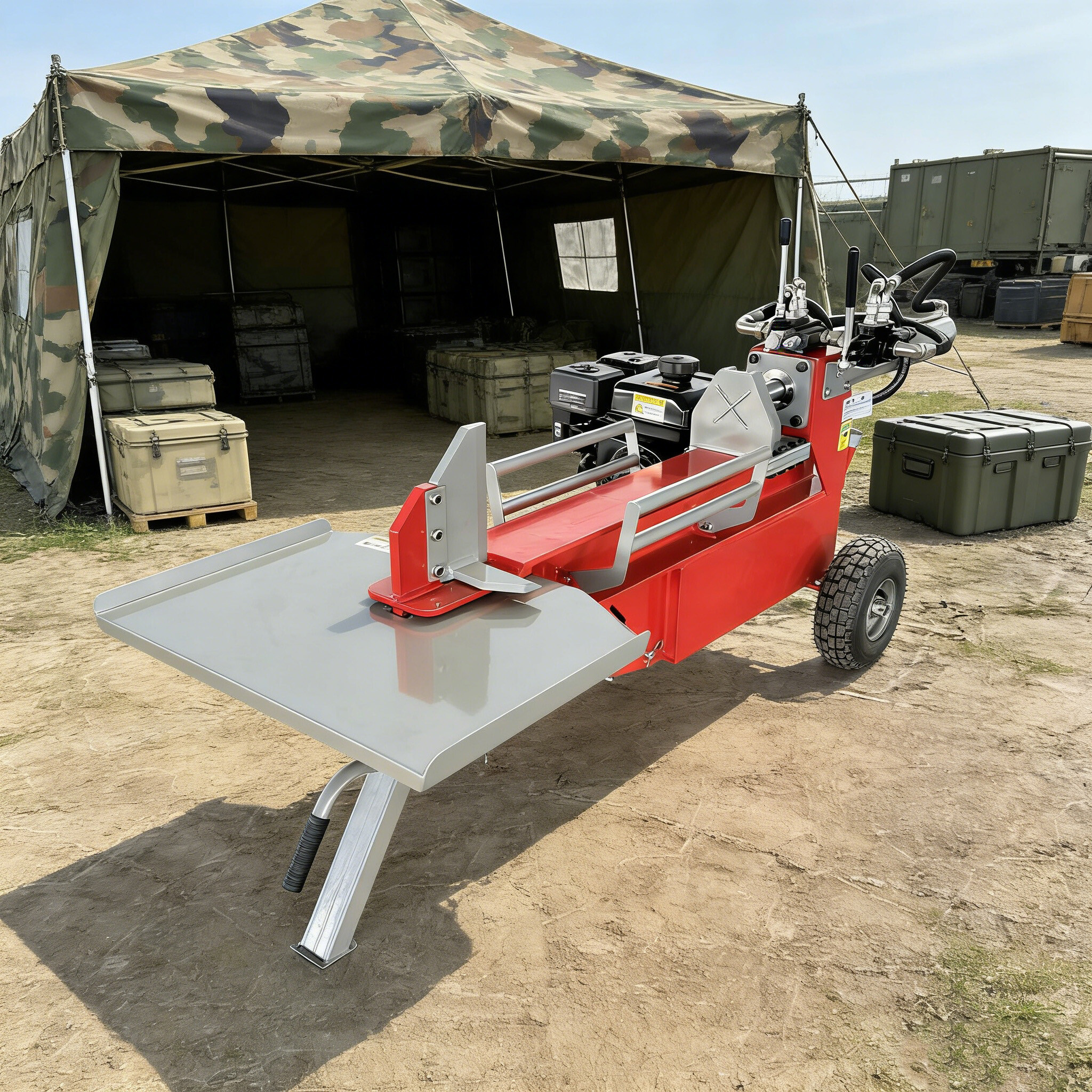
The power system and drive type of a log splitter directly determine its splitting capacity, operating efficiency, application range, and maintenance requirements. Understanding these systems helps users and distributors select the most suitable solution for different working conditions and production demands.
This analysis provides a detailed overview of the main power systems and drive mechanisms used in modern log splitters.
1. Electric Power Systems
Power Source:
Electric motor
Technical Characteristics:
Provides stable and consistent torque
Low noise and vibration levels
Simple structure with fewer mechanical components
Minimal emissions and low operating cost
Application Analysis:
Electric log splitters are best suited for indoor or residential use where a stable power supply is available. They are commonly used for light to medium-duty wood splitting and offer high reliability with low maintenance requirements.
2. Gasoline Engine Power Systems
Power Source:
Gasoline engine
Technical Characteristics:
High mobility and independence from electrical supply
Strong output suitable for heavy-duty operations
Reliable performance in outdoor and remote locations
Application Analysis:
Gasoline-powered log splitters are ideal for forestry, farms, and commercial applications where portability and higher power output are required. They are commonly paired with hydraulic drive systems for improved splitting force.
3. Hydraulic Drive Systems
Drive Mechanism:
Hydraulic pump, control valve, and cylinder
Technical Characteristics:
Delivers high and stable splitting force
Smooth, controlled operation throughout the splitting cycle
Adjustable pressure and speed
High efficiency for continuous operation
Application Analysis:
Hydraulic drive systems are the most widely used in professional and industrial log splitters. They are suitable for splitting hardwood, large-diameter logs, and irregular wood with consistent performance and reliability.
4. Mechanical and Manual Drive Systems
Drive Mechanism:
Mechanical leverage, flywheel, or manual force
Technical Characteristics:
Simple construction
Low initial cost
No fuel or electricity required
Application Analysis:
These systems are typically used for occasional or low-volume wood splitting. While cost-effective, they are limited in capacity and efficiency compared to hydraulic systems.
5. Horizontal and Vertical Drive Configurations
Horizontal Drive Configuration:
Logs are positioned horizontally
Suitable for small to medium-sized logs
Faster handling and higher throughput for light materials
Vertical Drive Configuration:
Logs remain upright during splitting
Ideal for large, heavy, or oversized logs
Reduces manual lifting and operator fatigue
Many professional log splitters feature dual horizontal and vertical operation to improve flexibility and efficiency.
6. Direct Drive vs. Belt Drive Systems
Direct Drive:
Higher transmission efficiency
Compact structure
Reduced power loss
Belt Drive:
Better shock absorption
Easier maintenance and replacement
Suitable for certain engine-driven designs
The choice depends on performance requirements, durability expectations, and maintenance preferences.
Conclusion
The power system and drive type are key factors influencing the efficiency, productivity, and application scope of a log splitter. Electric, gasoline, and hydraulic systems each offer specific advantages, while different drive configurations improve adaptability to various working conditions.
For professional users and distributors, selecting the right power and drive system ensures optimal performance, lower operating costs, and long-term reliability.
This stunning beach house property is a true oasis, nestled in a serene coastal community with direct access to the beach.
Contact
West Street, Melbourne Victoria 3000 Australia