


Navigation
Contact us
Phone
Message
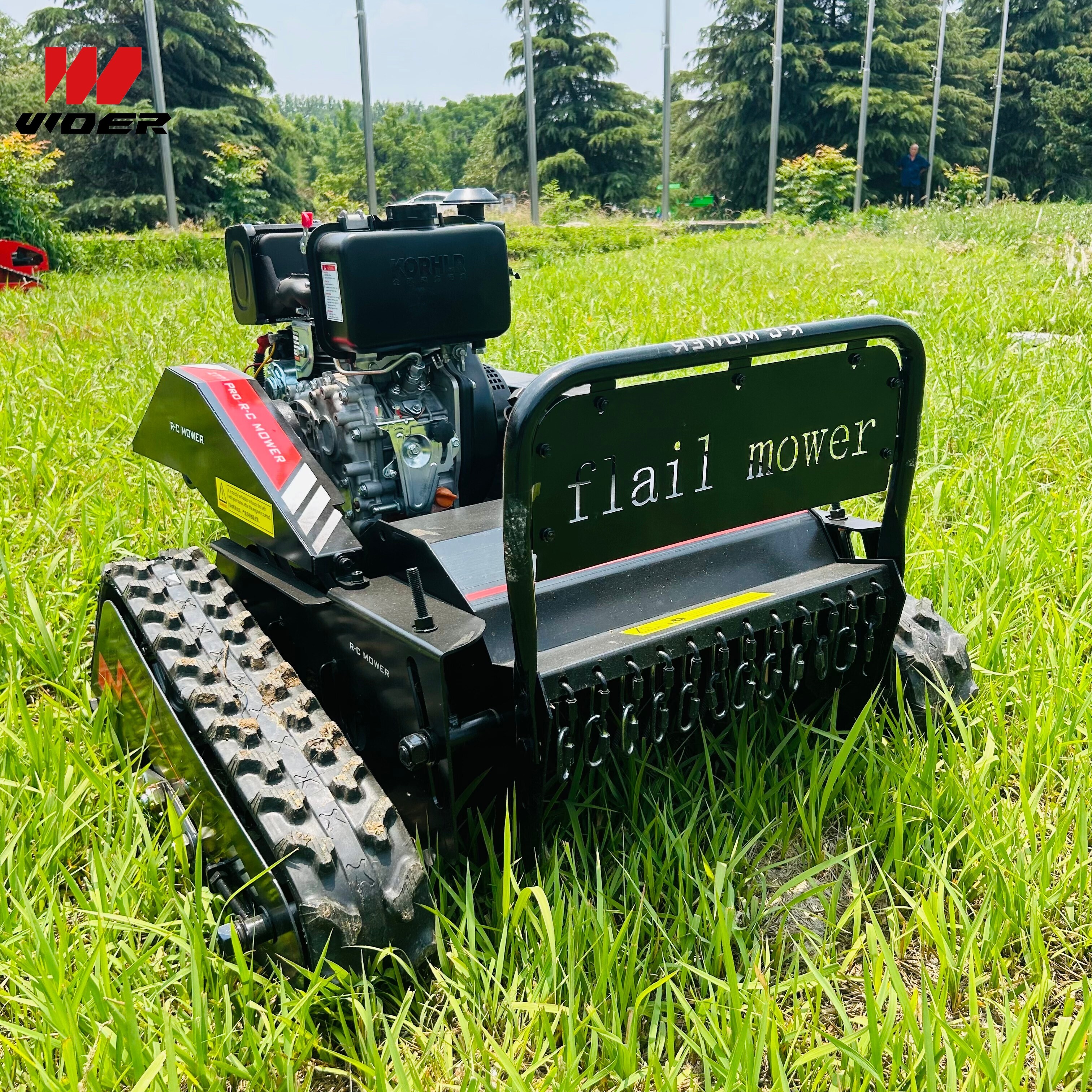
Selecting the right lawn mowers for commercial landscapes demands a balance of durability, cutting performance and operational control. This 2025 buying guide evaluates top lawn mower machines — from compact gasoline lawn mower models and the specialized Remote Control Lawn Mower With Gasoline Engine to advanced robot lawn mower and remote control lawn mower robot systems — and compares automatic lawn mower and remote lawn mower options for efficient lawn mower for grass cutting. We also analyze lawn mower blades, maintenance needs and control interfaces to help information researchers, operators, technical evaluators and procurement decision-makers choose the ideal solution. In commercial settings, choices hinge on uptime, ease of service and predictable operating costs, not just cutting radius. For information-gathering professionals and technical assessment teams, it is critical to consider powertrain type (gasoline vs. electric hybrid), blade configuration, and remote control or autonomy features that affect labor requirements and safety. Operators and contract executors are often concerned with intuitive control, quick diagnostics and parts availability, and finance approvers want lifecycle cost models rather than sticker prices alone. Across municipal, sports turf, and large campus applications, a comprehensive evaluation should include productivity metrics such as cutting width per hour, fuel or energy consumption per hectare, and time to service bearings or blades. This opening overview positions the subsequent modules: definition and market context, technical performance and comparison analysis, procurement and compliance considerations, and case-based recommendations with actionable FAQs. Expect pragmatic guidance on selecting a lawn mower for grass cutting that meets both operational reliability and commercial procurement constraints while integrating remote-control and robotic options where they deliver measurable value. This guide intentionally addresses the perspectives of operators, technical evaluators, business stakeholders and financial approvers with evidence-backed trade-offs and real-world maintenance scenarios to drive strategic purchasing decisions.
Definition & Market Overview
In this section we define core product categories and summarize the market dynamics influencing demand for lawn mowers and related systems. Definitions help clarify distinctions between equipment types that often get conflated: - Lawn mowers (general): machines designed for grass cutting and turf maintenance, available in walk-behind, ride-on and tow-behind formats. - Gasoline lawn mower: internal combustion engine-driven models valued for high torque and refueling speed, commonly used for sustained commercial tasks. - Robot lawn mower / automatic lawn mower: battery-driven, autonomous units that follow predefined boundaries or GPS tracks to maintain turf with minimal operator involvement. - Remote lawn mower and remote control lawn mower robot: operator-controlled machines that offer stand-off control for safety on slopes, hazardous sites, or confined spaces. - Remote Control Lawn Mower With Gasoline Engine: a hybrid category combining the power and runtime of gasoline engines with remote operation capability for difficult terrain or sites with intermittent access. Understanding these categories is essential for procurement teams to match performance to contractual obligations. Market drivers in 2025 include labor shortages in groundskeeping, higher emphasis on predictable operational budgets, rising adoption of telematics, and evolving emissions regulations that favor electric or low-emission gasoline powertrains in sensitive districts. For contractors and enterprise buyers, key market signals are increased availability of modular lawn mower blades and service kits, standardized telematics APIs for fleet management, and competitive financing offerings that treat maintenance contracts and blade replacement as part of total cost. From a supply perspective, manufacturers focusing on durability — reinforced decks, sealed gearboxes, commercial-grade engine platforms — are commanding share in large campus and sports turf markets. Meanwhile, innovation in autonomous navigation and obstacle detection has expanded the suitability of robot lawn mower units for medium-sized estates and specialty landscapes. For organizations where safety and slope management are critical, remote control lawn mower options provide a balance between human oversight and reduced operator exposure. This market overview equips technical evaluators and procurement teams to prioritize capabilities such as compatibility with existing fleet telematics, blade interchangeability, and the availability of local service networks when assessing candidate lawn mower machines.
Technical Performance and Comparison Analysis
Technical performance metrics often determine whether a particular model of lawn mower for grass cutting will meet commercial demands. Here we compare typical platforms—gasoline lawn mower, remote control gasoline models, robot lawn mower units, and automatic lawn mower systems—across parameters that matter most to operators and evaluators: cutting capacity (m2/hour), engine or battery runtime, blade type and replacement cadence, slope handling, safety systems, and remote or autonomous control capabilities. The following high-level comparison highlights trade-offs:
Beyond platform-type, technical evaluators should drill into component-level specs: blade geometry and material (hardened steel or modular multi-blade arrays), deck airflow for clipping dispersion, gearbox service intervals, and the presence of onboard diagnostics for engine or battery health. For remote or robotic systems, evaluate navigation reliability (RTK GPS vs. perimeter wire), obstacle detection (LiDAR, ultrasonic), and secure remote-control channels to prevent unauthorized access. Ask manufacturers for measured cutting productivity under local conditions—wet grass, tall growth, or dusty fields can radically change expected throughput. For financial approvers, include end-of-life data such as blade regrind cycles, expected gearbox overhaul kilometers, and trade-in values to model total cost. Operators will value features that reduce daily toil: quick-release blades, tool-free deck access, and standardized lubrication points. These technical and comparative considerations allow procurement and operations teams to align the choice of lawn mower machine to site-specific requirements and long-term maintenance budgets.
Procurement Guide, Standards & Cost Considerations
Procurement of commercial lawn mowers requires a multi-stakeholder checklist. Start with a requirements matrix that maps site conditions to mandatory capabilities (e.g., slope rating, width of cut, autonomy level, emissions class). Include the following practical evaluation steps to guide commercial decisions and financial approvals: 1) Define performance KPIs: cutting area per hour, required crew hours saved, fuel/energy per hectare, and expected downtime per quarter. 2) Require factory test reports or third-party validation for claimed runtime and cutting rates. 3) Ask for maintenance and parts lead times—lawn mower blades and deck spares are critical consumables. 4) Specify telematics and data access rights to integrate with your asset management system. In terms of standards and compliance, reference internationally recognized norms where applicable: ISO safety standards for machinery guarding, CE marking for European markets, EPA or CARB regulations for gasoline engines in North America, and local noise ordinances that may favor automatic lawn mower or electric alternatives. Cost & alternatives analysis should compare capital expenditure against operating costs: gasoline lawn mower machines often have lower initial purchase price per unit of power but higher fuel and maintenance spend, while robot lawn mower solutions can reduce recurring labor costs though they have higher setup and boundary management expenses. Consider hybrid procurement strategies: deploy robot lawn mower units for repetitive, accessible lawns and gasoline or remote control gasoline models for heavy-duty, irregular or hazardous areas. For contractual purchasers and approvers, craft SLAs that include blade sharpness service intervals, response times for critical repairs, and availability guarantees for replacement parts. Financing options—lease, fleet-as-a-service, or performance-based contracts—can smooth budget impacts and shift maintenance risk to suppliers. A detailed procurement guide aligned with standards and cost models enables business evaluators and contract teams to make defensible choices and secure long-term value from investments in lawn care machinery.
Case Studies, Trends & FAQ with Call to Action
Real-world cases clarify how different lawn mower types perform under contract conditions. For example, a university campus replaced large segments of manual mowing with a mix of robot lawn mower units for quad areas and remote control lawn mower robot systems for slope embankments; the result was a measurable drop in overtime hours and a 15% reduction in fuel costs within a year. Another municipal contractor adopted Remote Control Lawn Mower With Gasoline Engine models to manage roadside verges and steep slopes; safety incidents dropped while contract throughput increased. Emerging trends in 2025 include improved battery chemistry enabling longer-run automatic lawn mower cycles, telematics-driven predictive maintenance that optimizes blade replacement schedules, and modular blade systems that reduce downtime by allowing rapid field swaps. Common FAQs and misconceptions are worth addressing: Q: Are robot lawn mower solutions suitable for large commercial sites? A: They can be, provided navigation and battery infrastructure scale, and when paired with manual or remote gasoline machines for aggressive cuts. Q: Does a gasoline lawn mower always mean higher operating cost? A: Not necessarily—fuel efficiency, engine tuning and local fuel pricing affect lifecycle cost; factor in blade wear and servicing frequency. Q: How important are lawn mower blades? A: Extremely; blade design affects cut quality, turf health, and fuel consumption—budget for regular sharpening and replacement. For contract executives and financial approvers, consider pilot programs to collect local productivity data before wide rollouts. Why choose us? We combine deep machinery domain knowledge with procurement-focused evaluation templates, technical audits of lawn mower machines, and supplier negotiation support to help you secure reliable equipment and service terms. Contact us to request a customized evaluation checklist, on-site demo coordination, or a lifecycle cost model comparing gasoline lawn mower, remote and robotic solutions for your specific landscape portfolio. Reach out by email or phone to schedule a specialist consultation and pilot program planning session.
This stunning beach house property is a true oasis, nestled in a serene coastal community with direct access to the beach.
Contact
West Street, Melbourne Victoria 3000 Australia