


Navigation
Contact us
Phone
Message
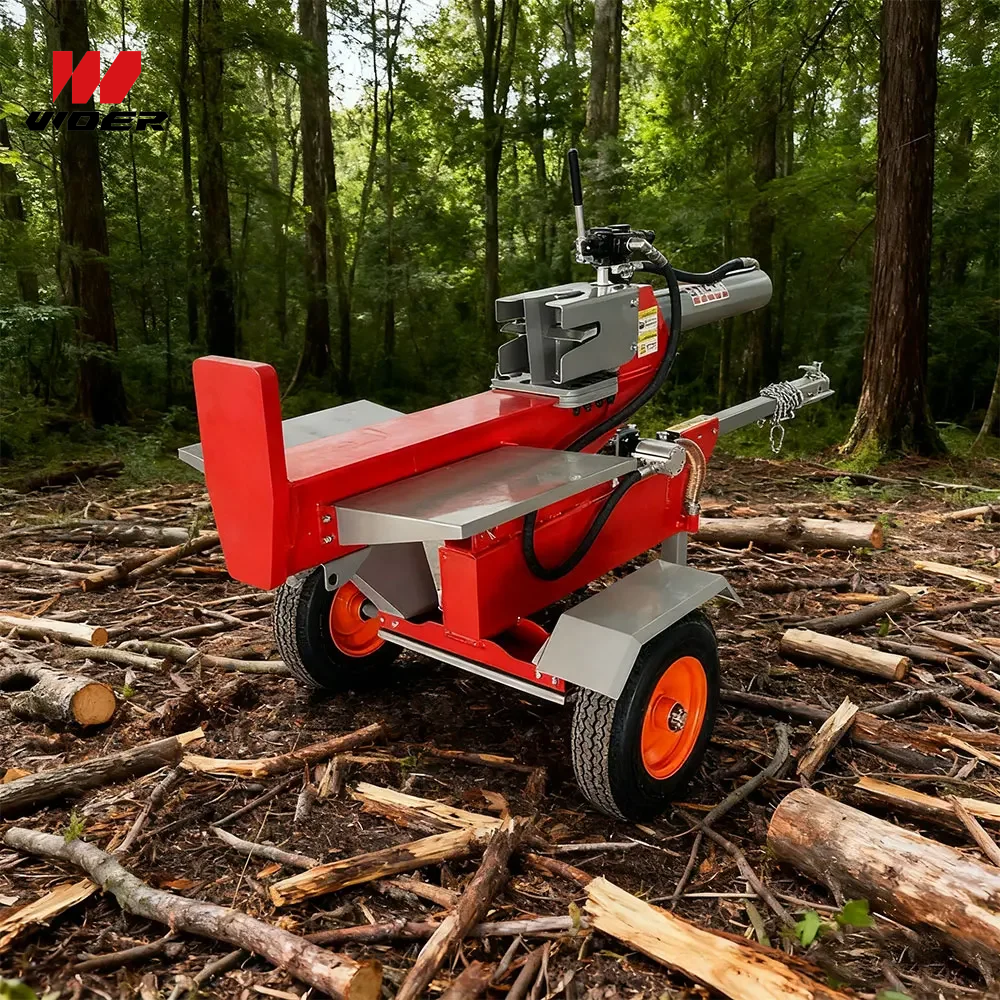
When selecting a heavy-duty log splitting machine, prioritize performance, durability, and efficiency. The top three features to demand in a wood log cutter splitter include high-powered kinetic wood splitter technology, robust wood processor log splitter construction, and reliable wood splitter hydraulic systems. These elements ensure optimal productivity for demanding applications.
Why Kinetic Energy Technology Is Revolutionizing Modern Wood Log Cutter Splitters
The evolution of the log splitting machine has reached a pivotal point with the integration of kinetic energy systems. Traditional hydraulic-only models have long dominated the market, but advancements in kinetic wood splitter design are now offering unmatched speed, efficiency, and mechanical responsiveness—especially under continuous, high-volume operations. For professionals engaged in commercial firewood production, forestry management, or industrial biomass processing, understanding this shift is critical when evaluating next-generation wood log cutter splitter options.
Kinetic wood splitters operate on a fundamentally different principle than conventional hydraulic units. Instead of relying solely on steady hydraulic pressure to push a log into a wedge, these machines store mechanical energy in a flywheel or accumulator system and release it in rapid bursts. This allows the splitting ram to accelerate at significantly higher velocities—often completing a full cycle in under two seconds. The result? A dramatic increase in cycles per minute (CPM), directly translating to more logs processed per hour without increasing engine size or fuel consumption.
One of the most compelling advantages of kinetic technology lies in its ability to handle variable-density hardwoods such as oak, hickory, and maple. Unlike softwoods that split predictably along grain lines, dense hardwoods often resist initial penetration due to interlocked fibers and internal stresses. A traditional hydraulic log splitter may stall or require multiple attempts, wasting time and straining components. In contrast, a kinetic wood splitter delivers an explosive impact force capable of overcoming resistance instantly, reducing operator downtime and minimizing wear on seals and cylinders.
Industry benchmarks show that modern kinetic systems can achieve peak splitting forces between 15 to 25 tons, with some advanced dual-mode models combining both kinetic impulse and sustained hydraulic pressure for maximum versatility. For example, certain hybrid wood processor log splitter configurations utilize kinetic force for initial crack initiation, then switch to hydraulic hold for complete separation—optimizing both speed and control. This level of engineering sophistication meets the demands of technical evaluators who require measurable performance data before procurement decisions.
From a maintenance perspective, kinetic wood splitters also offer long-term operational benefits. Because they reduce reliance on constant high-pressure hydraulics, there’s less thermal buildup in fluid systems, which extends hose life, pump longevity, and overall system reliability. Operators report fewer instances of seal blowouts and reduced oil degradation over extended shifts—key considerations for teams managing fleets of equipment across remote job sites.
For business managers assessing total cost of ownership (TCO), the ROI of investing in kinetic technology becomes evident within one to two heating seasons. While upfront costs may be 15–25% higher than standard hydraulic splitters, the throughput gains—often exceeding 30% in real-world conditions—quickly offset the price difference. Moreover, many manufacturers now back their kinetic systems with extended warranties, reflecting confidence in component durability and field performance.
As environmental regulations tighten and fuel efficiency standards rise, kinetic wood splitters also align well with sustainability goals. Their energy-efficient operation reduces idle time and lowers emissions per unit output, making them suitable for eco-conscious operations and regulated zones where noise and exhaust are monitored. With growing interest in renewable biomass fuels, having a fast, responsive, and scalable log splitting solution positions companies ahead of market trends.
In summary, kinetic wood splitter technology represents not just an incremental upgrade, but a strategic advancement in how wood processors approach productivity and resilience. Whether you're a hands-on operator seeking faster cycle times or a technical evaluator analyzing system dynamics, this feature should rank at the top of your checklist when sourcing a new wood log cutter splitter.
Engineering Durability: What Makes a True Heavy-Duty Wood Processor Log Splitter
Durability isn’t merely about using thicker steel—it’s about intelligent structural design, material selection, and real-world validation under punishing conditions. When specifying a wood processor log splitter for heavy-duty use, buyers must look beyond advertised tonnage ratings and examine the underlying engineering principles that determine long-term survivability. The distinction between a consumer-grade log splitter and a true industrial machine becomes apparent only after hundreds of hours of operation, where fatigue, vibration, and repeated shock loads take their toll.
A defining characteristic of premium wood processor log splitter builds is the use of high-tensile structural steel in critical load-bearing areas. Frame rails, base plates, and pivot points are typically constructed from ASTM A572 Grade 50 or equivalent steel, known for its excellent strength-to-weight ratio and resistance to cracking under cyclic stress. These materials are precision laser-cut and CNC-formed before being welded with automated MIG/TIG processes to ensure consistent joint integrity. Such manufacturing standards prevent warping and maintain alignment even after years of daily use.
Beyond raw materials, the geometry of the frame plays a crucial role in distributing forces evenly throughout the machine. Industrial-grade log splitting machines employ triangulated support structures and cross-bracing to minimize flex during splitting events. This rigidity prevents misalignment between the hydraulic cylinder and splitting wedge, which—if present—can lead to binding, uneven wear, and premature failure. Some top-tier models incorporate finite element analysis (FEA) simulations during development to identify stress concentrations and reinforce weak zones before prototyping begins.
Another often-overlooked aspect of durability is ground-level protection. Mobile wood log cutter splitters frequently operate on uneven terrain, exposing undercarriages to rocks, roots, and debris. High-end units integrate skid plates, recessed hydraulic lines, and shielded electrical conduits to protect vulnerable components. Axles and wheel assemblies are oversized and sealed against moisture and particulate ingress, ensuring mobility remains reliable even in muddy or snowy environments.
The splitting head itself must withstand extreme localized pressures. Premium wedges are forged from hardened alloy steel (typically HRC 50–55 hardness) and feature replaceable tips or modular designs that allow for quick servicing without replacing the entire assembly. Many manufacturers now offer reversible or multi-face wedges that extend service intervals by providing multiple usable edges before refurbishment is needed. This modularity reduces downtime and spare parts inventory for fleet operators.
Vibration damping is another hallmark of professional-grade construction. Continuous operation generates significant harmonic feedback, particularly in horizontal-vertical combo units. To mitigate this, advanced wood processor log splitters utilize rubber-isolated mounts for engines, pumps, and control panels. These isolators absorb shock and reduce operator fatigue while protecting sensitive electronics from premature failure.
Corrosion resistance is equally important, especially for outdoor storage or coastal operations. Powder-coated finishes with UV inhibitors outperform standard paint in resisting chipping and oxidation. Stainless steel fasteners are increasingly used in key locations to prevent galvanic corrosion, particularly where dissimilar metals interface. Sealed bearings and O-ring protected joints further enhance weatherproofing, contributing to longer service intervals and lower maintenance costs.
Real-world testing protocols also separate serious manufacturers from budget producers. Leading brands subject their log splitters to accelerated life-cycle tests simulating 5,000+ splitting cycles under maximum load, followed by teardown inspections to assess wear patterns. Field trials in logging camps, firewood farms, and municipal yards provide additional validation data that informs ongoing design improvements. This commitment to empirical verification gives technical evaluators confidence in product claims beyond marketing slogans.
Ultimately, the investment in a robustly built wood processor log splitter pays dividends through reduced unscheduled repairs, consistent uptime, and resale value retention. For procurement officers and operations managers, this translates into predictable operating budgets and minimized workflow disruptions. As such, structural integrity should never be compromised for short-term savings.
The Critical Role of Hydraulic System Design in Reliable Log Splitting Performance
No matter how powerful the engine or rugged the frame, a log splitting machine is only as effective as its hydraulic system. The wood splitter hydraulic circuit governs force delivery, response time, temperature management, and overall system longevity. In high-demand environments—such as commercial firewood production or forest residue processing—a poorly designed hydraulic setup can become the weakest link, leading to sluggish performance, frequent breakdowns, and costly downtime.
At the heart of every efficient wood splitter hydraulic system is a well-matched pump-motor combination. Gear pumps remain common in entry-level models, but axial piston pumps are preferred in heavy-duty applications due to their superior efficiency, pressure tolerance, and cooler operation under continuous duty. These pumps can sustain operating pressures of 3,000 psi or higher while maintaining flow consistency, ensuring full splitting force is available even after prolonged use.
Hydraulic fluid quality and cooling capacity are equally vital. Standard mineral oils degrade rapidly when exposed to sustained heat, forming sludge and varnish that clog valves and damage seals. Industrial-grade log splitters specify synthetic or anti-wear (AW) hydraulic fluids compatible with high-temperature environments. Additionally, integrated heat exchangers or aluminum radiator-style coolers help dissipate excess thermal energy, keeping fluid temperatures below 180°F—the threshold at which oxidation accelerates significantly.
Valve design determines responsiveness and control precision. Proportional control valves allow operators to modulate ram speed and direction smoothly, improving safety and accuracy during delicate splitting tasks. Pilot-operated check valves prevent uncontrolled descent or recoil, a critical safety feature when handling large, irregular logs. Load-sensing circuits further optimize efficiency by delivering pressure only when resistance is detected, conserving energy and reducing wear.
Hose and fitting specifications also reflect system maturity. Top-tier wood log cutter splitters use reinforced, abrasion-resistant hydraulic hoses rated for at least 6,000 psi burst pressure, with swivel fittings that eliminate twisting and kinking. All connections follow ISO 8434 or SAE J514 standards to ensure compatibility and leak-free performance. Color-coded routing aids simplify troubleshooting and reduce error during maintenance.
System diagnostics have become increasingly sophisticated. Advanced wood processor log splitters now include pressure gauges, flow meters, and digital monitors that alert operators to anomalies such as cavitation, low fluid levels, or abnormal temperature spikes. Some models even support Bluetooth-enabled telemetry for remote monitoring and predictive maintenance scheduling—an invaluable tool for large-scale operations managing multiple units.
Maintenance accessibility is another indicator of thoughtful hydraulic design. Service points should be grouped logically and labeled clearly, with spin-on filters and drain ports positioned for easy access. Reservoir caps equipped with breather filters prevent contamination during refills, while sight glasses enable quick fluid level checks without opening the system.
To illustrate the impact of hydraulic excellence, consider a comparative study conducted by a northern U.S. firewood cooperative. Over a six-month winter season, two otherwise identical log splitters were operated side-by-side—one with a basic open-center hydraulic system, the other with a closed-loop, load-sensing configuration. The advanced unit demonstrated 22% faster cycle times, 37% lower fluid temperature averages, and zero hydraulic failures compared to three major repairs on the standard model. This real-world evidence underscores the importance of prioritizing hydraulic sophistication in procurement decisions.
For technical personnel responsible for equipment lifecycle management, a robust wood splitter hydraulic system means fewer emergency calls, lower consumable costs, and greater adaptability across varying log sizes and species. It’s not just about brute force; it’s about intelligent power delivery engineered for endurance.
Comparative Overview: Feature Prioritization Across User Roles
This table highlights how different stakeholders prioritize features when evaluating a log splitting machine. While operators focus on immediate usability and kinetic responsiveness, technical teams emphasize verifiable system performance and diagnostic capabilities. Maintenance leads value durable construction that minimizes repair frequency, whereas business decision-makers weigh the combined impact of all three core attributes on long-term profitability.
Understanding these perspectives enables suppliers and specifiers to communicate value more effectively. A wood log cutter splitter isn't just a mechanical device—it's a productivity node within a larger operational ecosystem. Aligning feature strengths with user needs ensures higher satisfaction, better utilization rates, and stronger return on investment.
Future Trends and Final Recommendations
The future of log splitting technology is moving toward smarter, more adaptive systems. Emerging innovations include AI-assisted log detection, automatic diameter sensing, and cloud-connected performance tracking—all aimed at reducing human intervention and maximizing uptime. However, no amount of digital enhancement can compensate for deficiencies in core mechanical design. That’s why the foundational trio—kinetic wood splitter capability, robust wood processor log splitter build quality, and advanced wood splitter hydraulic architecture—remains non-negotiable for serious industrial applications.
As regulatory pressures grow around emissions, noise, and workplace safety, manufacturers are responding with cleaner engines, sound-dampened enclosures, and enhanced guarding systems. Electric and PTO-driven variants are gaining traction in urban and indoor settings where diesel exhaust is prohibited. Yet, regardless of power source, the principles of force delivery, structural resilience, and fluid dynamics remain central to effective log splitting machine performance.
In conclusion, when sourcing equipment for heavy-duty wood processing, do not settle for generic specifications or inflated tonnage claims. Demand transparency in engineering details, request third-party performance data, and insist on field-proven reliability. Whether you're upgrading a single-unit operation or outfitting a regional processing facility, choosing a machine built around these three essential features will deliver superior results, lower operating costs, and lasting operational advantage.
To explore fully engineered wood log cutter splitter solutions tailored to your production volume and material requirements, contact our application specialists today. We provide detailed technical consultations, site assessments, and customized configuration options to ensure your next log splitter investment performs at peak efficiency from day one. Learn more about our industrial-grade kinetic wood splitters and schedule a live demonstration.
This stunning beach house property is a true oasis, nestled in a serene coastal community with direct access to the beach.
Contact
West Street, Melbourne Victoria 3000 Australia