


Navigation
Contact us
Phone
Message
Introduction
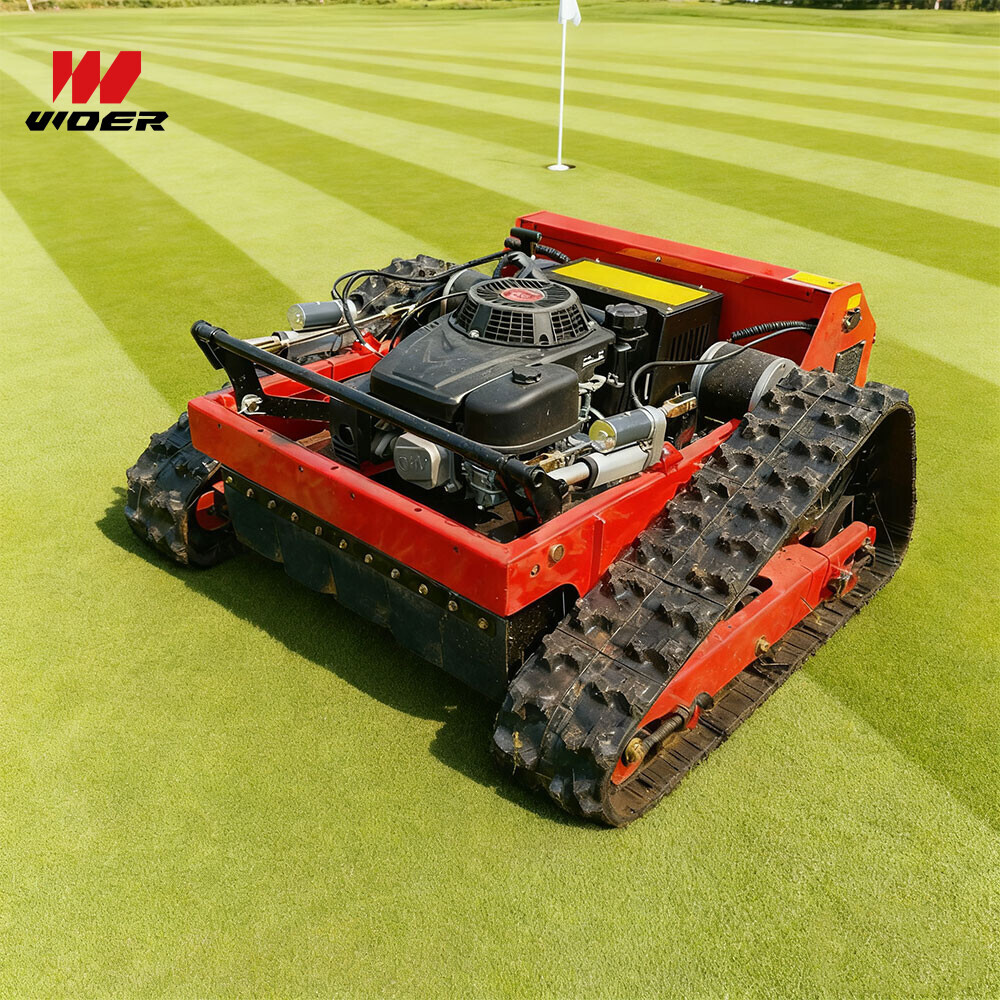
Choosing the right robot lawn mower for campus groundskeeping requires more than brand appeal—it's about measurable KPIs like cutting quality, uptime, safety, and total cost of ownership. This guide compares lawn mowers across performance indicators, weighing automatic lawn mower convenience against hybrid options such as a Remote Control Lawn Mower With Gasoline Engine, and evaluates remote lawn mower features, lawn mower blades durability, and serviceability of a lawn mower machine. Whether you're an operator, technical evaluator, or financial approver, these five KPIs will help you select a reliable remote control lawn mower robot or gasoline lawn mower suited for large lawn mower for grass cutting needs. Beyond that opening, this paragraph expands to ground the decision-making process for campus teams and procurement committees. Campus groundskeeping departments and contracted vendors must evaluate machines not only by immediate performance but by long-term reliability, parts availability, and integration with maintenance workflows. For information researchers and technical evaluators, robot lawn mower specifications such as cutting width, blade material, battery runtime versus gasoline engine output, and remote management protocols are key. For operators and contract executors, ergonomics, deck access for blade replacement, and safety interlocks determine daily efficiency. For finance and procurement teams, total cost of ownership, warranty terms, and predictable maintenance windows influence approvals. When considering a remote lawn mower or a remote control lawn mower robot, compare automatic lawn mower features such as geo-fencing, return-to-base behavior, and diagnostic telemetry. Hybrid options—like a Remote Control Lawn Mower With Gasoline Engine—offer extended operation in large open campuses where recharging time can be a bottleneck; however, gasoline lawn mower models introduce fuel logistics, emissions considerations, and different maintenance rhythms. Any robust evaluation must include lawn mower blades wear patterns, replacement intervals, and compatibility across deck platforms. This introduction establishes the cross-disciplinary lens—operations, technical, commercial, and financial—required to evaluate machines intended for large-scale campus groundskeeping.
Definition & Market Overview
Definition and market overview clarify what product classes buyers are comparing. A robot lawn mower in this context refers to autonomous or semi-autonomous units designed to cut turf with minimal human intervention. A remote lawn mower may be a fully remote-controlled machine or an autonomous unit augmented with remote diagnostics and control. A Remote Control Lawn Mower With Gasoline Engine denotes models combining a gasoline powertrain and remote-control capability—useful for extremely large campuses or terrains that challenge battery endurance. The global market for robotic and remote lawn mowers has matured rapidly as battery energy density, sensor suites, and fleet-management software improved. Within the wood processing and landscaping equipment supply chain, vendors that traditionally supplied lawn mower machine decks and blades to industrial users have adapted to provide hybrid solutions. Market dynamics for campus groundskeeping are driven by labor shortages, sustainability targets, and the need to lower operating costs through automation. Procurement officers increasingly compare the merits of automatic lawn mower fleets against retrofitted gasoline lawn mower units that can be remote controlled for difficult slopes or isolated zones. Key buyer segments—public universities, private campuses, corporate estates, and large park systems—prioritize predictable uptime, minimum supervision labor, and compliance with local noise and emission regulations. For the wood-processing-equipment-related stakeholders and contract executors, the supply chain presents options: standardized lawn mower blades with easier resharpening cycles, modular decks for rapid swap-outs, and service contracts that include spare parts for both electric and gasoline lawn mower platforms. Evaluators should also consider supplier networks: proximity of certified technicians, availability of replacement lawn mower blades, and warranty terms affecting lifecycle costs for a lawn mower machine deployed on a campus.
Technical Performance: Five KPIs and Comparative Table
This module dives into the five KPIs you must measure when evaluating robotic and remote lawn mower options for campus groundskeeping. The KPIs we recommend tracking are: Cutting Quality, Uptime & Reliability, Safety & Compliance, Maintainability & Serviceability, and Total Cost of Ownership (TCO). Each KPI ties directly to operational outcomes. Cutting Quality assesses the uniformity of the cut, stripe visibility (if required), and ability to handle variable turf heights. Uptime & Reliability covers mean time between failures, battery versus fuel runtime, and ability to finish assigned swaths without human intervention. Safety & Compliance includes blade containment, emergency stop responsiveness, geofencing accuracy, and conformance with local standards. Maintainability & Serviceability measures how quickly a technician can replace lawn mower blades, change oil or filters in gasoline models, or swap battery packs. TCO aggregates capital price, predictable maintenance, consumables like blades and fuel, and end-of-life disposal or trade-in value. Below is a compact comparison table to visualize these KPIs across three archetypal product classes: Autonomous Electric Robot, Remote Control Gasoline Hybrid, and Manual Remote-Controlled Electric Mower. The table is illustrative for evaluators to adapt with supplier-specific numbers.
When you run a technical evaluation, quantify each KPI with measurable metrics: clipping height variance in millimeters, mean time to repair in hours, battery cycle count to 80% capacity, and blade wear per hectare mowed. Use objective tests under real campus conditions (slope, obstacles, irrigation times) and log data from automatic mower telematics or remote diagnostics where available. Include lawn mower blades lifespan and lifecycle maintenance checklists as part of the technical spec sheet.Procurement Guide, Cost & Alternatives
Procurement teams and financial approvers need a structured approach. Begin with a requirements matrix that maps campus zones (formal lawns, athletic fields, slopes, narrow corridors) to equipment capabilities. For each zone, specify tolerances for cutting quality, maximum allowable noise, and access constraints. Include mandatory KPIs from the earlier table and weight them according to campus priorities—safety and uptime may weigh heavier than stripe aesthetics for many institutions. When issuing an RFP, require vendors to submit measured KPI data from a comparable deployment and a service-level agreement (SLA) that stipulates response times, spare parts availability for lawn mower blades and key components, and scheduled preventative maintenance plans. Cost and alternatives analysis must include direct and indirect costs. Direct costs: capital expenditure for units, consumables such as lawn mower blades, batteries, fuel, and scheduled maintenance. Indirect costs: operator training, downtime during campus events, noise mitigation measures, and disposal or recycling of batteries and engine fluids. Consider alternatives: a mixed-fleet strategy combining autonomous electric robots for routine zones, remote control gasoline units for expansive or rugged parcels, and manual remote-control electric mowers for detailed landscaping tasks. This combination often minimizes TCO while preserving cutting quality and operational resilience. For financial approvers, model three-year and five-year TCO scenarios. Sensitivity analyses should include fuel price volatility, battery replacement timelines, and warranty coverage variations. Negotiate contract terms that include spare lawn mower blades as part of consumables packages and include defined KPIs with financial penalties or service credits for missed SLA targets. Finally, require vendors to demonstrate compliance with relevant standards—noise regulations, fuel emissions, and safety certifications—so compliance costs are predictable.
Case Studies, FAQ & Why Choose Us / Contact Us
Case studies and FAQs help bridge the gap between spec sheets and operational reality. Consider a mid-size university that deployed a fleet of autonomous electric robot mowers for quad areas and a small number of remote control gasoline hybrids for adjacent athletic fields. The university tracked the five KPIs over a 12-month pilot: cutting quality improved in managed lawns, uptime increased due to predictable charging cycles, and TCO was favorable after accounting for labor redeployment from mowing to overseeding and repairs. Another municipal campus combined manual remote-control electric units for detailed landscaping tasks, thereby reducing gasoline consumption by 40% while maintaining turf aesthetics. These examples highlight the trade-offs between automatic convenience and hybrid flexibility. Common FAQs from evaluators include: How often should lawn mower blades be replaced? Answer: blade replacement depends on substrate and usage but typically occurs every 50–200 hours; track wear visually and with cutting performance metrics. Can a remote lawn mower operate in wet conditions? Most models have operational limits; verify IP ratings and manufacturer guidance. What certifications should we require? Look for CE (where applicable), emissions compliance for gasoline engines, and supplier adherence to recognized safety standards for autonomous machinery. Why choose us? We offer a consultative evaluation that aligns technical KPIs with procurement and financial realities, bridging the needs of operators, technical evaluators, finance approvers, and contract executors. Our approach emphasizes measurable outcomes: we help you define KPI thresholds, test candidate units under campus-specific conditions, and structure contracts that secure parts, including lawn mower blades and service response times. Contact us to schedule a KPI-driven pilot, request a customized procurement checklist, or obtain benchmarking data comparing automatic lawn mower models, remote control lawn mower robots, and Remote Control Lawn Mower With Gasoline Engine options for campus environments. We provide hands-on demonstrations, lifecycle cost analysis, and supplier negotiation support to ensure your groundskeeping program meets aesthetic, safety, and budgetary goals.
This stunning beach house property is a true oasis, nestled in a serene coastal community with direct access to the beach.
Contact
West Street, Melbourne Victoria 3000 Australia