


Navigation
Contact us
Phone
Message
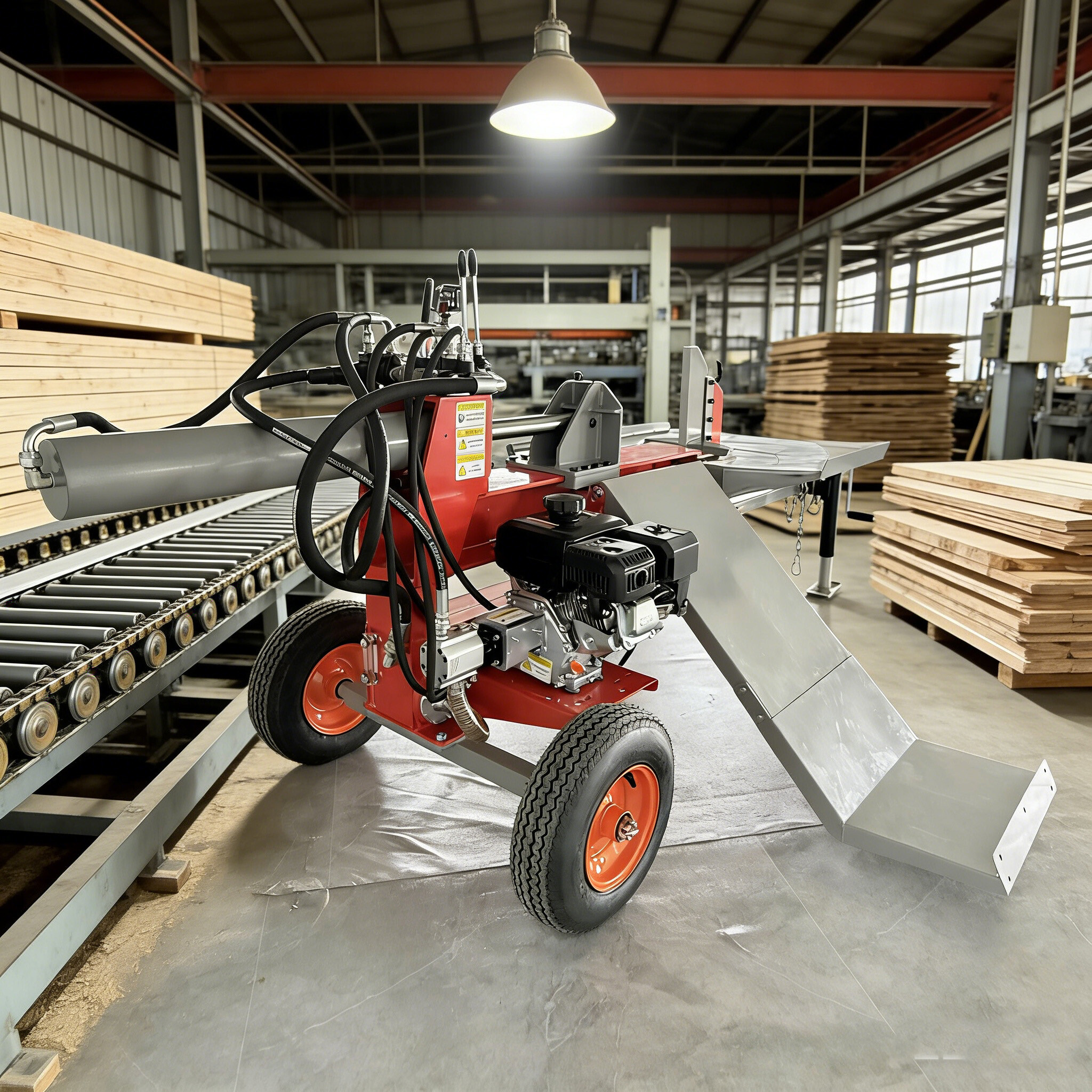
Log splitters operate under high mechanical force and hydraulic pressure, making safety protection systems a core element of machine design. Advanced safety devices and control technologies not only protect operators but also improve machine reliability, regulatory compliance, and operational efficiency.
This section outlines the main safety protection technologies used in modern log splitters and their practical value in professional applications.
1. Mechanical Safety Protection Systems
Key Components:
Fixed and adjustable protective guards
Reinforced blade and wedge covers
Anti-pinch structural design
Technical Value:
Mechanical protection prevents direct contact with moving or high-force components and reduces the risk of injury caused by wood kickback or debris.
2. Dual-Action and Interlock Control Systems
System Description:
Dual-action or interlock controls require coordinated operator input to activate the splitting cycle.
Safety Advantages:
Prevents unintended or accidental activation
Forces correct operating posture
Enhances control accuracy
These systems are commonly required for industrial and commercial-grade log splitters.
3. Hydraulic Safety and Pressure Control Technology
Core Safety Functions:
Pressure relief valves to prevent overload
Flow control valves for stable ram movement
Cylinder cushioning to reduce impact forces
Proper hydraulic protection safeguards both the operator and critical system components.
4. Emergency Shutdown and Fail-Safe Design
Safety Features:
Emergency stop buttons positioned within easy reach
Automatic shutdown in case of abnormal pressure or electrical faults
Fail-safe logic ensuring the machine stops during power loss
Fail-safe systems are essential for minimizing damage during unexpected events.
5. Sensor-Based Monitoring and Protection
Advanced Technologies:
Position sensors to monitor ram movement
Load sensors to detect abnormal resistance
Temperature sensors for hydraulic oil monitoring
Sensor-based protection enables real-time detection of unsafe conditions and automatic corrective actions.
6. Electrical Safety and Control System Protection
Protective Measures:
Overcurrent and overload protection
Waterproof and dustproof control enclosures
Shielded wiring and grounding systems
These features ensure stable operation in harsh working environments.
7. Operator Safety Interface and Warning Systems
Interface Enhancements:
Visual warning indicators and alarms
Clear labeling and safety signage
User-friendly control layout
Well-designed interfaces reduce operational errors and improve response time.
8. Compliance with International Safety Standards
Modern log splitters are designed to meet global safety requirements such as CE, ISO, and OSHA standards.
Compliance Benefits:
Easier market access
Reduced liability risk
Increased customer trust
Safety-certified equipment is especially critical for export markets and professional users.
Conclusion
Safety protection devices and technologies form the foundation of reliable and compliant log splitter operation. Through the integration of mechanical safeguards, hydraulic protection, intelligent monitoring, and fail-safe control systems, modern log splitters deliver safer working conditions and improved operational stability. For manufacturers, distributors, and end users, investing in advanced safety technology is essential for long-term performance and regulatory compliance
This stunning beach house property is a true oasis, nestled in a serene coastal community with direct access to the beach.
Contact
West Street, Melbourne Victoria 3000 Australia