


Navigation
Contact us
Phone
Message
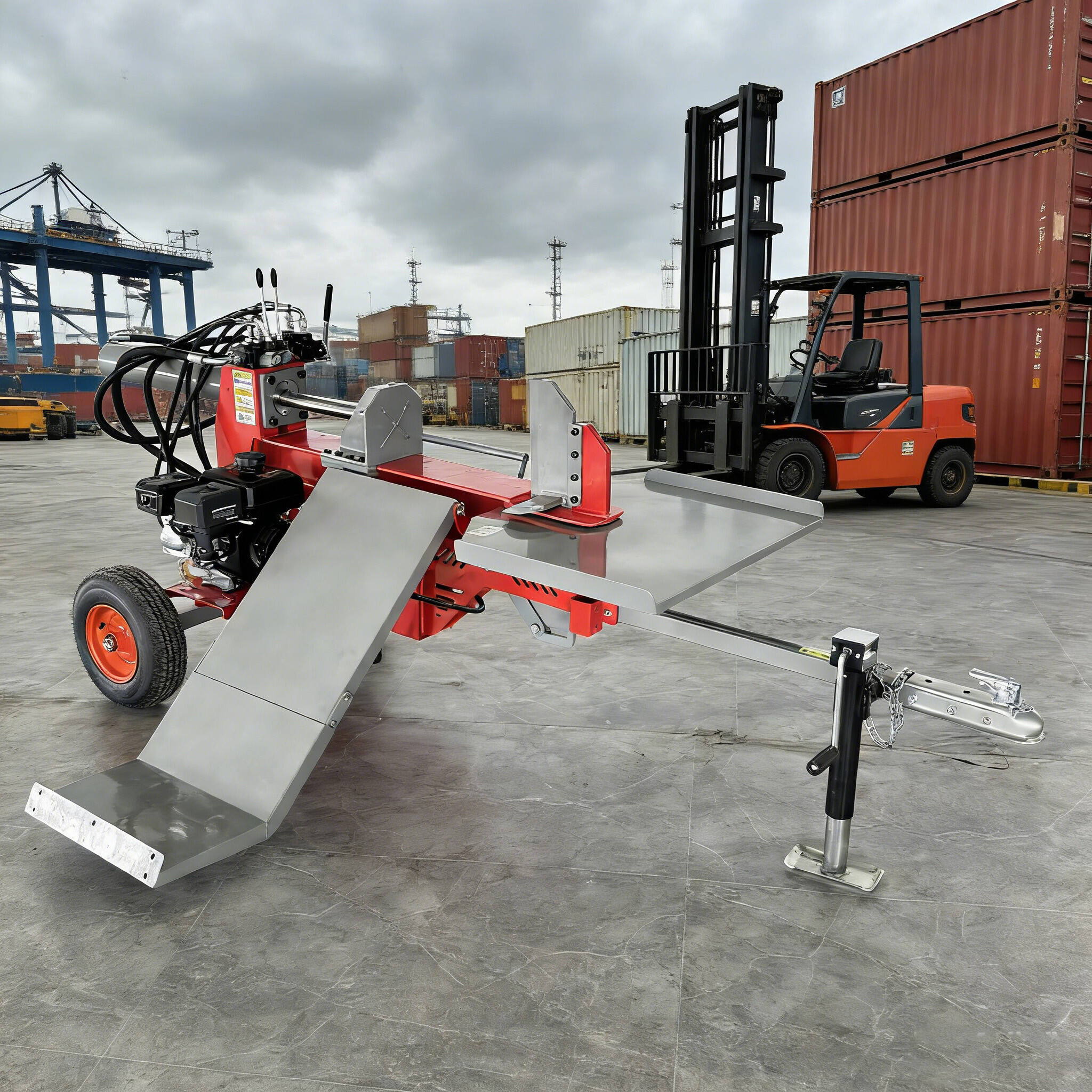
The log splitter industry is evolving rapidly as digital and automation technologies become integrated with traditional wood processing equipment. Smart features and connected systems are transforming how log splitters operate, improving efficiency, safety, and user experience. This article explores the key trends driving intelligent development in log splitters and what these innovations mean for manufacturers, distributors, and professional users.
1. Integration of Sensors and Intelligent Feedback
Trend Overview:
Embedded sensors monitor critical operating parameters such as hydraulic pressure, oil temperature, cycle time, and load variations.
Benefits:
Real-time performance tracking
Early fault detection and alerts
Adaptive splitting based on log characteristics
Smart feedback systems improve uptime and optimize splitting performance.
2. IoT Connectivity and Remote Monitoring
Trend Overview:
Internet of Things (IoT) enables log splitters to connect to cloud platforms or local networks for data sharing.
Features Include:
Remote status dashboards
Alerts for maintenance and service needs
Usage tracking for performance analytics
Connected log splitters allow managers to monitor multiple machines and plan maintenance proactively.
3. Predictive Maintenance and Data Analytics
Trend Overview:
By leveraging historical performance data and machine learning, log splitters can predict when components will need service or replacement.
Benefits:
Reduced unplanned downtime
Optimized service intervals
Extended equipment lifespan
Predictive models help users avoid breakdowns and lower operating costs over time.
4. Automation and Adaptive Control Systems
Trend Overview:
Intelligent controllers adjust splitting force, speed, and cycle timing based on log size, species, and moisture content.
Functional Improvements:
Automated settings for different wood types
Adaptive pressure regulation
Self-adjusting operational sequences
Adaptive control reduces manual settings and enhances productivity.
5. Human-Machine Interfaces (HMI) and User Experience
Trend Overview:
Advanced HMI panels, touchscreens, and app-based interfaces make log splitter operation more intuitive.
User Benefits:
Clear status displays
Guided setup and diagnostics
Configurable user profiles and presets
Improved interface design shortens learning curves and reduces operator errors.
6. Safety Enhancements Through Smart Features
Trend Overview:
Intelligent safety systems monitor operator actions and environmental conditions.
Examples:
Proximity sensors that halt splitting if hands are too close
Automatic emergency stops with real-time diagnostics
Load imbalance alerts
Smart safety systems reduce risk and help meet regulatory compliance standards.
7. Energy Efficiency and Eco-Innovation
Trend Overview:
Intelligent optimization focuses on lowering energy consumption and minimizing waste.
Innovative Features:
Smart hydraulic flow control
Idle mode shutoff
Energy recovery techniques
Energy-aware systems support sustainable operation and cost savings.
8. Future Outlook: AI and Machine Learning
Trend Overview:
Artificial intelligence (AI) models could learn from usage patterns and optimize splitting strategies.
Potential Capabilities:
Predictive splitting force adjustment
Automated troubleshooting
Voice or gesture operation
AI-assisted log splitters may redefine efficiency and automation in wood processing.
Conclusion
The intelligent evolution of log splitters is reshaping the wood processing landscape. From IoT connectivity and predictive maintenance to adaptive controls and smart safety systems, these technologies offer substantial improvements in productivity, reliability, and user experience. For manufacturers and distributors, embracing smart innovations ensures competitive advantage and future-proof investment in a rapidly modernizing industry.
This stunning beach house property is a true oasis, nestled in a serene coastal community with direct access to the beach.
Contact
West Street, Melbourne Victoria 3000 Australia