


Navigation
Contact us
Phone
Message
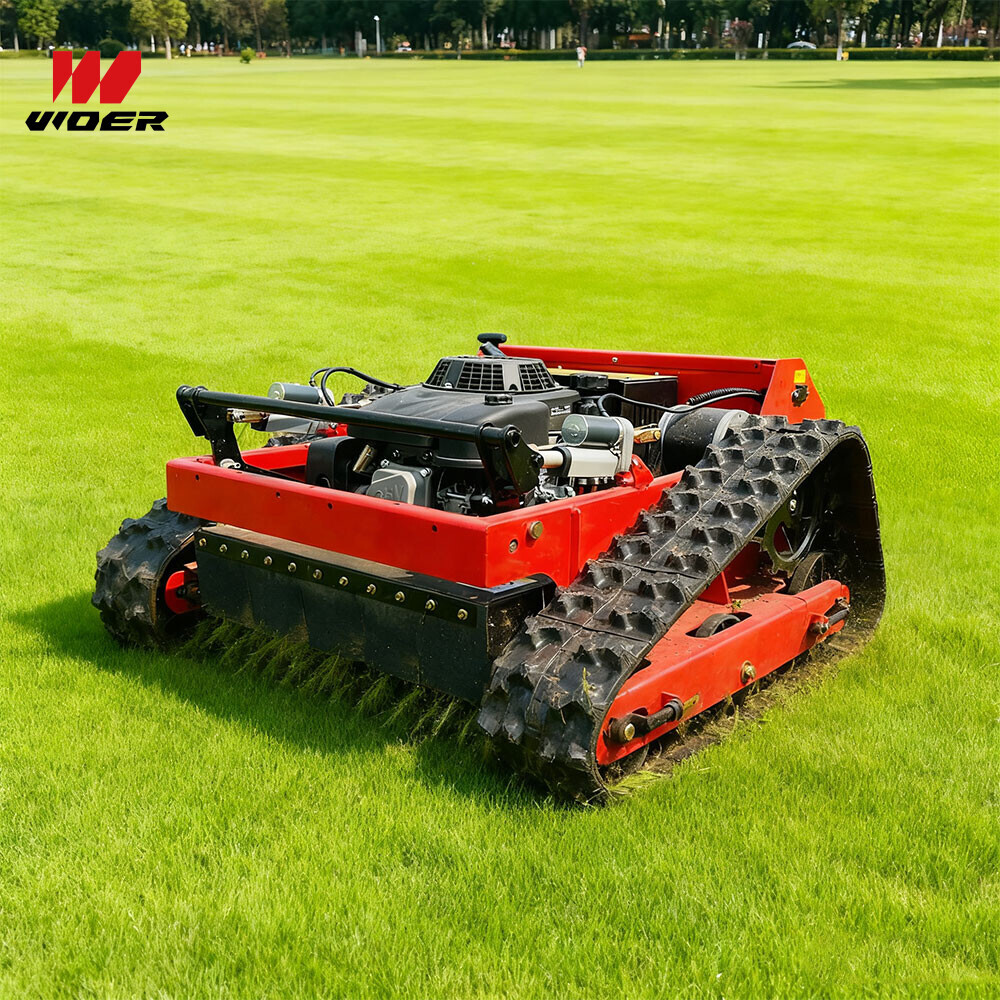
For large-scale sites such as timber yards and processing plants, selecting the right lawn mowers is a decision that affects uptime, fuel logistics, and cut quality. This article compares electric alternatives with the gasoline lawn mower and explains why a Remote Control Lawn Mower With Gasoline Engine — or other robust lawn mower machine — often outperforms robot lawn mower and automatic lawn mower options for demanding lawn mower for grass cutting tasks. We evaluate remote lawn mower and remote control lawn mower robot use cases, maintenance of lawn mower blades, operational costs, and operational risk to help operators, technical and business decision-makers choose confidently. In this opening section we combine definition and overview to clarify key terms and scope for timber-processing operations where landscape maintenance is not purely aesthetic but directly tied to safety, equipment access and regulatory compliance. Definitions matter: when professionals say "lawn mowers" in an industrial timber yard they often mean heavy-duty gasoline lawn mower units or remote-controlled gasoline-engined machines rather than domestic electric mowers or small robot lawn mower units. A remote lawn mower here refers to any unit designed to be operated from a distance, whether via tether, radio remote or an onboard automation system — and a remote control lawn mower robot indicates higher autonomy with path planning and collision avoidance. An automatic lawn mower can be either a low-power robot for residential turf or a higher-performance machine for industrial grounds; however, power source is the defining axis for our comparison. Gasoline lawn mower units bring high torque, extended runtime with quick refuels, and robust deck designs that tolerate irregular surfaces, woody debris and heavy-duty lawn mower blades wear — all relevant to timber yards and processing plants. Conversely, battery electric lawn mowers and robot lawn mower devices offer lower emissions, quieter operation and simpler maintenance in low-duty or sensitive environments. This article will frame those trade-offs in operational and financial terms relevant to information gatherers, operators, technical evaluators, procurement and finance approvers, and contract executors in the wood-processing sector. We will also outline procurement criteria, maintenance realities for lawn mower blades and machines, and recommendations for staged adoption where hybrid solutions make sense.
Market Overview and Industry Context
Understanding the market context for lawn mowers in the timber processing industry highlights why gasoline-powered options continue to have strong traction on large-scale sites. Timber yards, sawmills and processing plants present unique ground conditions — uneven gravel pads, remnant branches, sawdust accumulations and long perimeters — which place atypical stresses on a lawn mower machine. Market trends show growth in adoption of automatic lawn mower and robot lawn mower technologies for residential and low-duty commercial segments, but procurement patterns for industrial land managers still favor gasoline lawn mower models or remote control lawn mower with gasoline engine units due to durability and predictable operating cycles. Stakeholders such as corporate decision-makers, technical evaluators and contract executors must weigh total cost of ownership, availability of spare parts, and workforce safety. Key market drivers include regulatory pressure for reduced idle emissions in urban-adjacent yards, availability of skilled maintenance staff for combustion engines, and logistics for on-site fuel management. The presence of heavy equipment and fuel infrastructure on-site reduces the comparative disadvantage of gasoline systems for many timber-processing operators. Conversely, in facilities prioritizing sustainability, hybrid fleets combining battery-powered automatic lawn mower units for office lawns and gasoline remote lawn mowers for perimeter and rough-cut areas are emerging as pragmatic strategies. For procurement teams, the market also offers specialized remote control lawn mower robot platforms engineered for slope cutting and woody debris management; these are priced at a premium but can reduce human exposure on hazardous slopes. Overall, the market is bifurcated: robots and electric mowers excel in low-disturbance, low-duty use; gasoline lawn mower machines remain dominant where uptime, cut quality and adaptability to variable debris loads drive value. This section aims to equip information research personnel and finance approvers with the industry context needed to anticipate CAPEX and OPEX trade-offs and to guide realistic vendor shortlists for tender processes.
Application Scenarios and Technical Performance Comparison
Practical application scenarios across timber yards reveal why remote control lawn mower units with gasoline engines or conventional gasoline lawn mower models outperform many electric and automatic lawn mower alternatives in high-demand contexts. Consider operational profiles: long continuous shifts covering several hectares, frequent encounters with small branches and uneven ground, and the need for rapid redeployment between work zones. A gasoline lawn mower provides consistent torque at varying RPMs, allowing lawn mower blades to maintain momentum through thicker vegetation and surface debris. Remote lawn mower solutions with gasoline engines extend that capability by removing an operator from hazardous terrain while retaining the power and refuel flexibility of combustion engines. Technical performance metrics that matter most to operators and technical evaluators include: 1) power-to-weight ratio and torque curve for consistent cut quality; 2) deck durability and blade retention systems to resist damage from stones and wood chips; 3) run-time per refuel and rapid refuel capability to minimize downtime; 4) serviceability for in-field blade sharpening and replacement; and 5) control architecture for safe remote operation and integration with site telematics. Robot lawn mower and automatic lawn mower models deliver excellent outcomes on flat, obstacle-free lawns, using multiple small blades and frequent operation to maintain surface uniformity. Yet in timber yards, their small cutting decks, limited debris handling and battery runtime constraints often necessitate a fleet of charging stations or repeated manual interventions, eroding the labor savings they promise. Remote control lawn mower robot models that integrate gasoline engines close the gap by offering robust deck designs and operator distancing but at higher complexity and purchase cost. From an operator safety perspective, remote lawn mowers reduce direct human presence near heavy equipment and working vehicles, a non-trivial advantage for contract execution teams and safety officers. Finally, maintenance of lawn mower blades in industrial settings emphasizes blade geometry, hardness and replaceability: blades used for lawn mower for grass cutting in timber facilities often require thicker, heat-treated steel and reinforced mounting to cope with woody impacts, features more readily available in gasoline-grade commercial mower product lines than in many off-the-shelf robot lawn mower models.
Procurement Guide, Cost Considerations, Standards and Call to Action
For procurement teams, finance approvers and enterprise decision-makers in wood-processing equipment environments, a pragmatic selection guide balances initial investment, recurring operating costs and compliance with industry standards. Start with a clear statement of use cases: perimeter mowing, slope control, rough-cut zones near log stacks, and high-traffic safety corridors. Request technical specifications that include deck material, blade type and hardness, torque delivery curves, fuel tank capacity and refuel cycle time, as well as remote-control latency and fail-safe behaviors. Consider the following purchasing checklist: 1) Operational match — Does the machine cover required hectares per shift? 2) Maintainability — Are spare lawn mower blades and service kits locally stocked? 3) Safety & compliance — Can the unit meet local emissions regulations and site-specific noise limits? 4) Integration — Is telematics and remote operation compatible with site control systems? 5) TCO modeling — Account for fuel logistics, technician labor for blade sharpening, and expected downtime. Cost & Alternatives: compare lifecycle costs between gasoline lawn mower units and electric fleets. Electric options lower fuel expense and emissions but increase charging infrastructure costs and often require battery replacements over 5–8 years. Gasoline systems have predictable refueling cycles and simpler field repairs; their fuel logistics can be integrated with existing diesel/petrol handling at timber sites. Standards & Certification: insist on CE/ISO/Safety certifications relevant to your jurisdiction, and verify remote operation protocols meet local radio and EMC rules. Case Studies: several timber yards have successfully deployed mixed fleets where remote control lawn mower with gasoline engine machines handle rough zones while compact automatic lawn mower units maintain office lawns; this hybrid model reduced total labor hours while maintaining cut quality and safety compliance. FAQ & Misconceptions: does a robot lawn mower always reduce cost? Not necessarily — in heavy-duty environments increased manual interventions and rework can negate savings. Is gasoline obsolete? Not for all use cases; refuelability and torque profile keep gasoline lawn mower machines relevant. Why choose us / Contact us: our team specializes in advising timber-processing operations on fit-for-purpose lawn mower machine selection, blade lifecycle programs and procurement optimization. Contact us to discuss site surveys, customized TCO models, and pilot deployments that validate a mixed-fleet approach before wide rollout. Our recommendations are tailored for information researchers, operators, technical evaluators, procurement officers, finance approvers and contract executors looking to combine safety, uptime and cost efficiency when selecting lawn mowers for demanding industrial uses.
This stunning beach house property is a true oasis, nestled in a serene coastal community with direct access to the beach.
Contact
West Street, Melbourne Victoria 3000 Australia