


Navigation
Contact us
Phone
Message
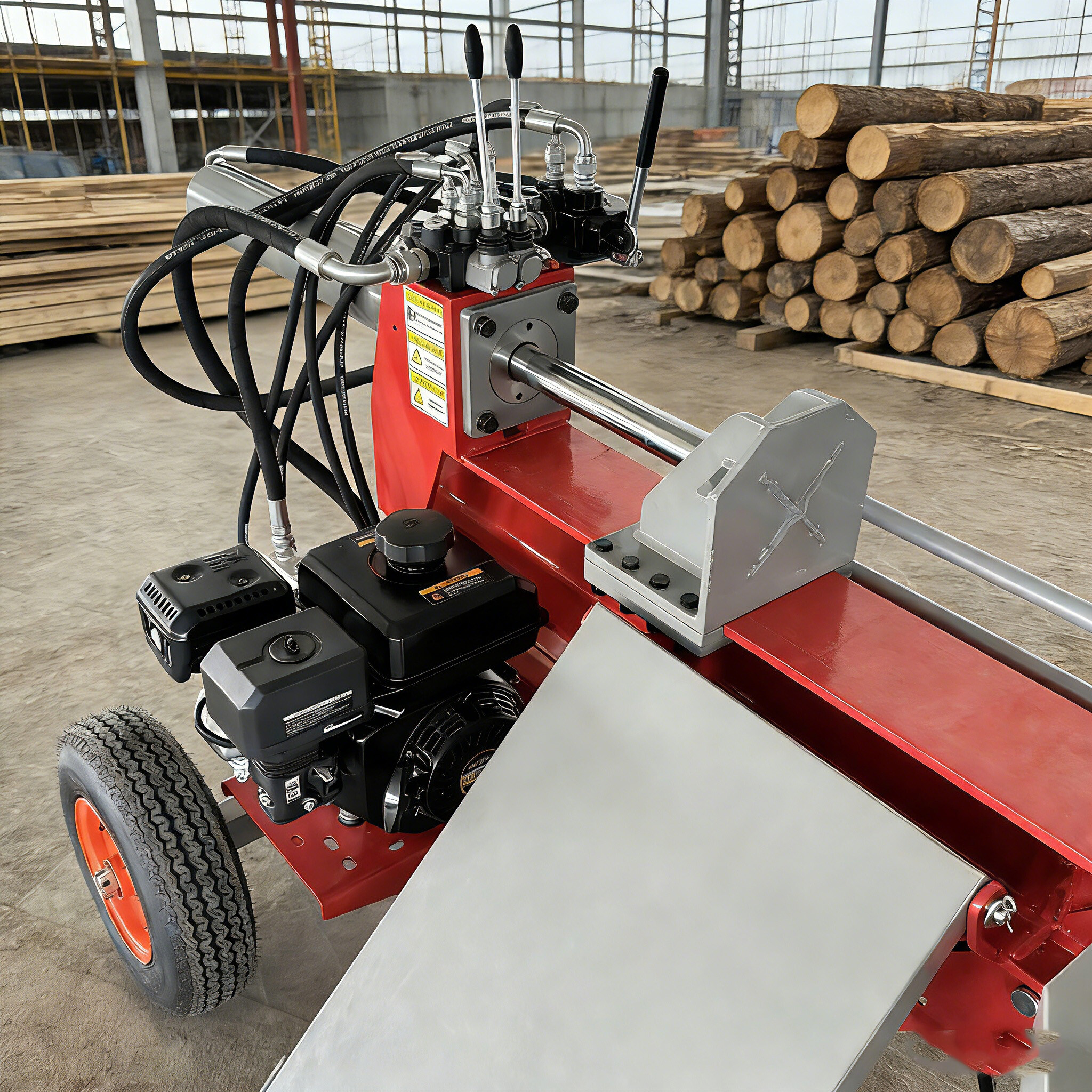
The log splitter industry has undergone significant transformation driven by advances in mechanical design, hydraulic engineering, automation, and digital control technologies. Modern log splitters are no longer defined solely by splitting force; instead, innovation now focuses on efficiency, safety, intelligence, and adaptability to diverse operating environments.
This article explores key design innovations and technological breakthroughs shaping the next generation of log splitters.
1. Advanced Structural Design and Frame Engineering
Design Innovations:
Reinforced high-strength steel frames
Optimized load distribution to reduce stress concentration
Modular frame construction for easier maintenance and upgrades
Technical Impact:
Improved structural design enhances durability, minimizes vibration, and extends service life under continuous heavy-duty operation.
2. Hydraulic System Optimization and Power Efficiency
Technological Breakthroughs:
High-efficiency hydraulic pumps with reduced energy loss
Load-sensing and pressure-adaptive hydraulic circuits
Faster cycle times with smoother ram movement
Benefits:
These innovations improve splitting efficiency while lowering energy consumption and hydraulic heat generation.
3. Intelligent Control Systems and Automation
Design Evolution:
PLC-based control architectures
Programmable splitting parameters
Automated return and sequencing functions
Operational Advantages:
Intelligent control systems reduce operator dependency, improve consistency, and enable adaptation to different wood types and sizes.
4. Smart Sensing and Real-Time Monitoring
Key Technologies:
Pressure and load sensors for adaptive force control
Position sensors for precise ram movement
Temperature sensors for hydraulic oil monitoring
Value Creation:
Real-time monitoring enhances safety, prevents overload conditions, and supports predictive maintenance strategies.
5. Ergonomic and User-Centered Design Improvements
Design Enhancements:
Optimized control layout for intuitive operation
Adjustable working height and orientation
Reduced operator fatigue through assisted handling features
User Benefits:
Ergonomic design improves productivity, safety, and long-term operator comfort.
6. Safety-Oriented Design Innovations
Technological Advances:
Two-hand control and interlock systems
Automatic emergency shutdown logic
Sensor-based proximity protection
Result:
Safety-driven design innovations significantly reduce accident risks while meeting international safety standards.
7. Integration with Digital and IoT Technologies
Breakthrough Trends:
IoT-enabled performance tracking
Remote diagnostics and maintenance alerts
Data-driven optimization of operating parameters
Strategic Value:
Digital connectivity enables smarter asset management and supports large-scale or multi-site operations.
8. Sustainable and Eco-Friendly Design Innovations
Sustainability-Focused Design:
Energy-efficient hydraulic components
Electric and hybrid power options
Compatibility with biodegradable hydraulic oils
Environmental Impact:
These innovations reduce emissions, noise, and environmental footprint while supporting regulatory compliance.
Future Outlook
Design innovation in log splitters continues to move toward greater intelligence, automation, and sustainability. Future breakthroughs are expected in AI-assisted control, fully automated production integration, and advanced materials that further improve performance and efficiency.
Conclusion
Design innovation and technological breakthroughs are redefining the capabilities of modern log splitters. Through advancements in structural engineering, hydraulic efficiency, intelligent control, safety systems, and digital integration, log splitters are becoming more efficient, reliable, and adaptable. For manufacturers and professional users, investing in innovative designs is key to achieving higher productivity, lower operating costs, and long-term competitiveness.
This stunning beach house property is a true oasis, nestled in a serene coastal community with direct access to the beach.
Contact
West Street, Melbourne Victoria 3000 Australia