


Navigation
Contact us
Phone
Message
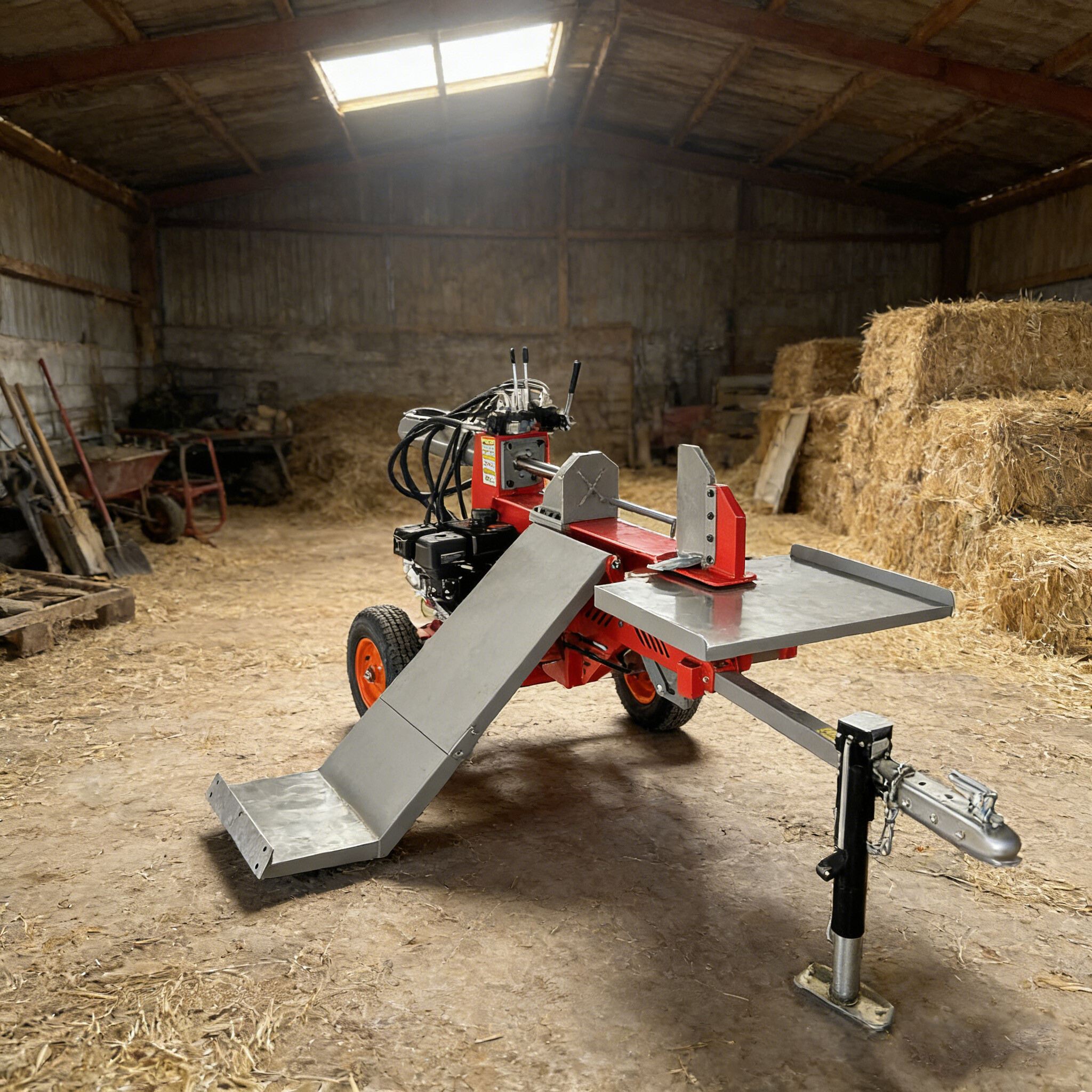
Choosing the right log splitter for farm use is an important investment that directly impacts operational efficiency, safety, and long-term value. Farms often process a wide variety of wood — from small branches to large hardwood logs — for firewood, construction, fencing, or biomass. Understanding key factors such as power source, splitting force, design, mobility, and maintenance will help you make an informed decision.
This guide walks you through the core considerations for selecting a log splitter that matches your farm’s unique needs.
1. Determine Your Power Source Needs
Gasoline-Powered Splitters
Best for: Farms without consistent electrical access
Advantages: High mobility, strong splitting force, suitable for large logs
Considerations: Requires regular engine maintenance; emits exhaust
Electric-Powered Splitters
Best for: Small to medium farms with reliable AC power
Advantages: Quieter operation, lower maintenance, eco-friendly
Considerations: Lower maximum force for large logs
Hydraulic Log Splitters
Best for: Heavy-duty farm operations
Advantages: Stable high force, excellent for large and hardwood logs
Considerations: Generally heavier and higher upfront cost
Recommendation:
If you split wood frequently and process large logs, gasoline or hydraulic models provide the necessary power. For lighter or intermittent farm use, electric models may be sufficient.
2. Choose the Appropriate Splitting Force (Tonnage)
What It Means:
Tonnage refers to the hydraulic force the splitter can apply. Higher tonnage equates to greater splitting capability.
Tonnage Guide:
15–20 tons: Suitable for softwood and small logs
20–30 tons: Ideal for medium to hardwood logs commonly found on farms
30+ tons: Best for large or dense hardwoods and commercial-level tasks
Recommendation:
For most farm environments, a 20–30 ton splitter balances performance and cost. Larger farms or commercial applications may require 30+ ton capacity.
3. Select the Right Splitter Configuration
Horizontal Splitters
Simple and efficient for small to medium logs
Easy to operate and store
Vertical Splitters
Better for tall or heavy logs
Reduces bending and lifting strain
Dual-Position Splitters
Offers flexibility for both horizontal and vertical splitting
Ideal if you work with a wide range of log sizes
Recommendation:
Dual-position models provide the best versatility for farms with mixed wood processing needs.
4. Evaluate Cycle Time and Efficiency
Key Considerations:
Cycle Time: Shorter cycle times increase throughput
Automatic Return/Retract: Reduces operator effort and improves speed
Multiple Speed Settings: Helps adapt to different wood densities
Recommendation:
If your farm’s workflow demands higher throughput, prioritize models with faster cycle times and efficient control systems.
5. Consider Portability and Handling
Mobility Features:
Wheels and tires suitable for rough terrain
Towable frames or hitches for tractor/UTV transport
Lightweight designs for easy repositioning
Recommendation:
Mobility is essential on farms with large operational areas. Look for models that balance portability with stability.
6. Factor in Maintenance and Durability
Maintenance Considerations:
Ease of hydraulic oil checks and changes
Accessibility of components for service
Availability of spare parts
Durability Features:
Heavy-duty steel construction
Reinforced frame and ram
Quality seals and hoses
Recommendation:
Choose brands with a strong reputation and readily available spare parts to minimize downtime.
7. Prioritize Safety Features
Important Safety Technologies:
Two-hand operation controls
Emergency stop systems
Blade guards and protective shields
Recommendation:
Safety features are non-negotiable, especially in farm environments where operators may have varying skill levels.
8. Balance Price and Long-Term Value
Price Considerations:
Initial purchase cost vs. expected service life
Long-term operating expenses (fuel, oil, maintenance)
Total Cost of Ownership:
A slightly higher upfront investment in a durable, easy-to-service splitter often results in savings over time.
Conclusion
Selecting the right log splitter for your farm requires balancing performance, durability, safety, and cost. By evaluating power source, tonnage, configuration, cycle efficiency, portability, and maintenance needs, you can choose a splitter that enhances productivity and ensures trouble-free operation for years. Whether you are processing firewood, preparing biomass, or handling construction wood, the right machine will support your farm’s workflow effectively and safely.
This stunning beach house property is a true oasis, nestled in a serene coastal community with direct access to the beach.
Contact
West Street, Melbourne Victoria 3000 Australia