


Navigation
Contact us
Phone
Message
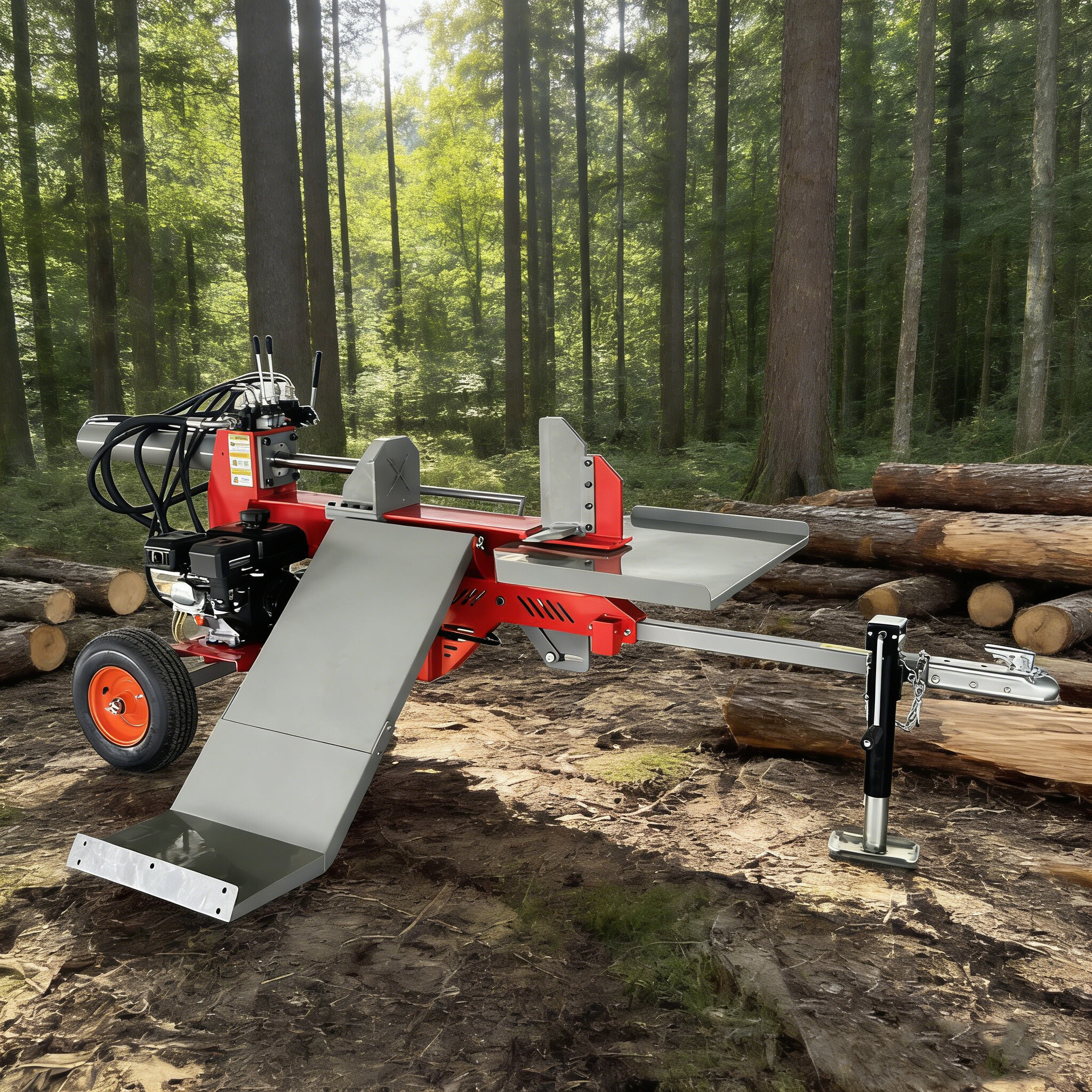
In modern wood processing operations, log splitters are no longer used as standalone machines. Instead, they are increasingly integrated with other wood processing equipment to form complete, efficient, and automated production lines. This integrated approach improves productivity, reduces manual handling, enhances safety, and ensures consistent output quality.
This article explains how log splitters can be effectively integrated with other wood processing machines and the operational benefits of such systems.
1. Integration with Sawmills and Cutting Equipment
Typical Setup:
Chainsaws or band saws for primary cutting
Log splitters for secondary splitting
Conveyors for material transfer
Operational Benefits:
Logs are cut to length before splitting
Reduced manual lifting and repositioning
Higher throughput and smoother workflow
This integration is commonly used in firewood production and timber preparation.
2. Integration with Conveying Systems
Equipment Involved:
Belt conveyors
Roller conveyors
Automated feeding systems
Advantages:
Continuous material flow
Reduced operator workload
Improved process efficiency
Conveyors allow logs to be fed directly into the splitter and transport split wood to storage or further processing stages.
3. Integration with Sorting and Stacking Systems
System Functions:
Automatic size-based sorting
Robotic or mechanical stacking
Palletizing systems
Benefits:
Organized output management
Reduced labor costs
Faster packaging and transportation
Sorting and stacking systems are especially valuable in commercial firewood and biomass production lines.
4. Integration with Wood Chippers and Crushers
Application Scenario:
After splitting, oversized or low-quality wood pieces can be transferred to chippers or crushers.
Operational Value:
Maximizes material utilization
Reduces waste
Supports biomass and recycling operations
This integration improves overall resource efficiency.
5. Integration with Drying and Storage Systems
Equipment Integration:
Kiln dryers
Natural drying racks
Automated storage systems
Benefits:
Improved moisture control
Enhanced wood quality
Faster market readiness
Drying systems ensure that split wood meets quality standards for fuel, construction, or further processing.
6. Integration with Automation and Control Systems
Smart Integration:
PLC control systems
IoT monitoring platforms
Centralized HMI panels
Advantages:
Real-time production monitoring
Predictive maintenance
Remote control and diagnostics
Automation enables coordinated operation of multiple machines with minimal human intervention.
7. Safety and Workflow Optimization
Safety Improvements:
Reduced manual handling
Controlled material flow
Integrated emergency stop systems
Workflow Benefits:
Fewer bottlenecks
Higher operational consistency
Lower risk of accidents
Integrated systems significantly enhance both safety and productivity.
8. Application Scenarios
Typical Integrated Applications:
Firewood production lines
Biomass fuel processing plants
Commercial timber yards
Forestry and agricultural operations
Each scenario benefits from tailored system integration based on production volume and automation level.
Conclusion
The integrated use of log splitters with other wood processing equipment represents a major trend toward efficient, automated, and scalable production systems. By combining log splitters with cutting, conveying, sorting, drying, and control systems, businesses can significantly improve productivity, reduce labor costs, enhance safety, and achieve higher-quality output. Integrated solutions are becoming essential for modern wood processing operations seeking long-term competitiveness and operational efficiency.
This stunning beach house property is a true oasis, nestled in a serene coastal community with direct access to the beach.
Contact
West Street, Melbourne Victoria 3000 Australia