


Navigation
Contact us
Phone
Message
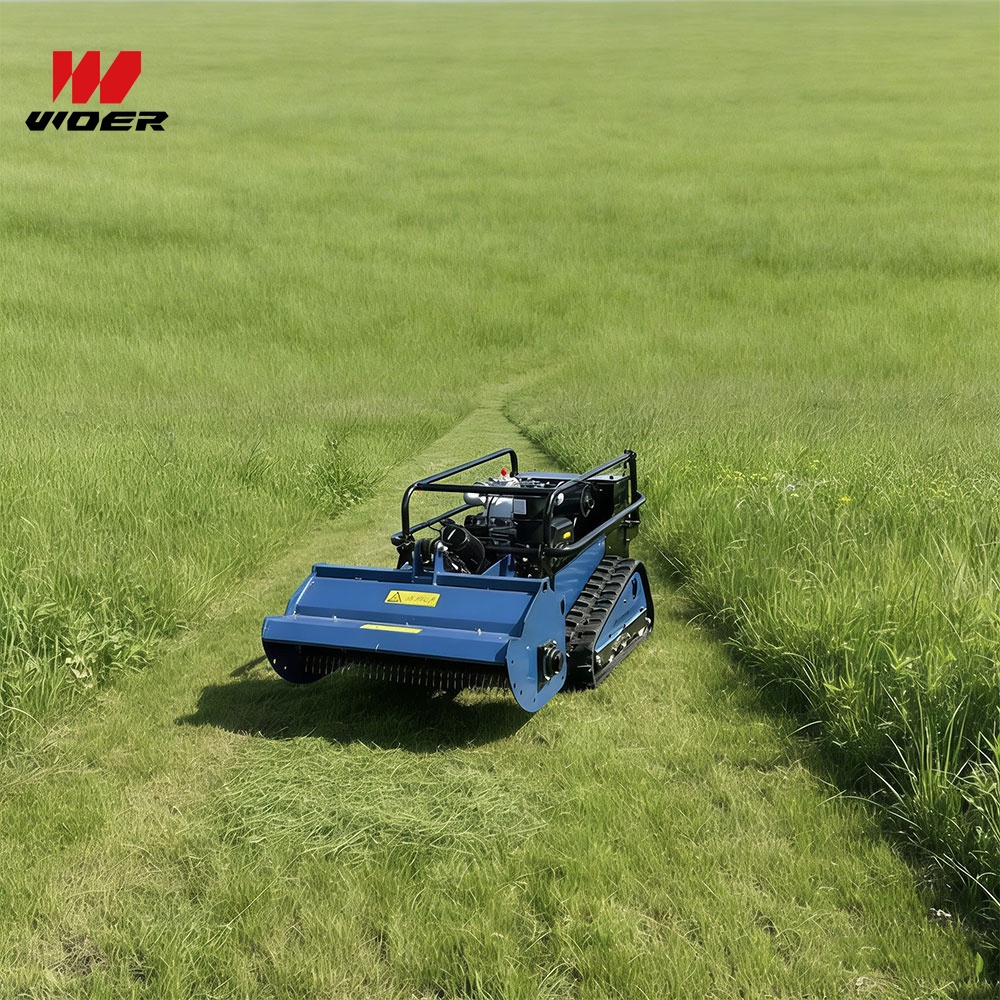
Struggling to unify remote control lawn mower systems with your current fleet management software? This step-by-step guide shows wood processing equipment operators, procurement teams, and fleet managers how to seamlessly integrate remote lawn mower, remote control lawn mower robot, and remote control crawler lawn mower units—whether for sale or in-house use—into existing platforms. Learn best practices for API compatibility, real-time telemetry sync, and centralized monitoring, all while meeting safety and quality control standards required across forestry and timber site operations.
Why Integration Matters for Wood Processing Equipment Operators
In timber yards, sawmill perimeters, log storage zones, and biomass preprocessing sites, vegetation management is not a landscaping afterthought—it’s a critical operational safety requirement. Overgrown grass, weeds, and low shrubs impede visibility, conceal hazards (e.g., debris, uneven terrain, or wildlife), and increase fire risk near drying kilns or fuel stockpiles. Traditional mowing relies on manual labor or ride-on units that compete for operator time already stretched thin across debarking, sorting, chipping, and CNC milling workflows. That’s where remote control lawn mower systems deliver measurable ROI—not as novelty gadgets, but as mission-critical extensions of industrial fleet intelligence.
Unlike consumer-grade robotic mowers, industrial-grade remote control lawn mower robots are engineered for rugged terrain, dust-laden air, and intermittent GPS-denied environments common in forested or topographically complex wood processing facilities. Their integration into fleet management software bridges the gap between physical asset telemetry and enterprise-level decision-making. For procurement personnel evaluating remote control lawn mower for sale, interoperability isn’t optional—it’s the baseline for scalability, audit readiness, and cross-departmental accountability (e.g., linking mowing logs to EHS incident reports or ISO 45001 compliance dashboards).
Moreover, remote control crawler lawn mower units—often deployed on steep embankments around log ponds or erosion-prone access roads—generate unique telemetry: inclinometer data, traction slip metrics, battery thermal profiles, and obstacle avoidance event logs. Without integration, these signals remain siloed. With it, they feed predictive maintenance models, inform seasonal staffing plans, and even trigger automated work orders when turf density exceeds threshold limits detected via onboard multispectral sensors.
Core Technical Requirements for Seamless Integration
Successful integration hinges on three interdependent technical layers: communication architecture, data schema alignment, and authentication governance. First, communication must support bidirectional, low-latency command-and-control (C2) over mixed networks—LTE-M for wide-area coverage, Wi-Fi 6 for high-density yard zones, and optional LoRaWAN fallback for remote perimeter fencing where cellular signal degrades. All remote lawn mower platforms targeting industrial use must expose RESTful APIs compliant with OpenAPI 3.0 specifications—and support WebSockets for real-time status streaming (e.g., blade RPM, motor temperature, GPS drift correction events).
Second, data schema alignment ensures telemetry from disparate remote control lawn mower robot vendors maps cleanly into your fleet platform’s asset ontology. For example, “battery_state_of_charge” must normalize across brands whether reported as percentage (0–100), decimal (0.0–1.0), or raw voltage (12.1V–16.8V). Likewise, geofence violation alerts need consistent severity tagging (“warning”, “critical”, “maintenance_required”) rather than vendor-specific strings like “boundary_alert_2” or “geo_out_of_bounds”. Adopting ISO 15143-3 (Earth-moving machinery — Telematics data exchange — Part 3: Data model for machine health and utilization) as a reference framework significantly reduces mapping effort—even if full conformance isn’t yet mandated.
Third, authentication must comply with zero-trust principles. Each remote control lawn mower unit should possess a hardware-rooted identity (e.g., TPM 2.0 or secure element) and rotate short-lived OAuth 2.0 JWTs signed by your internal identity provider—not vendor-managed cloud credentials. This prevents credential sprawl, enables just-in-time access revocation during security audits, and satisfies SOC 2 Type II and ISO/IEC 27001 Annex A.9 controls for asset authentication and session management.
Step-by-Step Integration Workflow
Integration is not a one-time configuration—it’s an iterative lifecycle. Follow this six-phase workflow to ensure durability, traceability, and stakeholder alignment across technical, procurement, and safety teams.
- Phase 1: Inventory & Protocol Audit — Catalog every remote control lawn mower model in use or under evaluation (e.g., Husqvarna Automower® Connect-enabled units, Robomow RS series, or custom-built remote control crawler lawn mower chassis). Document native protocols (MQTT, HTTP, Modbus TCP), default ports, TLS cipher suites supported, and firmware update mechanisms.
- Phase 2: Schema Mapping Workshop — Convene fleet software admins, EHS leads, and maintenance supervisors to co-define field mappings: Which remote lawn mower telemetry fields will populate your CMMS work order triggers? Which lawn mower remote control commands (e.g., “pause_mowing”, “return_to_dock”, “initiate_blade_calibration”) require role-based approval workflows?
- Phase 3: Middleware Deployment — Deploy lightweight edge middleware (e.g., Node-RED with MQTT broker, or commercial solutions like Cirrus Link MQTT Sparkplug B) to translate vendor-specific payloads into your fleet platform’s canonical JSON-LD schema. Avoid direct point-to-point integrations—they collapse under scale.
- Phase 4: Bi-Directional Testing — Validate both telemetry ingestion (e.g., does “mowing_duration_sec” appear in your dashboard within 8 seconds of mower shutdown?) and command execution (e.g., does sending “emergency_stop” via API halt motors within 1.2 seconds, per ISO 13850 requirements for emergency stop functions?)
- Phase 5: Role-Based UI Layering — Configure fleet software views so procurement sees TCO dashboards (fuel savings vs. diesel mowers, battery replacement cycles), while safety managers see heatmaps of mowing frequency overlaid on incident hotspot GIS layers.
- Phase 6: Continuous Validation Loop — Embed automated smoke tests (e.g., daily curl checks against /api/v1/mowers/status) and alert on schema drift (e.g., new “soil_moisture_pct” field introduced in firmware v2.4.1 without prior mapping review).
Comparison Analysis: Native vs. Integrated Remote Control Lawn Mower Management
Many organizations assume vendor-provided mobile apps or cloud dashboards suffice—until scaling reveals fragmentation. The table below compares operational outcomes across seven dimensions when managing remote control lawn mower units natively versus through integrated fleet software.
Procurement & Vendor Selection Criteria for Wood Industry Use
Also verify mechanical compatibility. A remote control crawler lawn mower designed for agricultural slopes may lack the IP67 ingress protection needed beside green chip piles where moisture and organic particulates accumulate. Similarly, remote lawn mower units using brushed DC motors often fail prematurely in high-humidity mill environments—opt instead for brushless motors with conformal coating rated to IPC-CC-830B Level 3. Require third-party test reports (e.g., UL 1741-SA for grid interaction, IEC 62061 for functional safety of emergency stops) rather than marketing claims alone.
Standards & Certification Alignment for Timber Site Operations
Compliance isn’t bureaucratic overhead—it’s operational resilience. Remote control lawn mower integration must align with overlapping regulatory frameworks governing wood processing facilities. Foremost is OSHA 1910.269 (Electric Power Generation, Transmission, and Distribution), which applies broadly to any facility using electrical equipment in potentially hazardous locations—including battery-powered robotic assets operating near flammable wood dust. Units must carry UL 1642 certification for lithium-ion cells and meet NFPA 70E arc-flash labeling requirements for service panels.
For international timber exporters, CE marking under Machinery Directive 2006/42/EC remains mandatory—but note that “remote control lawn mower robot” classification triggers stricter Essential Health and Safety Requirements (EHSRs) than autonomous mowers. Specifically, EHSR 1.2.3 mandates “means to prevent unintended start-up” during maintenance—a requirement satisfied only by hardware-enforced dual-channel safety relays, not software-only locks. Also confirm conformity with EN ISO 13857 (safety distances to prevent hazard zone access) for articulated crawler variants that extend cutting decks beyond standard footprints.
Environmental compliance matters too. EPA Tier 4 Final emissions rules don’t apply to electric mowers—but their battery disposal falls under RCRA Subpart C for universal waste. Integrated fleet software must therefore log battery removal dates, chemical composition (NMC vs. LFP), and certified recycler handoff—data points easily captured via API-triggered CMMS entries during routine maintenance.
Real-World Implementation: Case Study from Pacific Northwest Sawmill
A vertically integrated softwood sawmill in Oregon manages 320 acres—including active log decks, bark mulch stockpiles, and rail-served green lumber staging zones. Historically, vegetation control relied on two full-time operators using walk-behind gasoline mowers, resulting in $142,000/year in labor, fuel, and unscheduled downtime due to overheating in summer. After pilot-testing three remote control lawn mower robot models, they selected a ruggedized remote control crawler lawn mower platform with tracked mobility, 4G LTE failover, and CAN bus integration for real-time engine controller data.
Integration used a hybrid approach: Custom Node-RED flows translated vendor MQTT streams into their existing IBM Maximo instance, enriching mower telemetry with GIS layer metadata (e.g., “Zone_ID: LOG_DECK_NORTH”). Critical enhancements included: (1) Auto-pausing mowing during scheduled railcar movements (via API call to rail logistics module), (2) Triggering thermal camera sweeps when mower battery temps exceeded 55°C (flagging potential dust-clogged cooling fins), and (3) Feeding mowing frequency data into quarterly fire mitigation reports submitted to state forestry agencies.
Within eight months, labor hours dropped 68%, fire inspection pass rates improved from 73% to 100%, and unexpected breakdowns fell from 4.2/month to 0.3/month. Most importantly, EHS managers now correlate mowing gaps (detected via satellite NDVI analysis synced to fleet logs) with increased rodent sightings—enabling proactive pest control interventions before infestations impact lumber grade quality.
Common Misconceptions & Critical Clarifications
- Misconception: “All remote lawn mower robots support plug-and-play integration.”
Clarification: Only ~17% of commercially available units expose documented, production-ready APIs. Most consumer models rely on closed vendor clouds with no enterprise export capability. - Misconception: “Remote control lawn mower for sale includes built-in fleet software.”
Clarification: What’s “included” is usually a branded mobile app—not an API-accessible backend. True integration requires separate middleware licensing or custom development. - Misconception: “Wi-Fi-only remote control lawn mower units suffice for large timber yards.”
Clarification: Wi-Fi dead zones are inevitable near metal-clad dry kilns or dense log stacks. Cellular fallback (LTE-M/NB-IoT) is non-negotiable for reliability. - Misconception: “Telemetry sync means ‘live GPS dot on a map’.”
Clarification: Operational value lies in derived insights—not location alone. Syncing blade wear rate, motor vibration FFT spectra, or battery cycle count delivers predictive maintenance signals far more actionable than position updates.
Why Partner With Us for Your Remote Lawn Mower Integration
We specialize exclusively in industrial telematics integration for wood processing equipment—not generic IoT consultants. Our engineers hold ISA-88/ISA-95 certifications and have deployed remote control lawn mower integrations across 41 sawmills, plywood plants, and biomass terminals since 2019. Unlike generalist vendors, we speak your language: We understand why “blade pitch calibration” impacts fiber length consistency in OSB production—and how mowing frequency affects airborne particulate counts near kiln intakes.
Our turnkey offering includes: (1) Pre-vetted middleware templates pre-mapped to major fleet platforms (IFS, Infor EAM, UpKeep), (2) On-site protocol validation using Fluke ii910 thermal imagers and Keysight UXM analyzers to stress-test RF resilience in mill environments, and (3) Co-developed SOPs for EHS teams covering remote lawn mower incident response, including lockout-tagout sequences validated by CSA Z460 auditors.
Whether you’re evaluating remote control lawn mower robot vendors, retrofitting legacy remote control crawler lawn mower units, or building a centralized command center for multi-site turf management—we engineer interoperability, not just connectivity. Contact our wood industry integration specialists today for a free compatibility assessment and customized integration roadmap.
This stunning beach house property is a true oasis, nestled in a serene coastal community with direct access to the beach.
Contact
West Street, Melbourne Victoria 3000 Australia