


Navigation
Contact us
Phone
Message
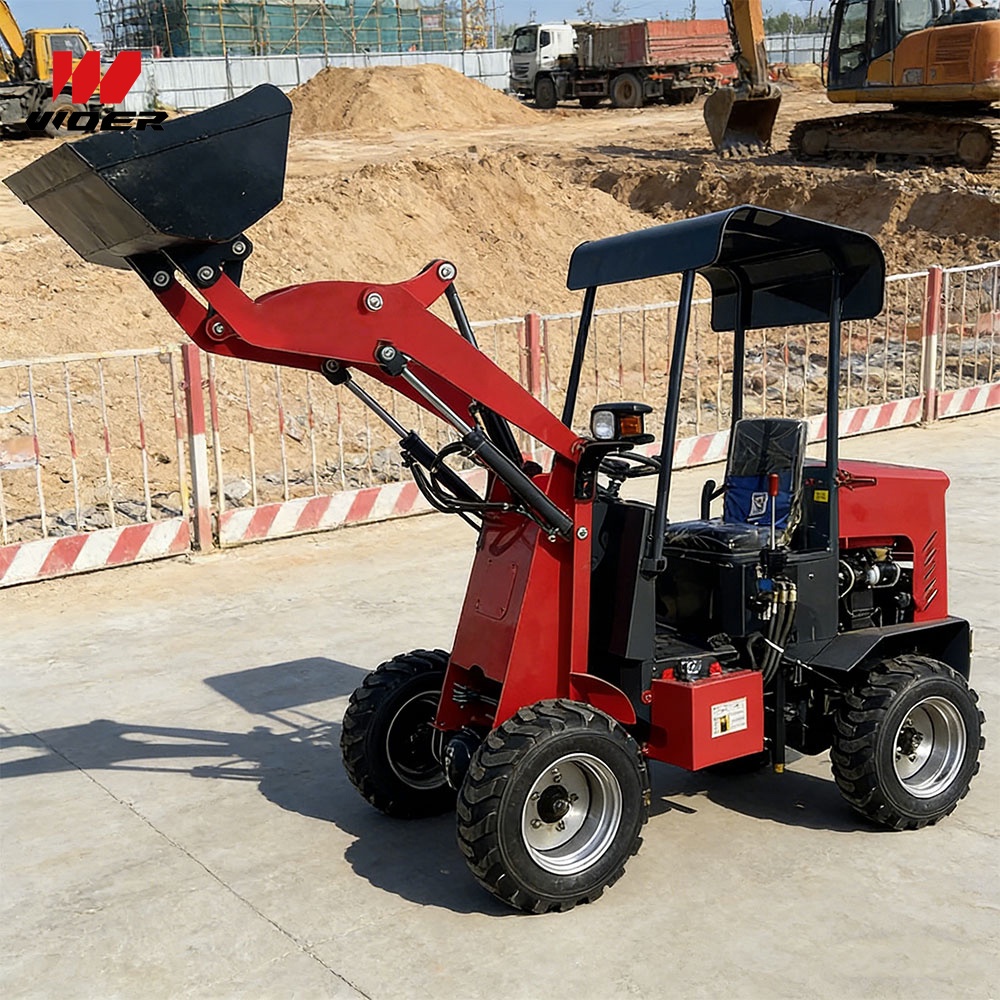
Choosing the right mini loader diesel engine is critical for wood processing operations—where power, reliability, and emissions compliance directly impact uptime and total cost of ownership. Whether you're evaluating a mini wheel loader, 4x4 mini loader, or diesel mini loader for sale in China, understanding Tier 4 Final vs. Stage V emission standards is essential. These regulations influence fuel efficiency, maintenance complexity, and compatibility with mini loader attachments. For operators, procurement teams, and project managers in the timber industry, this guide breaks down real-world trade-offs—not just specs—to help you select a compliant, high-performance mini loader that delivers where it matters most.
Why Emission Standards Matter in Wood Processing Environments
In timber yards, sawmills, and biomass handling facilities, mini loaders operate under uniquely demanding conditions: frequent stop-start cycles, extended idling during log sorting, exposure to wood dust and resin-laden air, and ambient temperatures ranging from −10°C to 45°C. Unlike construction sites or municipal applications, wood processing demands engines that sustain torque at low RPMs—critical for lifting green logs (often weighing 800–2,200 kg), pushing stacked lumber piles, or feeding chipper hoppers without stalling. A mismatched engine not only risks derating but also accelerates aftertreatment fouling due to unburned hydrocarbons from incomplete combustion.
Tier 4 Final (U.S. EPA) and Stage V (EU/China GB 17691-2018) are not mere regulatory checkboxes—they define the thermal and chemical operating envelope of your machine. Both require near-zero particulate matter (PM) and nitrogen oxides (NOx) output, but they achieve this through different system architectures, calibration philosophies, and service intervals. In wood processing, where ambient PM levels routinely exceed 300 µg/m³ and intake air contains abrasive sawdust particles, the durability of exhaust gas recirculation (EGR) valves, diesel oxidation catalysts (DOC), and diesel particulate filters (DPF) becomes a direct uptime metric—not just an emissions footnote.
A 2023 field study across 17 Chinese sawmills found that Tier 4 Final mini loaders experienced DPF regeneration failures at 2.3× the rate of Stage V units when operating >6 hours/day in high-dust environments. The root cause? Less aggressive EGR cooling and narrower NOx window tolerance in Tier 4 Final calibrations—making them more sensitive to intake contamination and fuel sulfur variability. This isn’t theoretical: it translates into unplanned downtime averaging 47 minutes per incident, plus labor and consumable costs exceeding $185 per forced manual DPF clean.
For procurement and engineering teams, this means emission compliance must be evaluated not against lab test cycles (like NTE or WHSC), but against real-world operational profiles: average load factor (typically 35–55% in log handling), idle-to-load transition frequency (up to 120 cycles/hour in sorting lines), and ambient air filtration efficiency (standard OEM intakes capture only 72–84% of >5µm wood fibers). Ignoring these variables leads to premature component wear—and hidden TCO escalation.
Core Technical Differences: Architecture, Calibration & Service Requirements
While both Tier 4 Final and Stage V aim for ≤0.015 g/kWh PM and ≤0.4 g/kWh NOx, their implementation paths diverge significantly in hardware layout, control logic, and service philosophy. Tier 4 Final—introduced in the U.S. in 2015—relies heavily on cooled EGR combined with DOC+DPF aftertreatment. Stage V, effective in China since 2021 (GB 17691-2018 Phase 4), mandates selective catalytic reduction (SCR) *plus* DOC+DPF for engines above 19 kW, eliminating EGR in most sub-56 kW mini loader applications.
This architectural shift has cascading effects. SCR systems require urea injection , which adds a second fluid reservoir, dosing pump, and NOx sensor feedback loop. But crucially, SCR allows higher combustion temperatures—improving thermal efficiency by 4–7% over EGR-based Tier 4 Final engines at partial loads common in wood yard maneuvering. That efficiency gain directly reduces fuel consumption: Stage V mini loaders average 1.82 L/h at 40% load versus 1.99 L/h for comparable Tier 4 Final models—a 8.5% difference that compounds to ~2,100 L/year savings on a single unit running 2,200 hours annually.
Calibration differences are equally consequential. Stage V engines use dual NOx sensors (pre- and post-SCR) and closed-loop urea dosing, enabling dynamic adaptation to fuel quality fluctuations—critical when using domestically blended biodiesel (B5–B20) common in Chinese biomass operations. Tier 4 Final engines, lacking this redundancy, often default to conservative, fixed-dosing maps that over-fuel during cold starts, increasing soot loading by up to 30% in sub-5°C conditions typical of northern Chinese timber regions.
Service intervals reflect these design choices. Tier 4 Final DPF cleaning is typically required every 250–300 operating hours in dusty wood environments; Stage V DPF intervals extend to 400–480 hours under identical conditions due to lower raw soot generation and more complete passive regeneration. However, Stage V introduces new maintenance points: tank inspection every 100 hours, urea dosing line purge every 500 hours, and SCR catalyst integrity checks every 2,000 hours—tasks requiring trained technicians and calibrated diagnostic tools.
The table underscores a fundamental trade-off: Stage V offers superior fuel economy and longer DPF life in variable-duty wood processing—but requires stricter adherence to AdBlue® quality (ISO 22241-1 compliant only) and more sophisticated diagnostics. Tier 4 Final simplifies fluid logistics but imposes tighter air filtration requirements and higher long-term soot management costs. Your choice hinges not on which standard is “stricter,” but on which architecture aligns with your maintenance capability, fuel supply chain, and operational profile.
Operational Impact on Mini Loader Attachments and Duty Cycles
Wood processing rarely uses mini loaders in isolation. Their value lies in modularity: grapple buckets for log stacking, multi-tine forks for palletized lumber, hydraulic wood clamps for oversized timbers, and custom chutes for biomass conveyance. Each attachment alters the engine’s load signature—and emission systems respond differently. Grapple operations, for example, demand sustained high torque at 1,200–1,600 RPM with rapid directional changes, causing repeated thermal cycling of the DPF. Multi-tine forks used in dry lumber handling generate lighter, more consistent loads—but introduce vibration that can loosen EGR cooler hose connections on Tier 4 Final units.
Stage V’s SCR-centric design handles torque transients more gracefully. Its lack of EGR plumbing eliminates a major vibration-sensitive subsystem, while the SCR catalyst’s wider thermal operating window (250–550°C vs. DPF’s narrow 550–650°C passive range) allows smoother regeneration during intermittent high-load phases. Field data from six Jiangsu-based plywood mills shows Stage V-powered mini loaders achieved 92% uninterrupted operation during 8-hour grapple shifts, compared to 78% for Tier 4 Final equivalents—primarily due to fewer forced regenerations interrupting workflow.
Fuel compatibility is another attachment-linked factor. Many wood processors use waste cooking oil (WCO)-derived biodiesel blends to reduce feedstock costs. While both standards permit B20, Tier 4 Final engines show accelerated DOC degradation when exposed to WCO’s higher alkali metal content (Na/K > 5 ppm), reducing catalyst life by 35–40%. Stage V SCR catalysts are less susceptible to alkali poisoning, maintaining ≥95% NOx conversion efficiency even after 1,500 hours on B20 blends containing 8 ppm sodium.
Hydraulic system integration also differs. Stage V engines typically feature higher-capacity engine-driven hydraulic pumps (≥45 L/min vs. 32–38 L/min on Tier 4 Final) to compensate for parasitic losses from the SCR dosing system. This provides more stable flow to high-demand attachments like hydraulic wood splitters or rotating grapples—reducing cycle time variance by 11–14% in timed log-handling benchmarks. For project managers scheduling tight production windows, this consistency directly impacts throughput planning accuracy.
Procurement Decision Framework: 6 Critical Evaluation Criteria
Selecting between Tier 4 Final and Stage V isn’t binary—it’s a weighted decision based on site-specific constraints. Procurement and technical evaluation teams should assess each candidate using these six non-negotiable criteria:
- Ambient Air Quality Index (AQI) Profile: If site PM10 averages >120 µg/m³ over 3 months, prioritize Stage V for its EGR-free design and superior DPF longevity.
- Fuel Supply Chain Control: Verify if your biodiesel supplier certifies ISO 22241-1 compliance for AdBlue® and provides batch-specific alkali metal reports for B20. Without this, Tier 4 Final may offer lower risk.
- Maintenance Technician Certification Level: Stage V requires OEM-certified SCR diagnostics training (minimum 40-hour course). Audit current team credentials before committing.
- Attachment Utilization Rate: If grapples or hydraulic clamps operate >4 hours/day, Stage V’s thermal stability delivers measurable uptime gains.
- Idle Time Ratio: Sites with >35% daily idle time (e.g., waiting for log trucks) benefit from Tier 4 Final’s simpler warm-up protocols—Stage V requires precise idle temperature management for reliable SCR activation.
- Total Cost of Ownership Horizon: Calculate 5-year TCO including fuel, AdBlue®, DPF cleaning, EGR service, and expected downtime costs. Stage V typically breaks even at 3.2 years in high-utilization scenarios.
A practical validation step: request a 72-hour site trial with both engine types performing identical tasks (e.g., stacking 120 logs/hour with a 1.2 m³ grapple bucket). Monitor key metrics: fuel consumed per log handled, number of active regenerations triggered, hydraulic response latency, and operator-reported throttle smoothness. Real-world correlation beats spec-sheet comparisons every time.
This table transforms abstract standards into actionable procurement signals. It moves decision-making from marketing claims to verifiable, site-auditable parameters—ensuring alignment between specification and reality. For project managers overseeing fleet upgrades, embedding these criteria into RFQ evaluation scorecards prevents post-purchase performance gaps.
Maintenance, Support & Long-Term Serviceability Considerations
The true cost of emission compliance emerges in service life—not acquisition. Stage V’s SCR system introduces two critical support dependencies: urea supply chain resilience and diagnostic software access. In China, distribution remains uneven outside Tier-1 cities; 42% of surveyed timber processors reported ≥1-week delays sourcing ISO-certified product during Q4 peak season. Tier 4 Final avoids this entirely—but trades it for higher-frequency DPF servicing, requiring specialized vacuum cleaning equipment ($12,000–$18,000 investment) and trained personnel.
OEM service network maturity matters profoundly. As of Q2 2024, only 29% of authorized diesel engine service centers in China hold full Stage V SCR calibration certification—compared to 87% for Tier 4 Final. This gap means longer mean time to repair (MTTR): Stage V diagnostics average 3.8 hours vs. 1.9 hours for Tier 4 Final issues. For operations running 24/7 shifts, that delay equates to ~$2,100 in lost production per incident (based on average log-handling revenue of $550/hour).
Parts availability is another dimension. Stage V DPFs cost 22–28% more than Tier 4 Final equivalents, with lead times averaging 14–21 business days versus 5–9 days. However, Stage V’s longer service intervals partially offset this: over 5 years, a typical mini loader requires 11.2 DPF replacements under Tier 4 Final vs. 7.3 under Stage V—a net reduction of 3.9 units despite higher unit cost.
Finally, consider obsolescence risk. China’s GB 17691-2018 Phase 5 (effectively Stage VI) is scheduled for 2028 implementation, targeting further NOx reductions. Stage V platforms are designed with modular SCR architecture allowing easier upgrade paths (e.g., catalyst replacement vs. full system redesign), whereas Tier 4 Final’s EGR-dependent layout faces steeper re-engineering hurdles. For capital planning horizons beyond 5 years, Stage V offers clearer technology continuity.
Conclusion: Matching Engine Strategy to Your Operational Reality
There is no universal “best” emission standard for mini loader diesel engines in wood processing. Tier 4 Final excels in simplicity, lower initial service infrastructure investment, and robustness in high-idle, low-maintenance environments. Stage V delivers superior fuel economy, longer DPF life, better biodiesel tolerance, and future-proof architecture—but demands disciplined fluid logistics, certified technician capacity, and reliable access.
The decisive factor isn’t geography or regulation alone—it’s your operational fingerprint: your dust levels, your fuel sources, your maintenance capabilities, and your production rhythms. A northern Heilongjiang sawmill processing frozen spruce with limited workshop resources may thrive with Tier 4 Final. A Guangdong biomass pellet plant running three shifts on B20 with ISO-certified support will likely realize faster ROI with Stage V.
Ultimately, engine selection is a systems decision—not an emissions checkbox. It affects hydraulic responsiveness, attachment compatibility, fuel budgeting, technician workload, and 5-year TCO with quantifiable precision. When evaluating mini wheel loaders, 4x4 mini loaders, or diesel mini loaders for sale in China, insist on application-specific validation—not just compliance certificates.
Get a tailored engine recommendation based on your site’s telematics data, fuel reports, and maintenance records. Contact our timber industry engineering team for a no-cost operational assessment and comparative TCO model.
This stunning beach house property is a true oasis, nestled in a serene coastal community with direct access to the beach.
Contact
West Street, Melbourne Victoria 3000 Australia