


Navigation
Contact us
Phone
Message
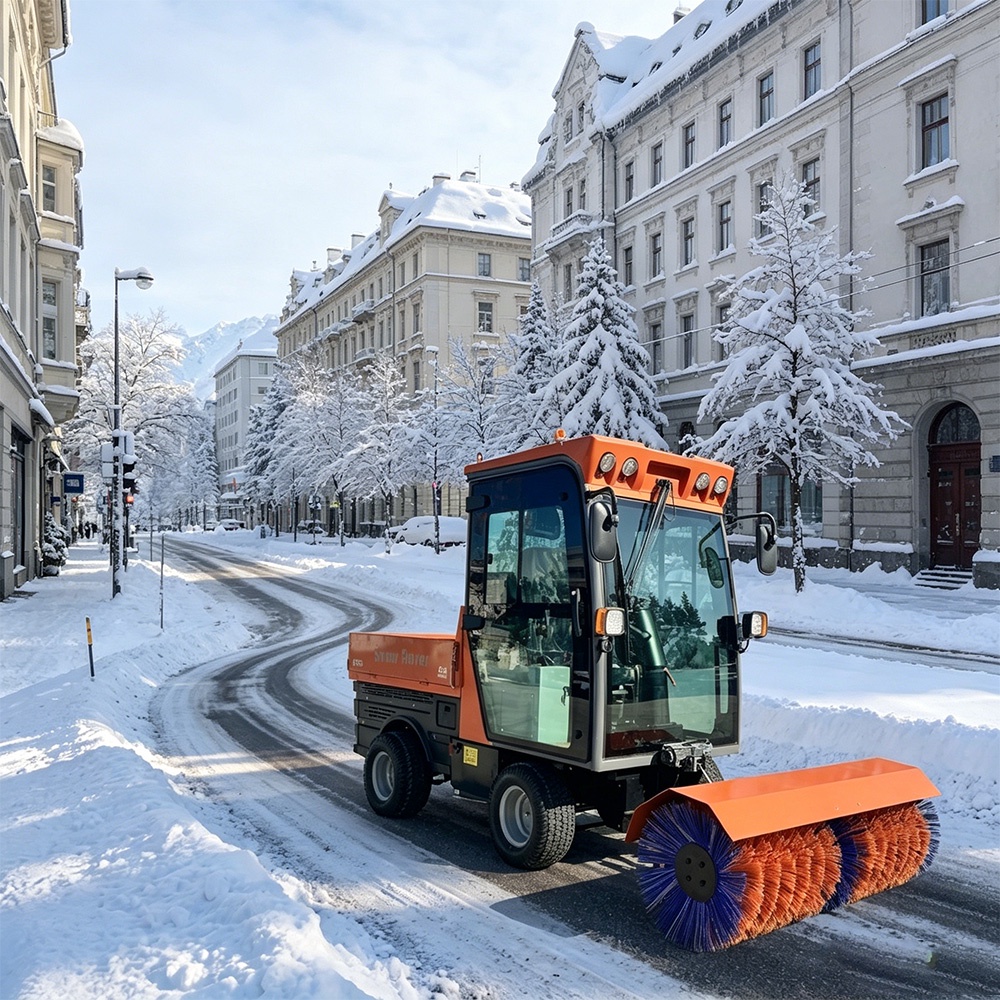
How to Choose a 4WD Ride-On Snow Sweeper for Commercial Snow Removal
Choosing a snow sweeper for commercial use is different from choosing one for a driveway. A property manager clearing a plaza, a municipality covering sidewalks, or a logistics hub keeping loading docks open must weigh clearing area, snow type, labor, uptime, maintenance, and support — not just the purchase price.
This guide walks through what actually matters, in the order it matters, so the machine you choose fits the season you will actually face.
Why Commercial Snow Removal Is Different
A residential buyer clears one driveway. A commercial buyer clears a site that must reopen after every storm — and a machine that sits in the shop during a snowfall costs more than its purchase price. Commercial buyers also face a shrinking labor pool: fewer workers are willing to shovel or push a walk-behind blower, which makes machine uptime and operator comfort business issues, not preferences.
Start with Your Clearing Area and Snow Load
Measure the total area to clear and note the deepest snow you must handle in a normal season. Different zones of the same site may need different functions:
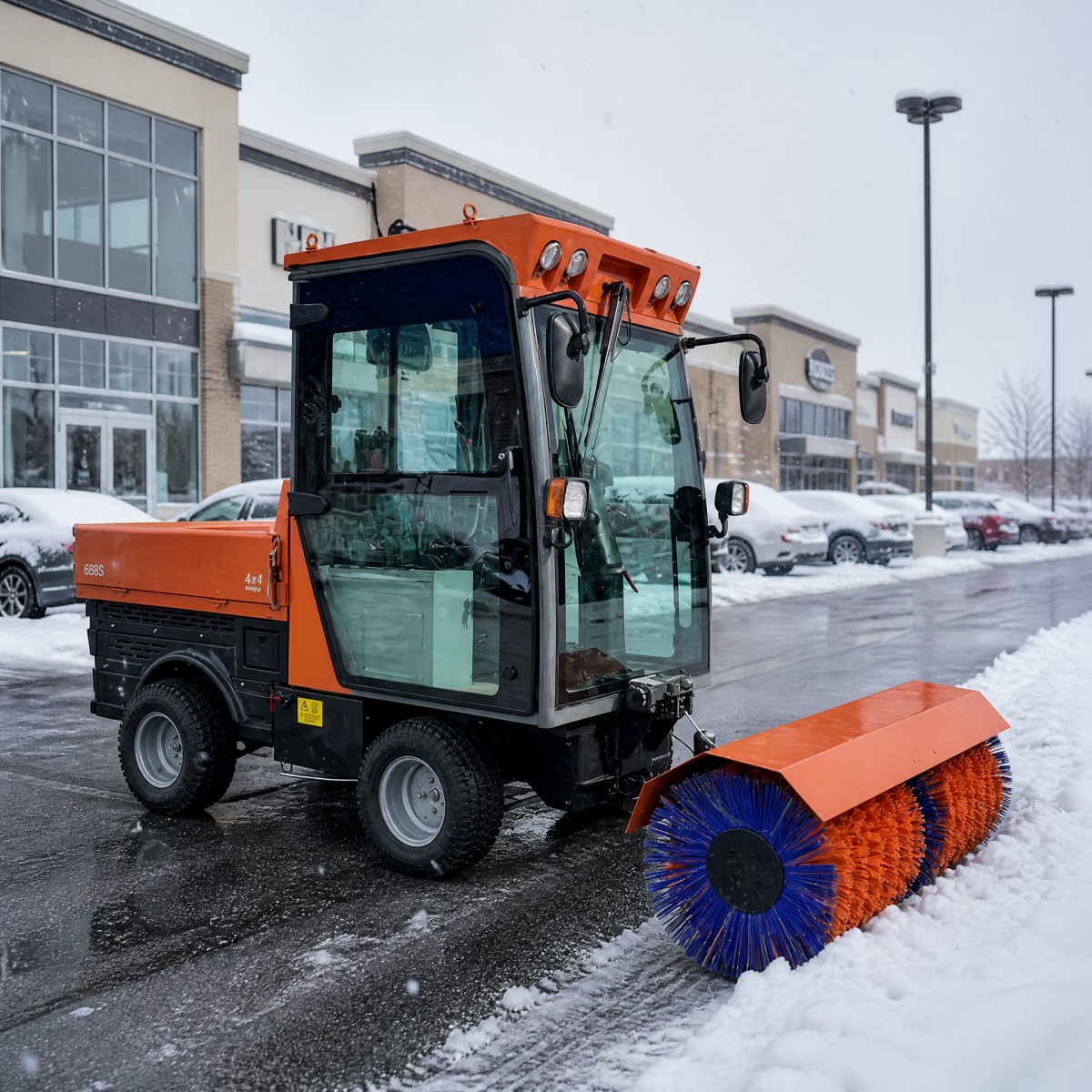
Machine width also matters: a sweeper must fit gates, aisles, and walkways. A compact unit around 2500 × 1300 × 1980 mm with a 659 kg operating weight can cover commercial sites without becoming a transport problem.
4WD vs 2WD: What Actually Matters in Snow
Wet, heavy snow creates forward resistance at the brush or blade, which unloads the drive wheels on a 2WD machine and causes slipping. A four-wheel-drive drivetrain keeps power on all four corners, and deep-tread tubeless tires (20×8-10) maintain grip on packed ice. If your site includes cambered roads, inclines, or slush, 4WD is not a luxury — it is the difference between clearing and spinning.
Match the Machine to Your Snow Type
Buyers should match the machine to the snow they actually receive, not the snow they hope for. Wet coastal snow and dry inland powder demand different combinations of power, brush, and thrower.
One Machine or Three? Multi-Function Attachments
Sites that only sweep can buy a single-purpose machine. Sites that sweep, throw, plow, and spread salt face a choice: a fleet of single-purpose machines, or one unit with quick-change attachments. The second option saves capital, storage space, and crew training — provided the attachment change is genuinely quick.
Operator Comfort Affects Uptime
An operator who stays warm and dry works longer shifts with fewer stops. A fully enclosed glass cab with 360° visibility, warm-air heating, and roof work lights extends the working window into early morning and low-light storms. A continuously variable transmission with cruise control lets the operator hold a steady working speed without clutching — less fatigue, more cleared ground.
Maintenance and Parts Support
A commercial machine should be serviceable by a local mechanic, not a factory specialist. Confirm parts availability for the engine, hydraulics, tires, and belts before purchase. Buyers should ask which common parts to stock, how parts are identified, and what the warranty and technical support process covers. Standardizing a small fleet around one model also simplifies training and parts planning.
Understand Total Cost of Ownership
A low purchase price with weak support becomes expensive the first time the machine misses a storm. Evaluate the full cost picture:
Questions to Ask Before Buying
1. What is the total area we need to clear per storm?
2. What is the deepest snow depth we must handle?
3. Will operators work through wet, heavy snow?
4. Do we need sweeping, throwing, plowing, spreading — or all four?
5. Can the machine access every zone of our site?
6. Is the cab comfortable and safe for long shifts?
7. Are parts and local service available for the engine and hydraulics?
8. What warranty and technical support process applies?
9. Which attachments and spare parts should we stock before winter?
10. Can the supplier support repeat orders as the fleet grows?
How the 4WD140 Fits
The 4WD140 is a four-wheel-drive, multi-function snow sweeper built for commercial clearing: a 1400 mm sweeping brush, a 1200 × 600 mm thrower, a 1500 × 400 mm push blade, and a salt spreader, all on one chassis with quick-change attachments. A 25 HP Runtong R740-1 engine, CVT with cruise control, deep-tread tubeless snow tires, and an enclosed heated cab address the traction, comfort, and uptime questions above.
Before ordering, buyers should confirm the current machine configuration, attachment compatibility, spare parts package, warranty policy, and delivery arrangement with the supplier.
Frequently Asked Questions
What size snow sweeper do I need for a commercial parking lot?
Start with the total area and the widest pass you can store and transport. A 1400 mm brush with a compact 2500 × 1300 × 1980 mm footprint suits most plaza and lot applications.
Is a 4WD snow sweeper worth the extra cost?
For wet, heavy snow, cambered surfaces, or any incline, yes — 4WD prevents the wheel slip that stalls 2WD machines mid-storm.
Can one machine sweep, throw, plow, and spread salt?
Yes, with quick-change attachments. Confirm that the changeover time and attachment compatibility match your site’s needs.
How deep a snow can a ride-on snow sweeper handle?
It depends on the attachment: a sweeping brush clears about 20 cm per pass, while a snow thrower is rated for snow depth up to 60 cm.
What maintenance does a commercial snow sweeper need?
Typical season work includes filters, belts, hydraulics, and tire checks. Confirm a recommended spare parts package with the supplier before winter.
Conclusion
Choosing a commercial snow sweeper requires more than comparing prices. The right machine fits the site, handles the local snow type, keeps operators productive, and stays available through the storms that matter. Practical, supportable, and understandable — that is the standard the 4WD140 is built to meet.
The 4WD140 is available for pre-season ordering. Contact us for the full specification sheet, pricing, or an on-site demonstration.
This stunning beach house property is a true oasis, nestled in a serene coastal community with direct access to the beach.
Contact
West Street, Melbourne Victoria 3000 Australia