


Navigation
Contact us
Phone
Message
PRODUCT NEWS
Heavy-Duty 35 Ton Hydraulic Log Splitter with Auto-Lift Wedge – Specs and Buying Guide
Hydraulic power, auto-lift wedge and a 730 mm capacity — what to compare before buying a 35-ton log splitter
What Is a Heavy-Duty Hydraulic Log Splitter?
A hydraulic log splitter uses a hydraulic cylinder to push logs against a fixed or moving wedge, converting engine power into hundreds of tons of splitting force. Commercial models add features that matter over a full season: faster cycles, adjustable pressure, auto-lift wedges and larger log capacities.
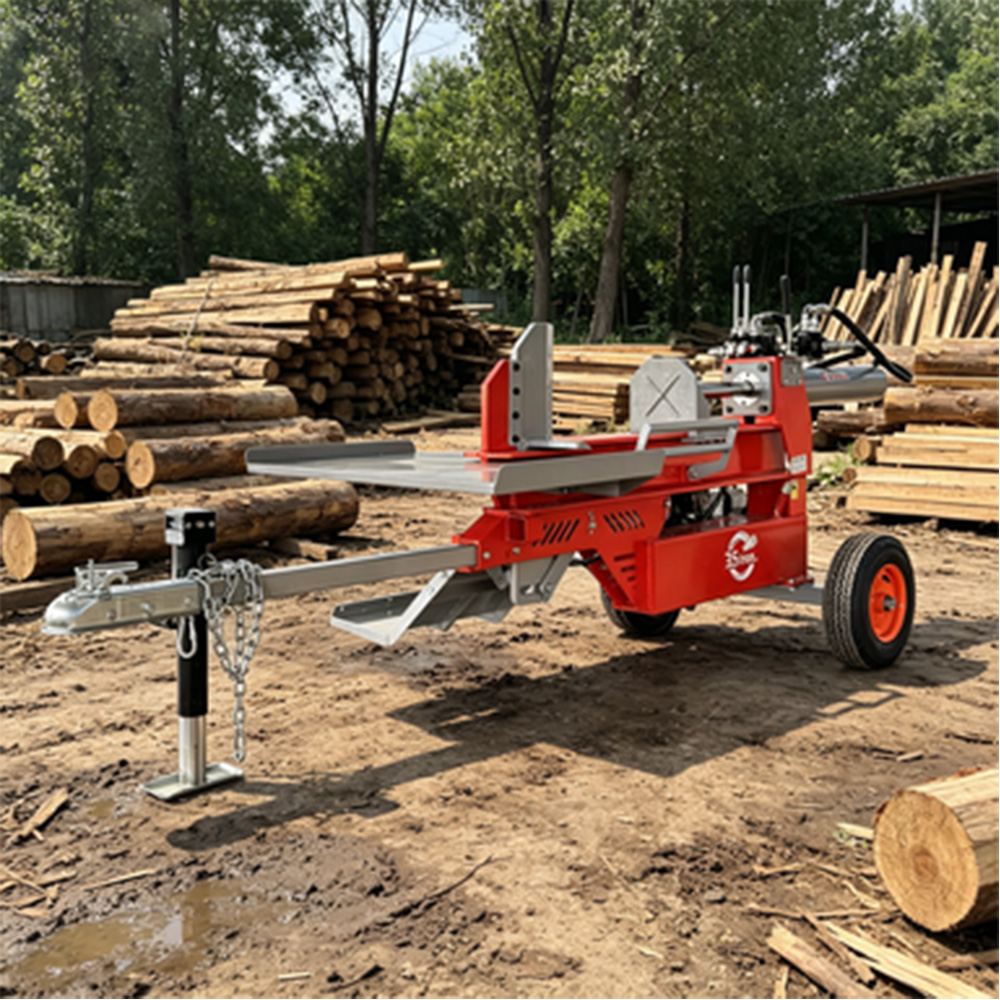
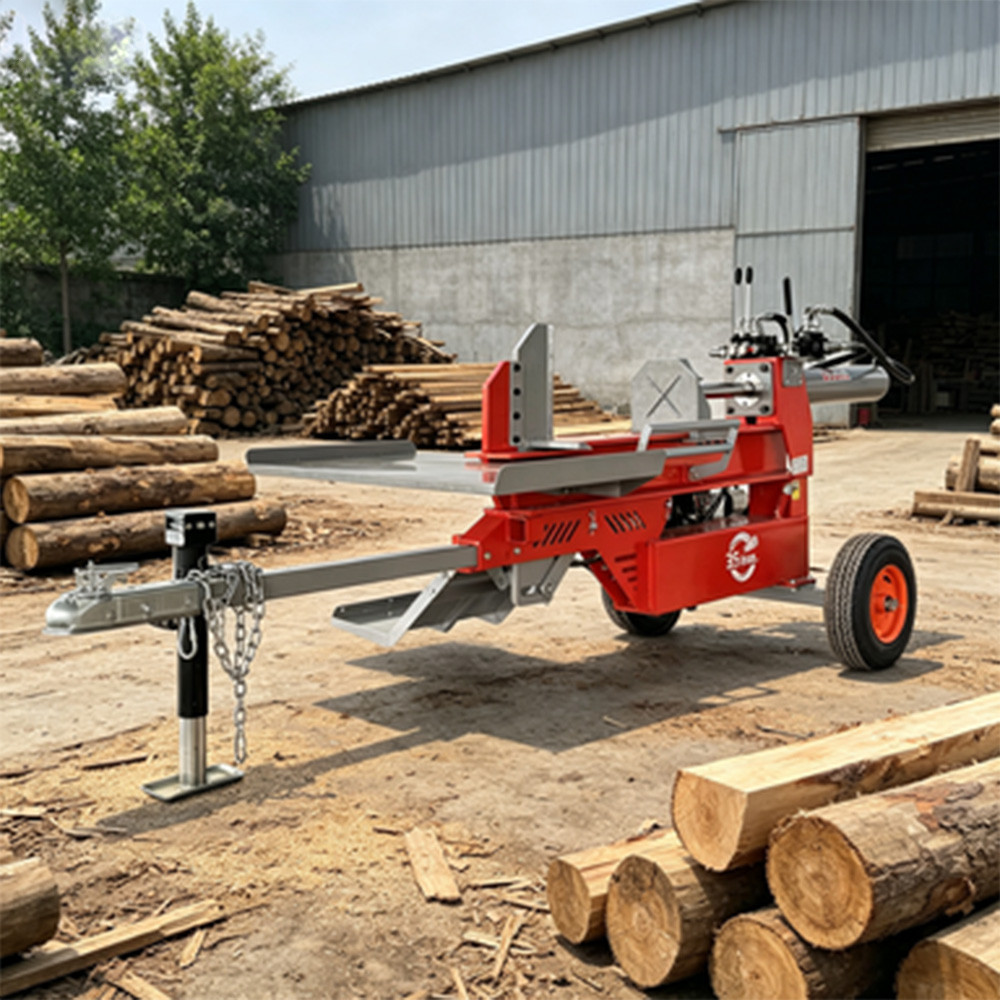
The 35-ton log splitter covered in this guide is a horizontal, towable machine with a 35-ton maximum splitting force, adjustable working pressure up to 32 MPa, a 730 mm log capacity and a cycle time of about 10 seconds. It is aimed at farms, estates, firewood suppliers and grounds teams that process large or hardwood logs in volume.
Why Choose a 35-Ton Log Splitter?
Most residential splitters fall in the 5–20 ton range. A 35-ton unit is a different class of machine, and the difference shows in three areas:
Hardwood and large diameters – 35 tons of force and a 100 mm cylinder bore split dense oak, beech and elm that stall smaller machines; logs up to 600 mm in diameter are within range
Faster cycles – an approximately 10-second cycle (auto-return valve) keeps production moving during peak firewood season
Adjustable pressure – 20–32 MPa working pressure lets the operator match force to the wood, reducing wasted energy on easy splits
For a firewood business or a property with heavy winter heating demand, the higher price of a 35-ton machine is typically recovered in fewer stalls, less manual re-work and faster output.
What Jobs Can a 35-Ton Log Splitter Handle?
Firewood production – 730 mm log length suits standard fireplace and stove wood sizes
Hardwood processing – oak, ash, beech and elm rounds up to 600 mm diameter
Farm and estate woodlots – clears storm-damaged trees and accumulated rounds in batches
Commercial firewood supply – continuous operation with an engine-rated duty cycle, backed by a 16–22 L hydraulic oil capacity for sustained running
Key Specs to Compare
The specification, summarized against what each figure means for a commercial buyer:
Auto-Lift Wedge and Three-Cylinder System: What Makes This Machine Different
The distinguishing feature of this 35-ton splitter is its automated wedge and table system. Instead of manually lifting a heavy wedge between passes, the operator uses a 40 L dual manual valve to control:
Hydraulic auto-lift wedge – the cross wedge raises and lowers hydraulically between 2-way and 4-way splits
Hydraulic log table – the work platform lifts logs into position, reducing manual handling of heavy rounds
Three-cylinder design – wedge lift, table lift and push cylinder operate independently through three manual valves, giving the operator control without leaving the work position
For operators who split hundreds of logs a day, these features reduce the physical strain that makes log splitting a two-person job.
Towing, Setup and Operation
The machine sits on a 2,800 × 1,430 × 1,170 mm frame with pneumatic tires and a drawbar fitted with a ball coupler and support jack — it tows behind a pickup or utility vehicle between sites. The horizontal beam and side loading ramp simplify rolling logs onto the work table. Confirm with the manufacturer:
• whether the machine ships on wheels and what the towball class is
• whether the 1 m extended version (longer beam) is needed for your log lengths
• whether an electric-start engine option is available for cold mornings
What to Confirm Before Buying
Frequently Asked Questions
How long does one split take?
About 10 seconds per cycle with the auto-return valve — the wedge returns automatically after each split, and the hydraulic lift positions the next log.
Can it split hardwood like oak?
Yes. The 35-ton force, 100 mm cylinder and adjustable 20–32 MPa pressure are designed for dense hardwoods up to 600 mm in diameter. For very knotty rounds, a 4-way split reduces resistance.
Is it towable?
The machine has pneumatic tires and a drawbar with a ball coupler and support jack. Confirm the towball class of your vehicle before moving it between sites.
Do I need the extended version?
The standard version accepts logs up to 730 mm. If you process longer firewood or industrial rounds, ask about the 1 m extended beam option.
This stunning beach house property is a true oasis, nestled in a serene coastal community with direct access to the beach.
Contact
West Street, Melbourne Victoria 3000 Australia